

East Fortune Airfield

East Fortune airfield in East Lothian is arguably the most historic surviving airfield of the First and Second World Wars anywhere in the United Kingdom. It opened in 1915 and was used by airships searching the North Sea for U-boats trying to sink coastal shipping.
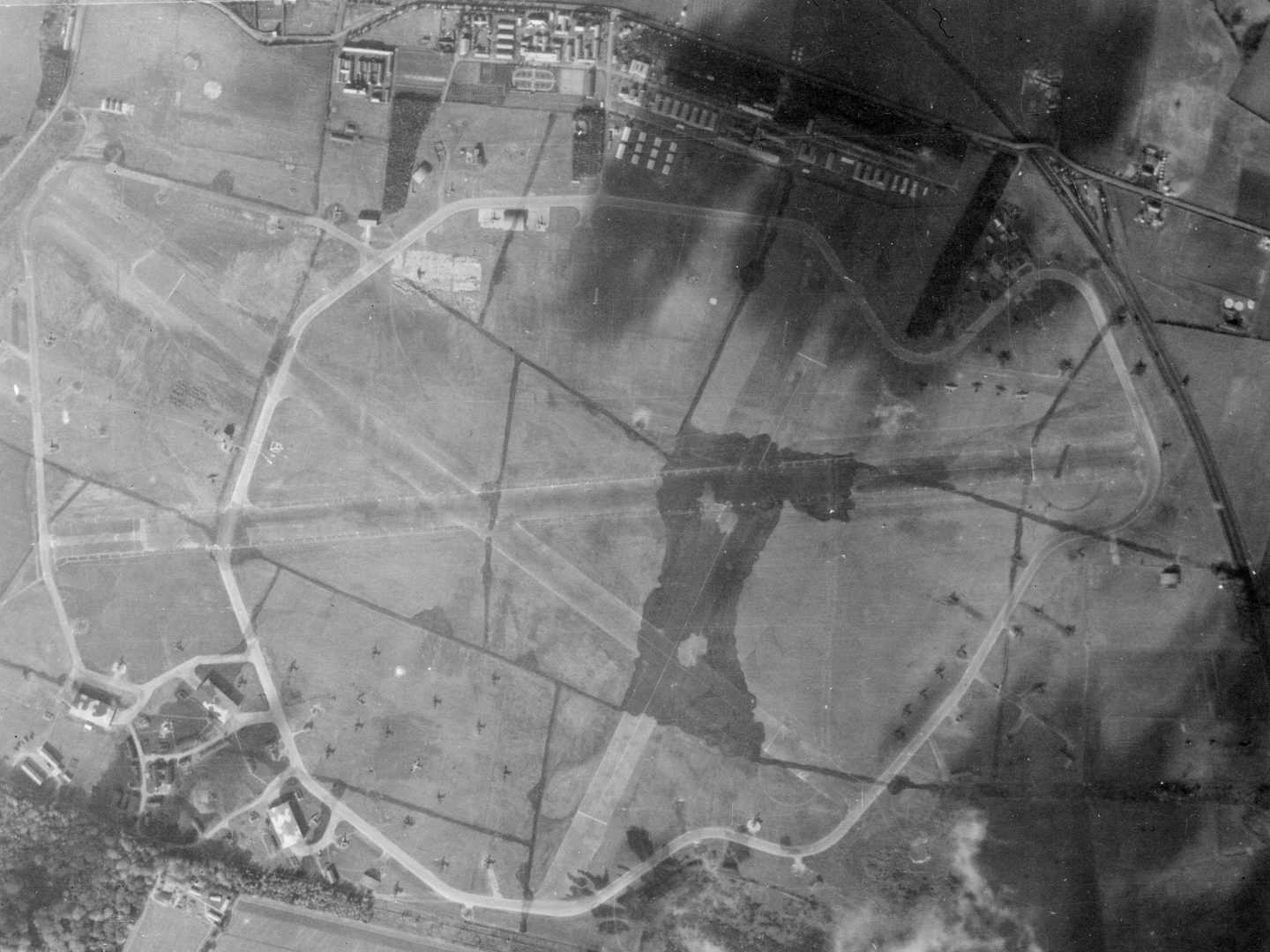
East Fortune airfield in 1942, when operating as RAF East Fortune and home to No. 60 Operational Training Unit (RAF); Collection: SCOT, Sortie: M/100/FNO/199, Frame: 6114 (21 October 1942)
Fixed-wing aeroplanes were also based there, and in April 1916 an Avro 504 took off to intercept two Zeppelins which were attacking Edinburgh. After failing to locate the airships, the pilot crashed while landing in the dark at East Fortune and was badly injured. Early trials of dropping torpedoes from aircraft were carried out from East Fortune, with an attack on the German High Seas Fleet planned but never carried out as the Armistice of November 1918 took place first.
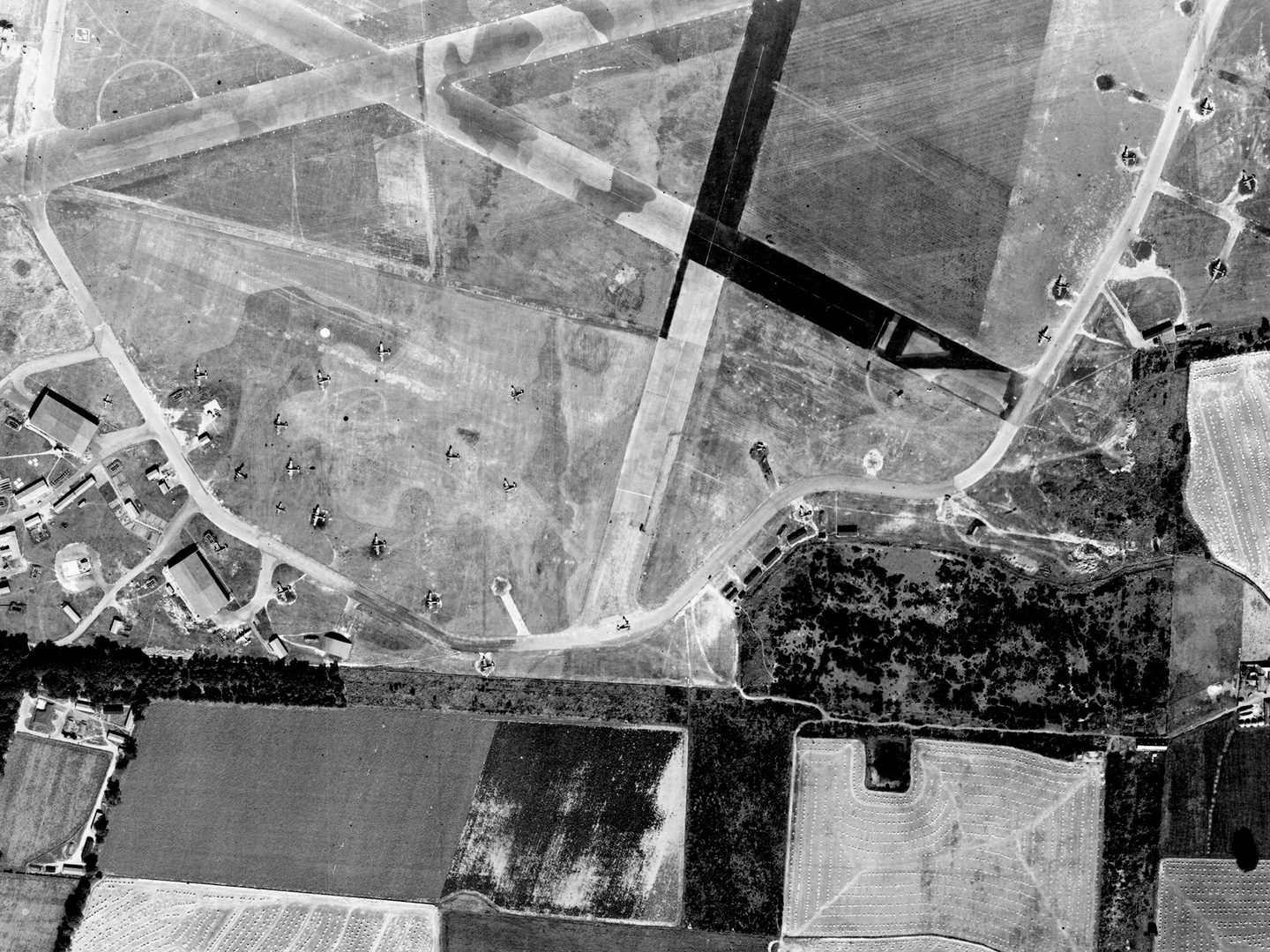
By 1943, East Fortune airfield was home to No. 132 (Coastal) Operational Training Unit (RAF); Collection: SCOT, Sortie: M/043/NLA/068, Frame: 3045 (27 August 1943)
In 1919, the R34 airship made the first east-west crossing of the Atlantic by air having departed from East Fortune, and the first return crossing. During the Second World War the airfield was used to train night fighter aircrew and later anti-shipping strike crews. East Fortune was active again for three months in 1961 as Edinburgh Airport, when the runway at Turnhouse was being resurfaced.
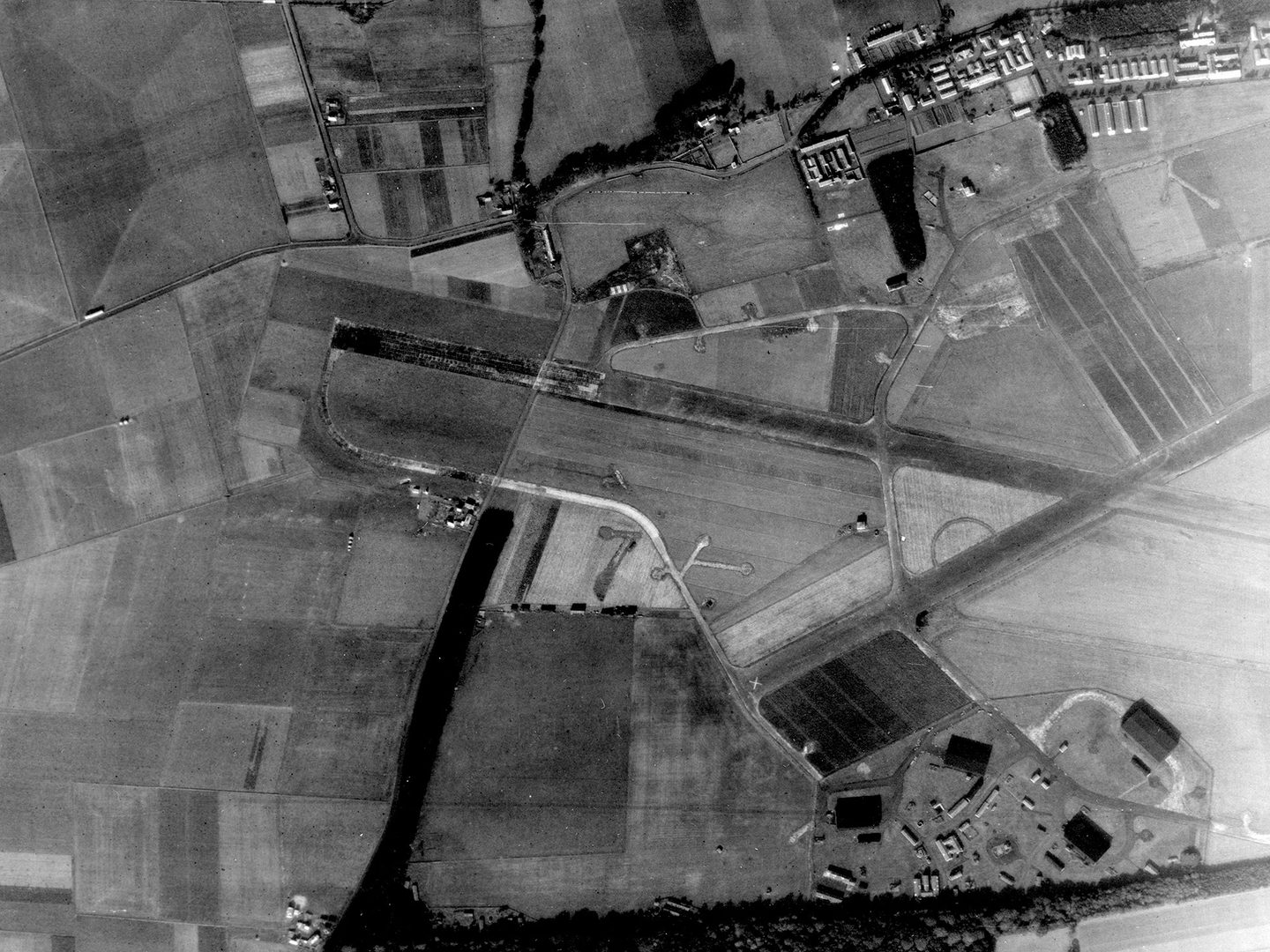
East Fortune airfield in 1959, shortly before its use as a substitute for Edinburgh Airport; Collection: SCOT, Sortie: 58/RAF/3262, Frame: F62_0253 (15 October 1959)
In 1970 the Royal Scottish Museum (now National Museums Scotland) was offered a Spitfire, and it was temporarily stored at East Fortune, with other aircraft and rockets joining it over the following few years. This led to a trial opening of a museum at East Fortune in 1975 which was a massive success, leading to the National Museum of Flight that still occupies the technical site of the airfield and has since 2005 displayed Scotland’s Concorde.
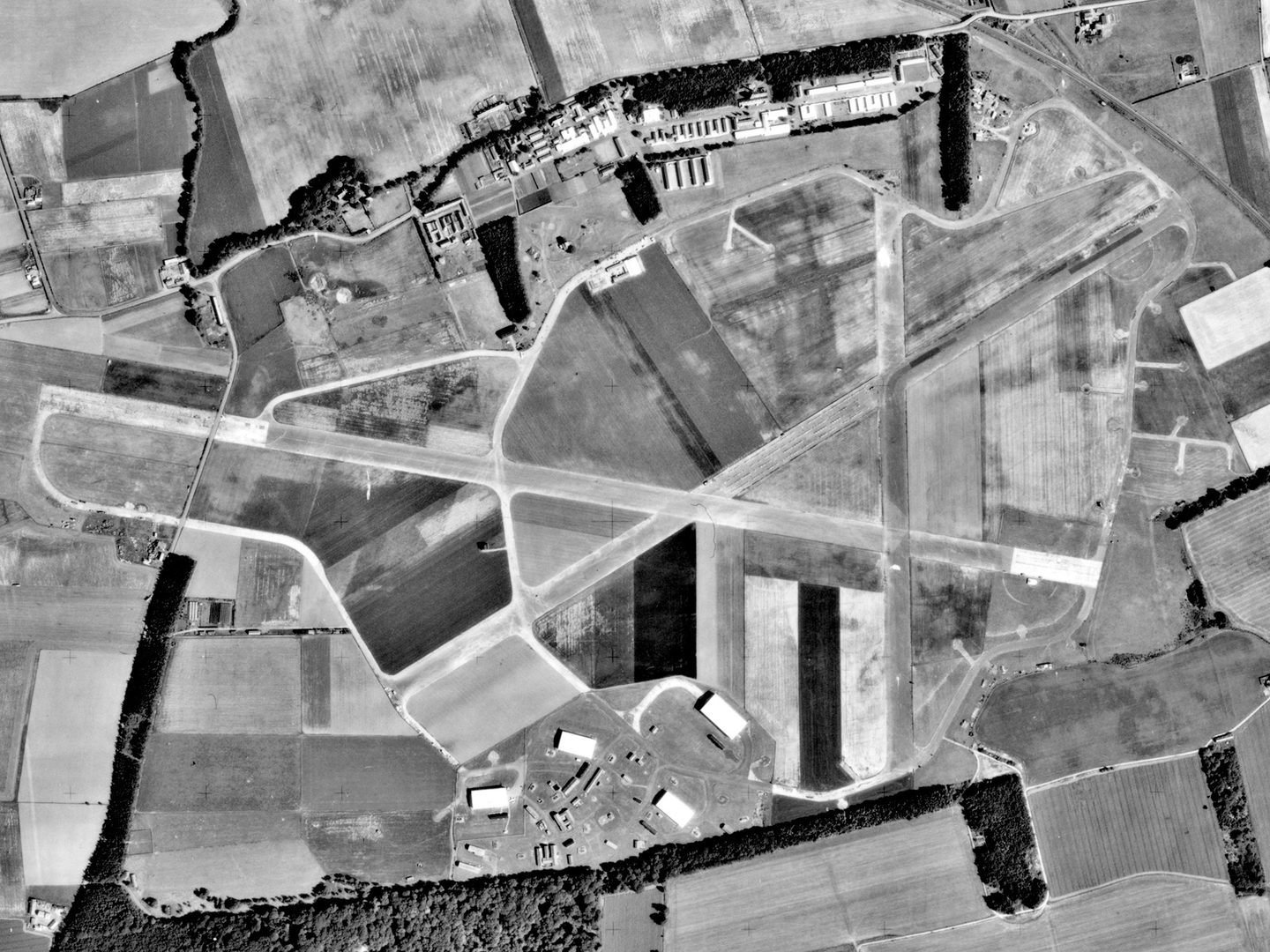
2 years before this image was taken, the Royal Scottish Museum had opened what became the National Museum of Flight at East Fortune; Collection: SCOT, Sortie: OS/77/0109, Frame: 0025 (06 August 1977)
In recent years the National Museum of Flight has restored and opened to visitors the air raid shelter on the museum site. At the same time one of the blast shelters (an open-topped shelter designed to allow essential personnel to continue working until the last minute before an air raid) has also been opened up to visitors.
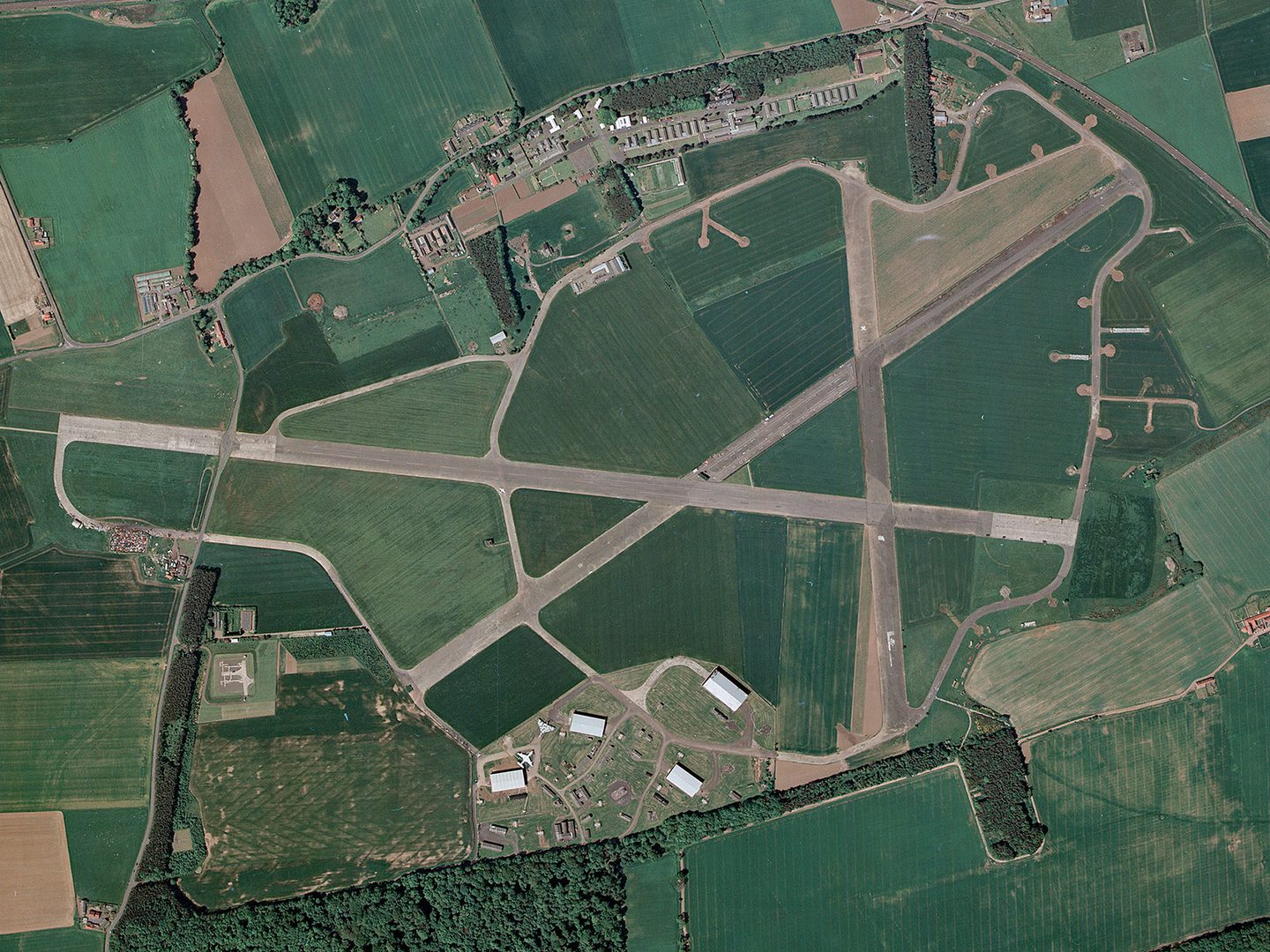
By 1988, an Avro Vulcan and de Havilland Comet had arrived at East Fortune, and are visible between the two left-hand hangars; Collection: SCOT, Sortie: ASS/51988, Frame: 0129 (07 June 1988)
This has led to a re-interpretation of the history of the airfield. The previous narrative suggested that the airfield was never bombed; new research has revealed this was not the case. On 4 November 1940 three bombs were dropped on the airfield whilst it was still being built. Royal Air Force (RAF) records confirm the airfield was also attacked on 3 October 1941 when eight bombs were dropped on smallholdings just outside the airfield perimeter.
Other research indicates the growing of food on the airfield, research that was greatly aided by examination of high-resolution copies of frames from sortie M/043/NLA/068 dated 27 August 1943. These aerial photographs revealed not only the presence of plots used to grow vegetables (confirmed by the background of photos taken on the ground in the museum’s collections) but also the existence of a couple of formal gardens. Research has shown that the growing of food was happening at RAF stations across the UK, but the presence of formal gardens demonstrates that there was an aesthetic element as well, presumably for morale purposes.
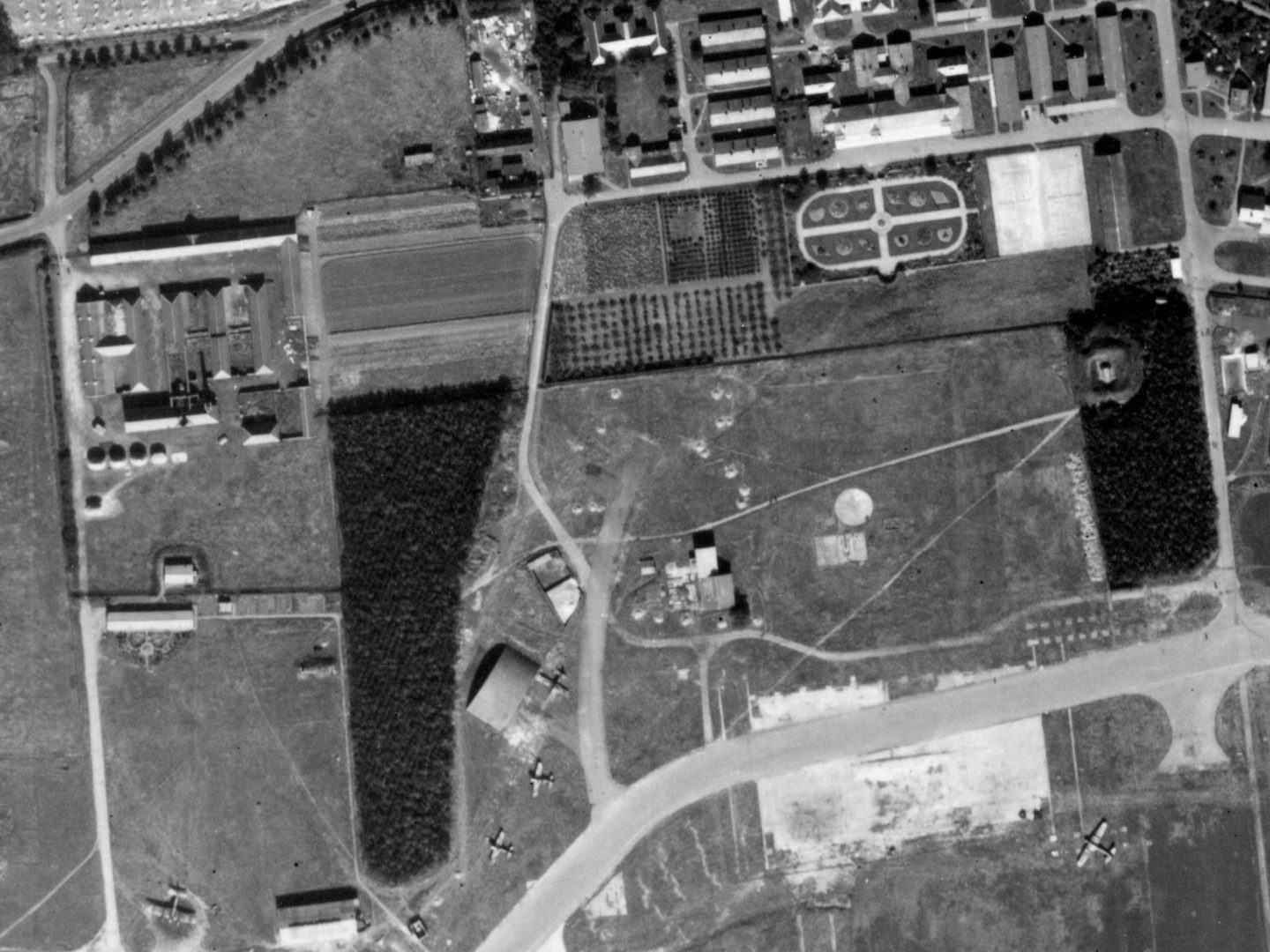
A detail of frame 3042 from sortie M/043/NLA/068, showing both formal and agricultural planting next to the airfield buildings; Collection: SCOT, Sortie: M/043/NLA/068, Frame: 3042 (27 August 1943)
The museum displays tell a little of this story in the Civil Aviation hangar, where one of the three themes is aerial photography. This section is built around two aircraft used for aerial photography, the Scottish Aviation Twin Pioneer and the Avro Anson. The displays include aerial cameras, film developing tanks and a stereo photograph viewer. An interactive nearby gives visitors the chance to experience viewing a photograph of the Forth Bridge in 3D stereo effect.
The Twin Pioneer was built at Prestwick by Scottish Aviation, the company founded by David McIntyre and Lord Clydesdale (later the 14th Duke of Hamilton). These Scotsmen were, in 1933, the first pilots to fly over Mount Everest. Part of their mission was to photograph the mountain from the air, the photographs being used to help produce maps of the mountain that were used by the 1952 expedition that put Norgay Tensing and Sir Edmund Hillary at the summit.
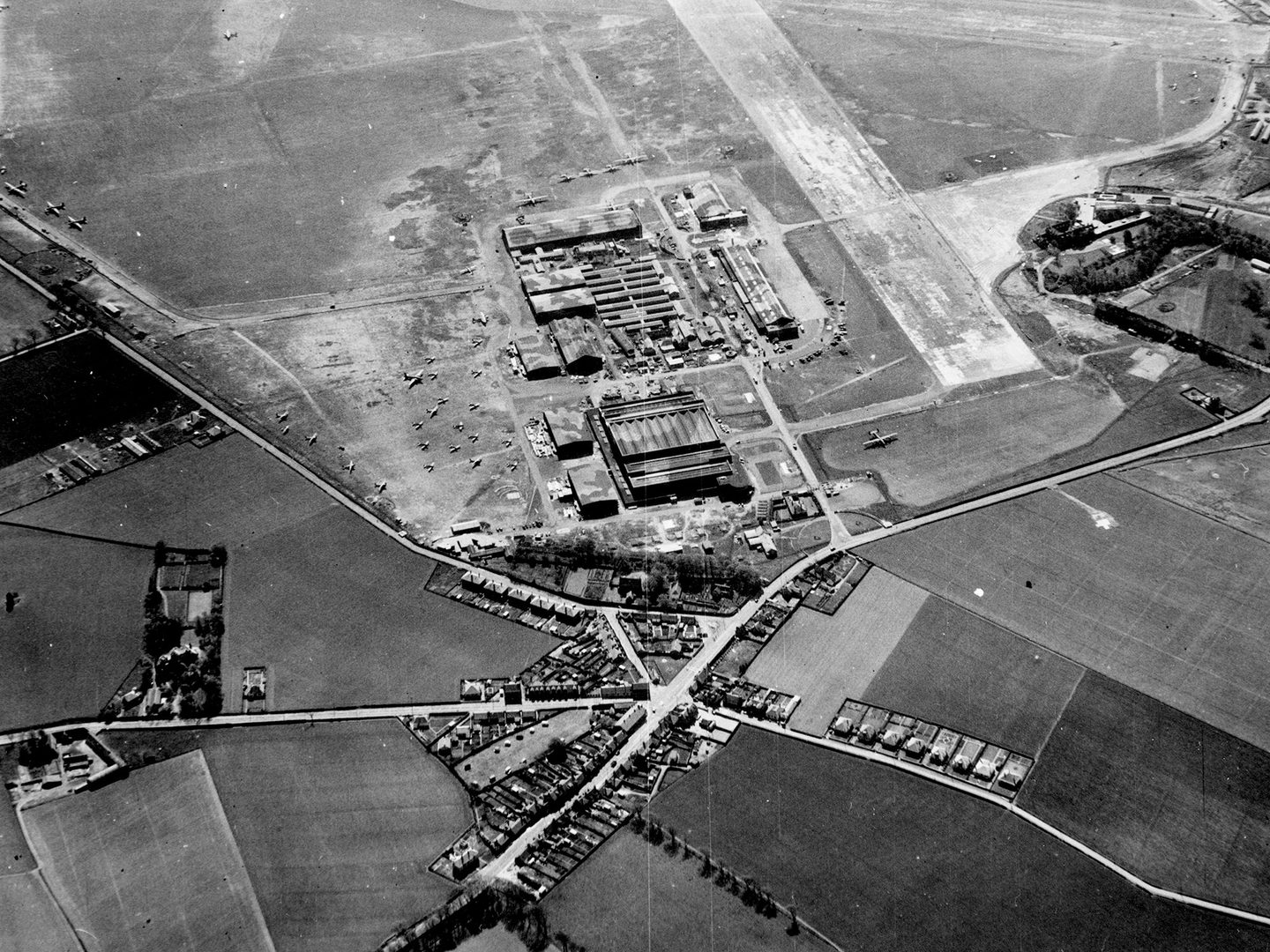
The Scottish Aviation factory building (centre) at Prestwick, formerly the Palace of Engineering at the Glasgow 1938 Empire Exhibition; Collection: SCOT, Sortie: CAM/007, Frame: 0558 (18 May 1941)
Aerial photographs are used in displays elsewhere at the National Museum of Flight, confirming the obvious links between aeroplanes and aerial photography that have existed since the earliest days of powered flight. Why not visit the National Museum of Flight for yourself and see if you can spot the aerial photos on display?
Ian Brown, Assistant Curator, Aviation, National Museums Scotland


