Anatomy Of: Airfields
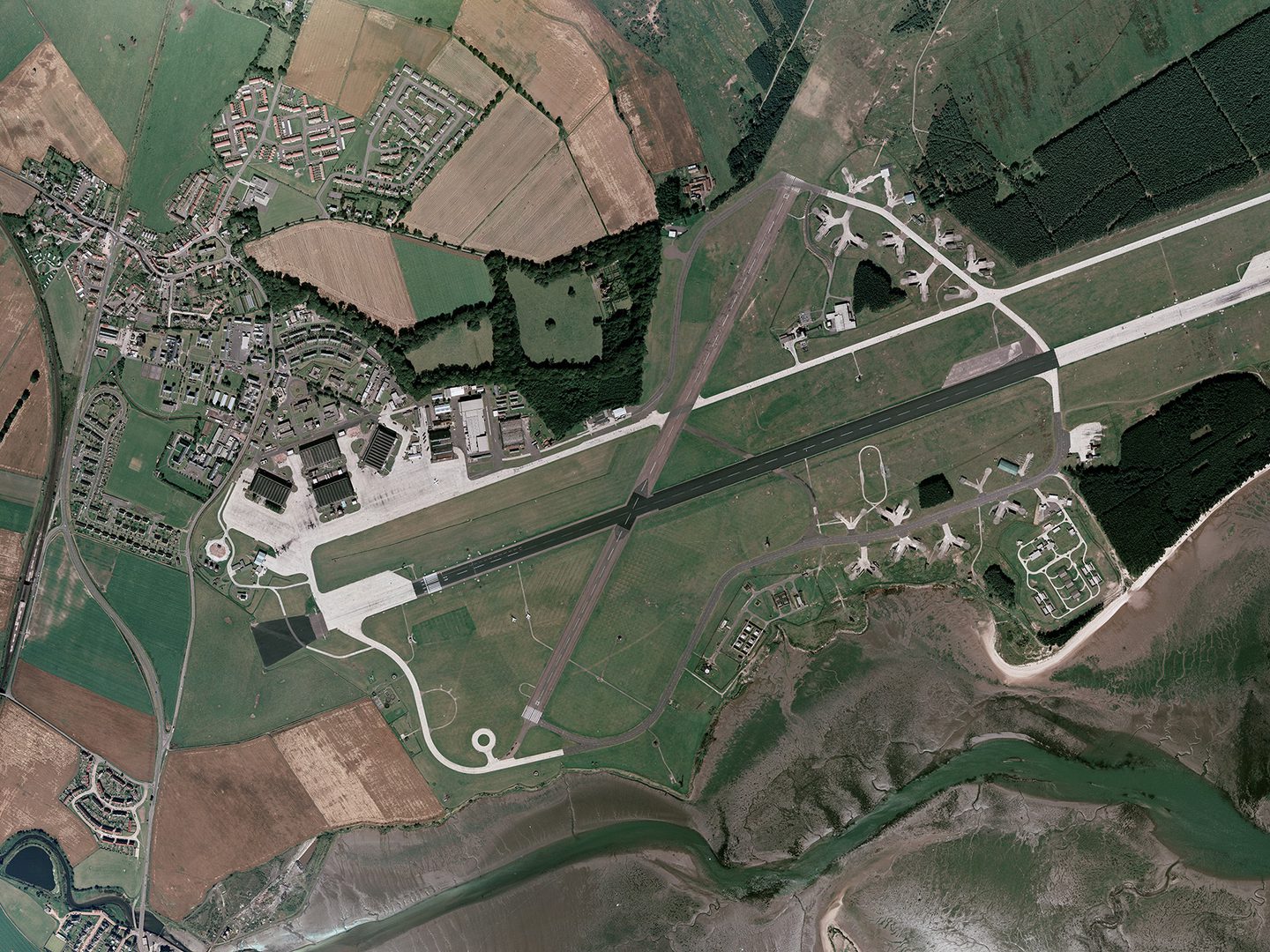
Modern land-based aircraft are extremely sophisticated and expensive pieces of equipment which require an airfield base to operate from. Military airfields are equipped with electronic systems to communicate with aircraft on runways and assist them in flight, defensive systems to secure their boundaries and airspace, stores of fuel and weapons for replenishing aircraft, structures for storing and maintaining aircraft and buildings in which to house, feed and train the personnel who carry out all of the airfield's functions. This 'Anatomy Of' feature identifies these key areas of a typical military airfield, based on imagery of RAF Leuchars in Scotland taken during the height of the Cold War.
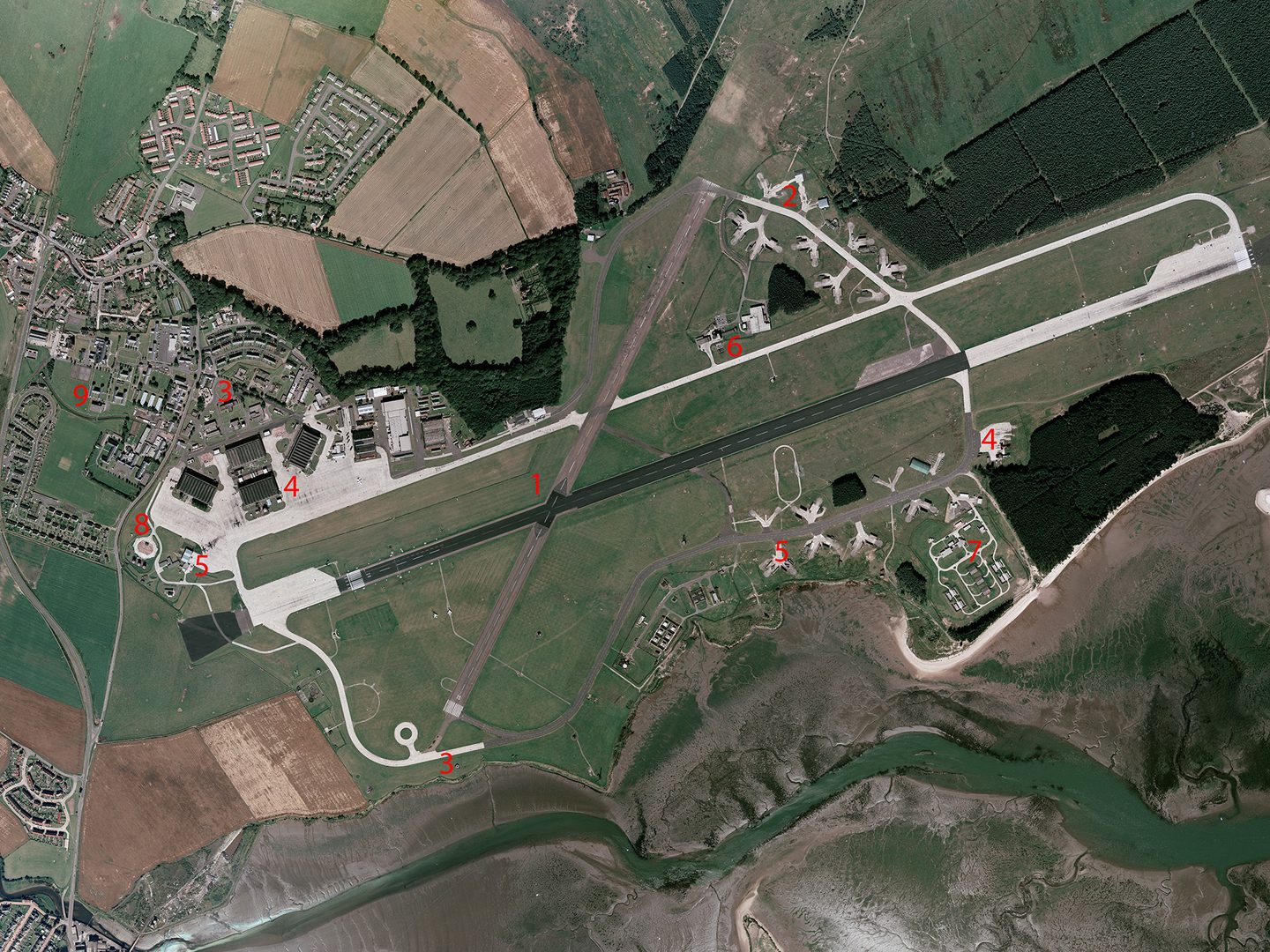
RAF Leuchars in Fife, Scotland; Collection: SAL, Sortie: FSL/7826, Frames: 0247, 0248, 0255 and 0256 (26 August 1978)
Runways
Aircraft land and take-off from runways, which are commonly made of asphalt and concrete although grass, graded earth, ice, steel planking and water can also be used. A series of white stripes indicates the threshold at each end of the runway, while the compass orientation and a centre-line are marked to assist pilots in steering their aircraft. At RAF Leuchars, an overshoot/undershoot area is provided at each end, beyond the touchdown zones, and there is an arrestor cable to halt overshooting aircraft. Also visible are the system of lights bracketing the touchdown zone, to assist pilots in making their approach to the runway, and the localiser element of the Instrument Landing System.
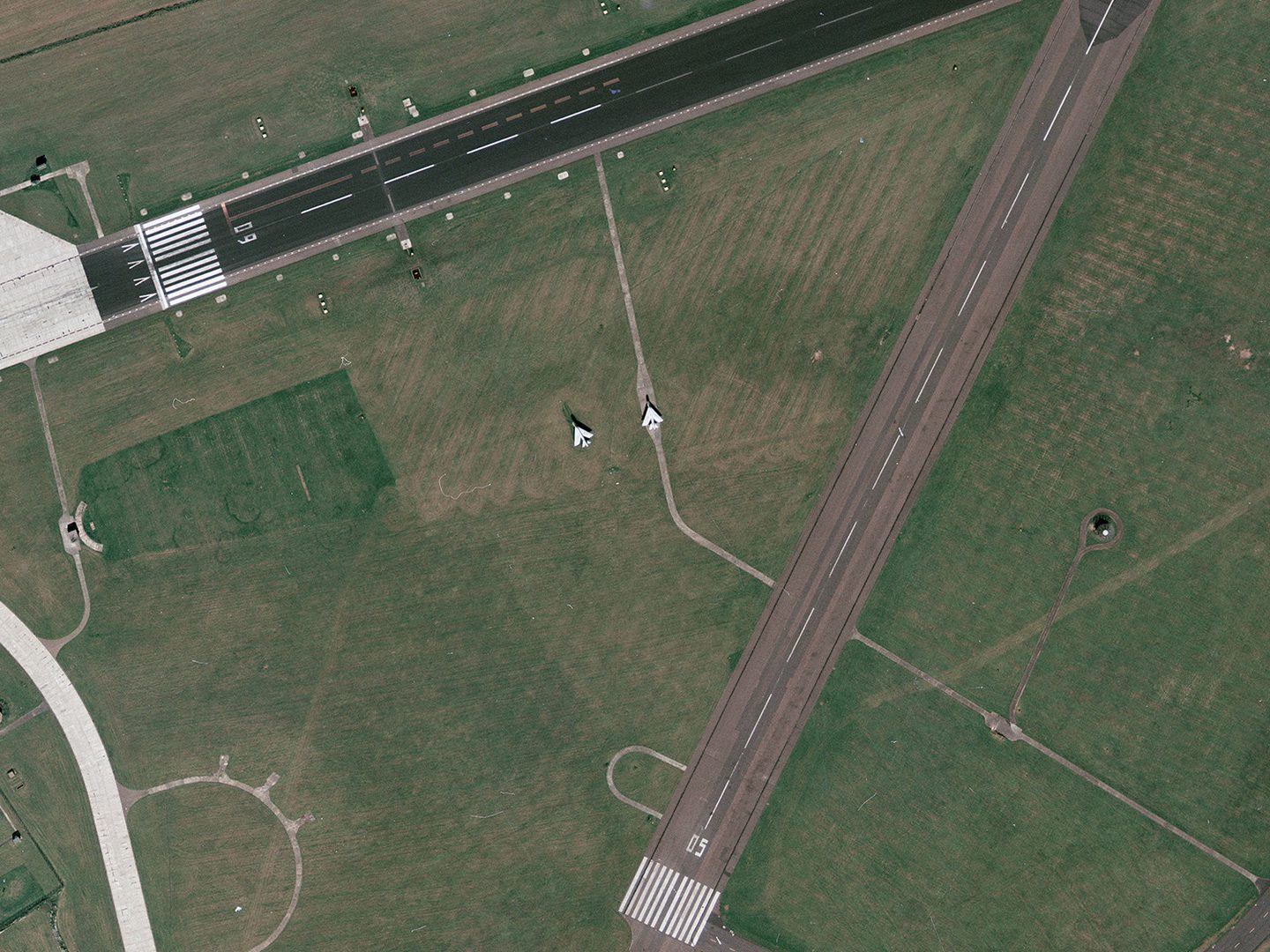
The western end of the runways at RAF Leuchars, clearly showing the compass orientations, lights and lines designed to aid pilots in landing.
Aircraft
The primary function of an airfield is to operate aircraft. For Photographic Interpreters (PIs), the type, variant, quantity and state of readiness of aircraft present on aerial photography allows the function and operational state of the site to be assessed. In this image, two Westland Wessex helicopters, in yellow search-and-rescue livery, are visible on hard-standings.
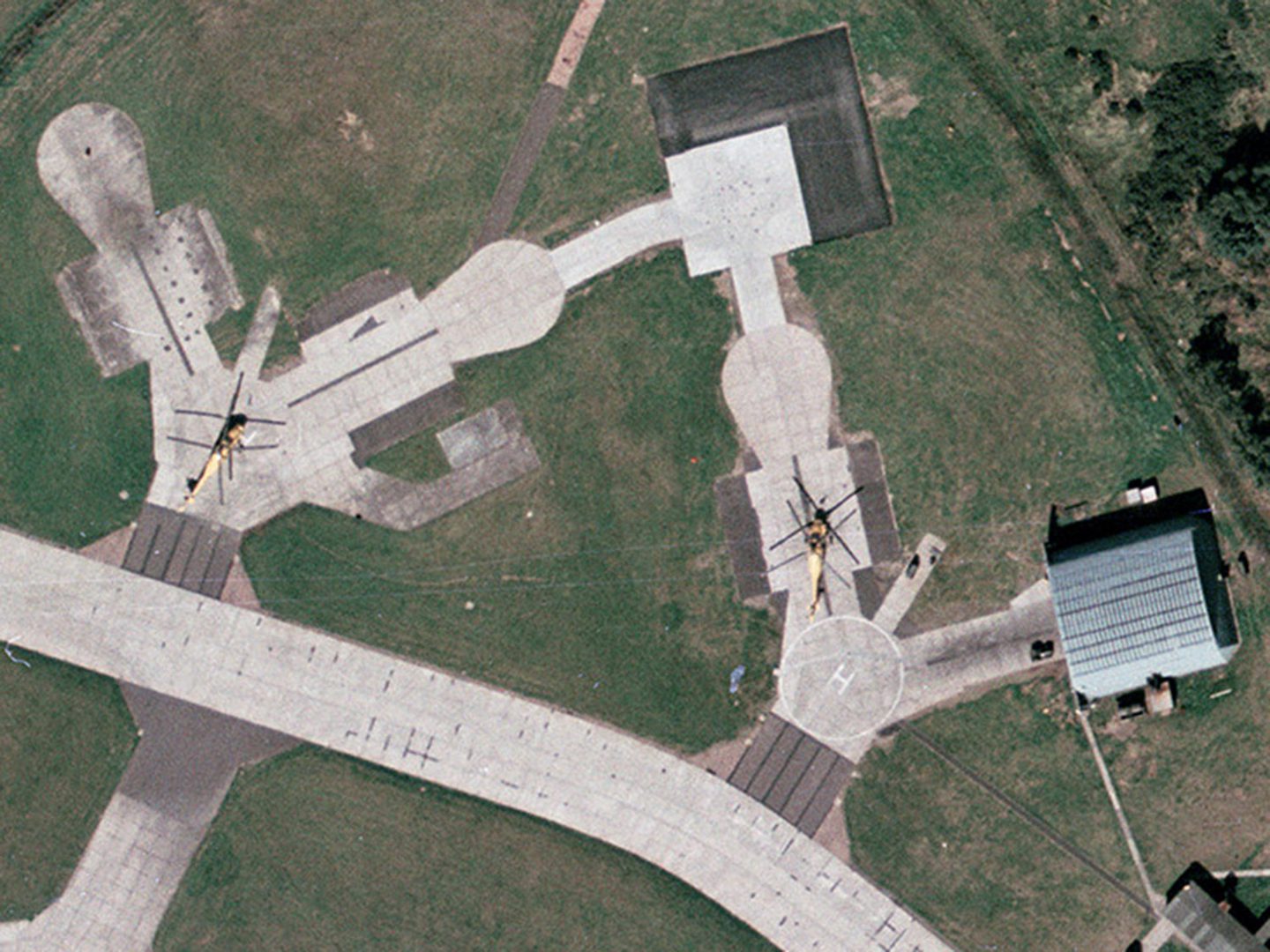
The Westland Wessex was a British helicopter developed from the American Sikorsky S-58, and used for anti-submarine operations, troop transport and search and rescue.
Security
Guardhouse
To control access to the airfield, a guardhouse is provided at the main entrance, where vehicles and visitors are vetted. Security personnel check access permits, operate an access barrier and issue directions to visitors. A continuous security fence encloses the airfield perimeter, often patrolled by armed guards.
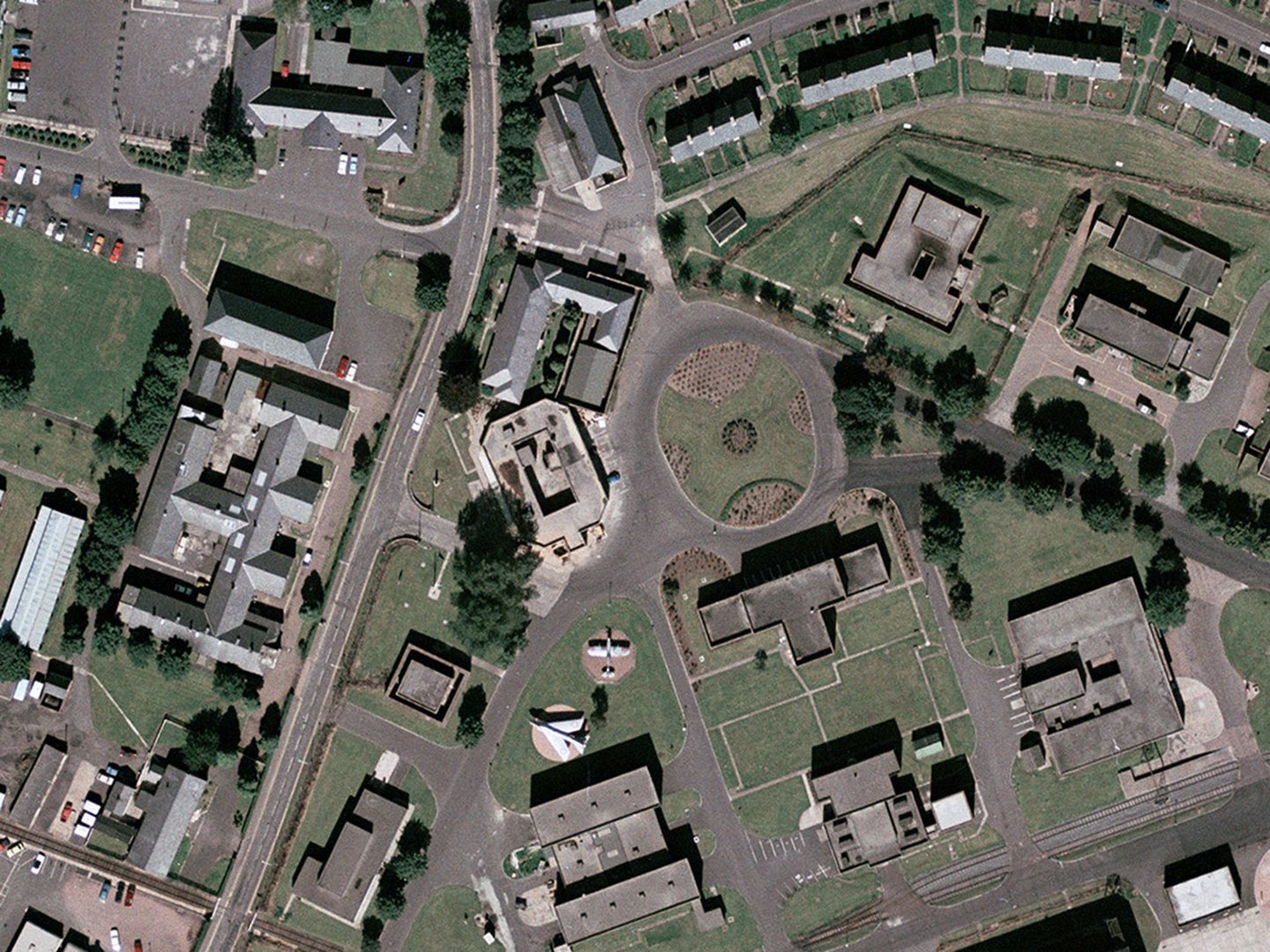
The guardhouse is the octagonal building just left of centre, and a security fence can be seen running along the road to the left, and between operations buildings and domestic housing at the top.
Pillboxes
A number of earth-reveted picket posts are positioned at key locations within the site, to provide strong-points for defence against attack from the ground. Several Second World War pillboxes also survive around the perimeter of RAF Leuchars, such as those in this image. Installations for point defence against air attack, such as anti-aircraft artillery and surface-to-air missile batteries, are also commonly seen at airfields around the world.
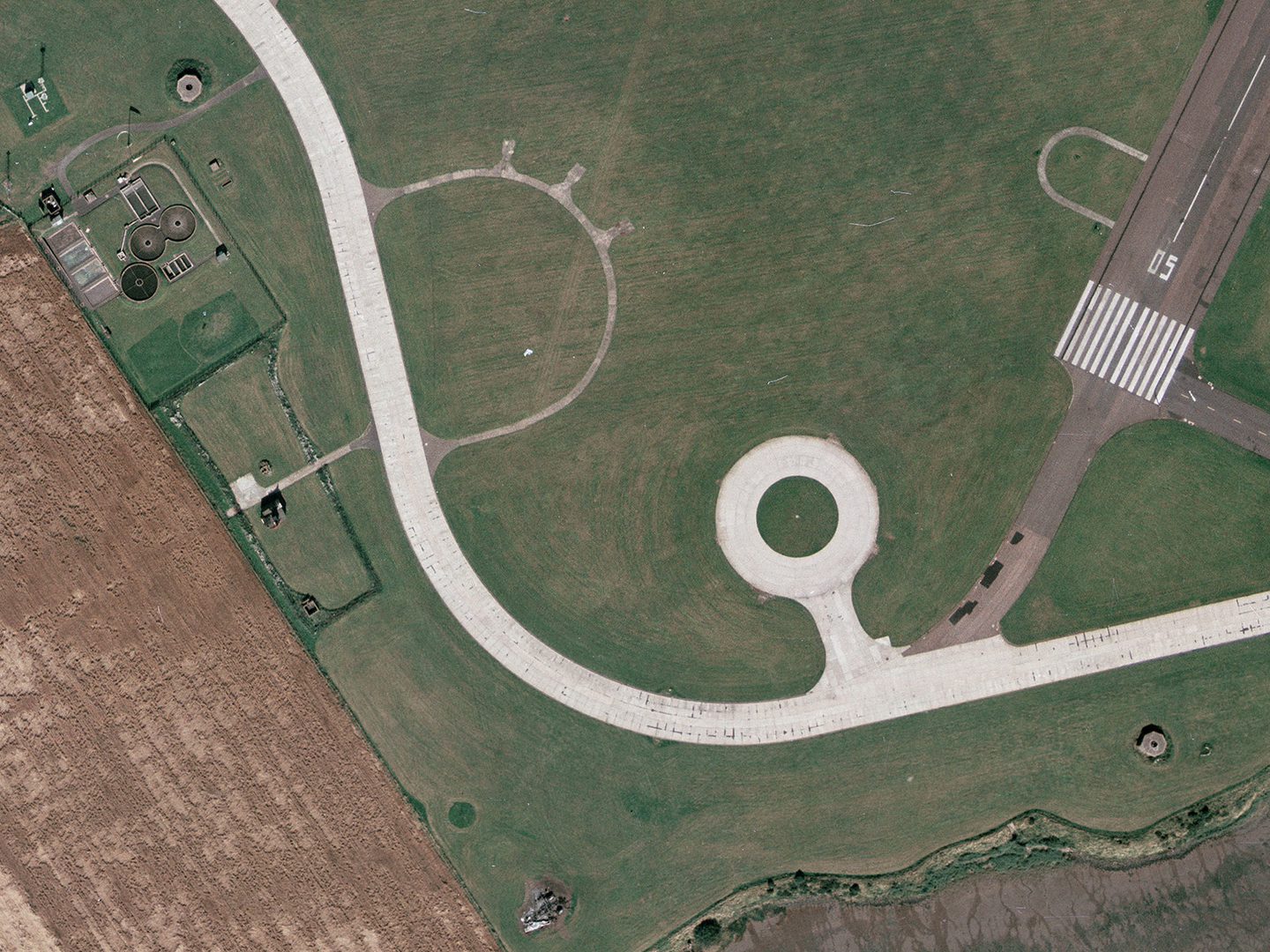
The pillboxes are clearly visible at the upper left and lower right; the circular feature is the compass swing base, where the alignment of aircraft compasses is checked.
Technical Areas
Hangars
Aircraft repair and maintenance is carried out in large sheds called hangars. These have wide sliding doors, to allow aircraft access, and tend to be grouped together, adjacent to aircraft parking aprons. Lighting towers are provided to allow the safe movement of aircraft around the hangars at night.
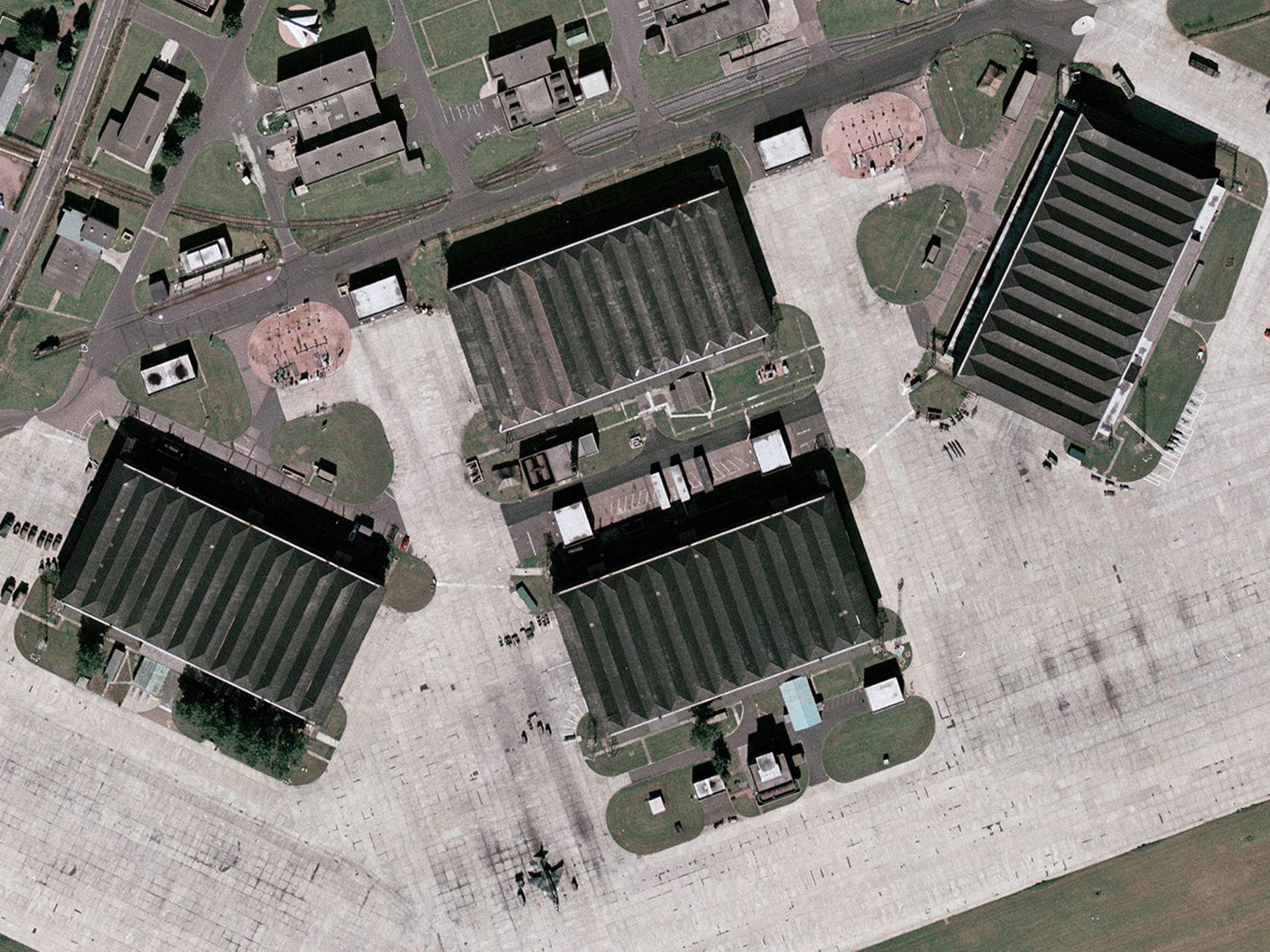
The four large hangars at RAF Leuchars are surrounded by spacious aircraft parking aprons; four aircraft fuel tanks are visible outside the right-hand hangar.
Engine Detuners
Some specialist technical equipment needs to be sited at a distance from domestic areas of the airfield. Here, two engine detuners can be seen on a hardstanding.
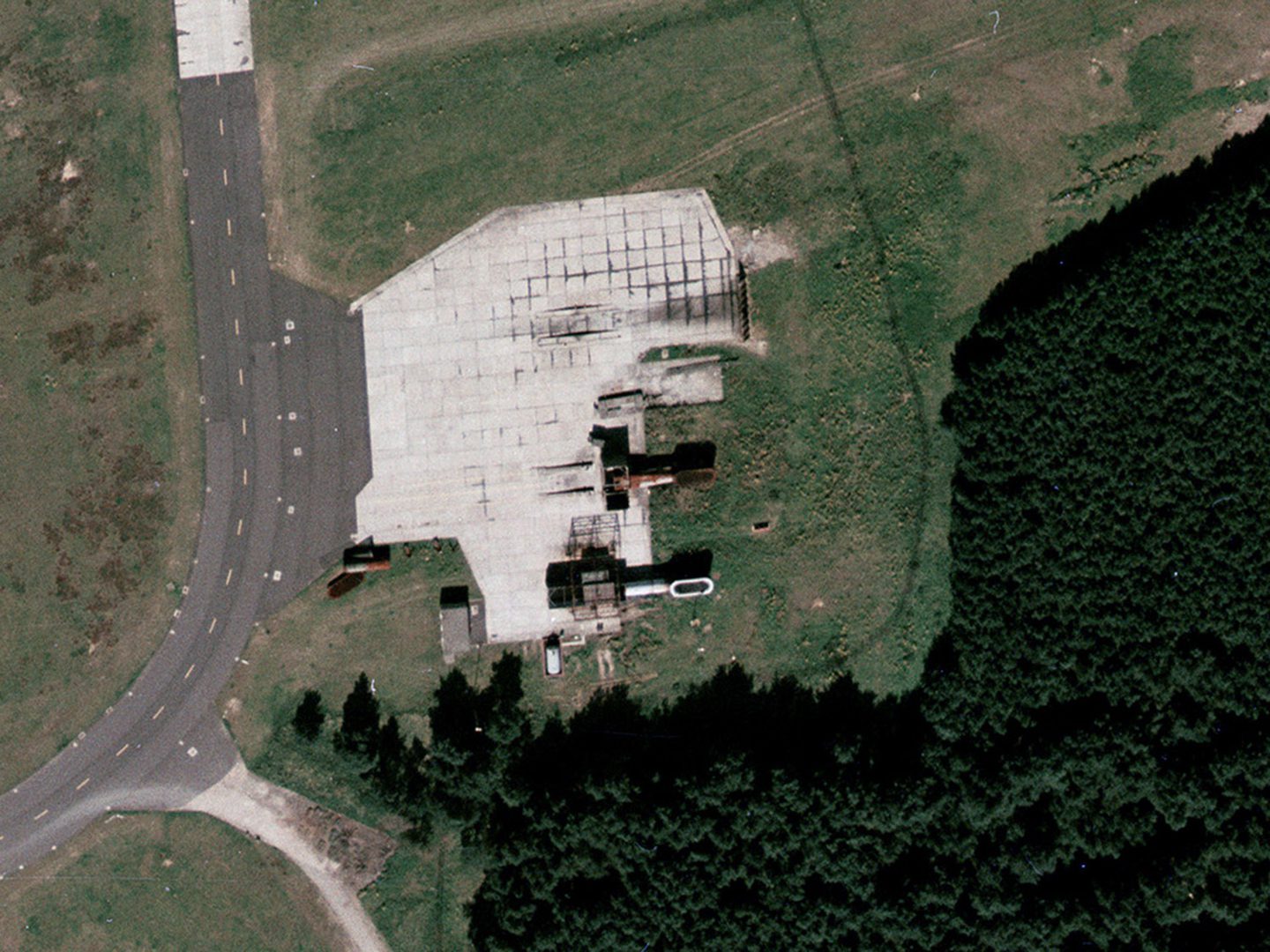
Engine detuners are used to dampen noise when testing aircraft jet engines.
Transport
The movement of fuel, weapons and personnel around the extensive perimeter of an airfield requires a number of specialist vehicles, all of which are housed and maintained by the station's Motor Transport section.
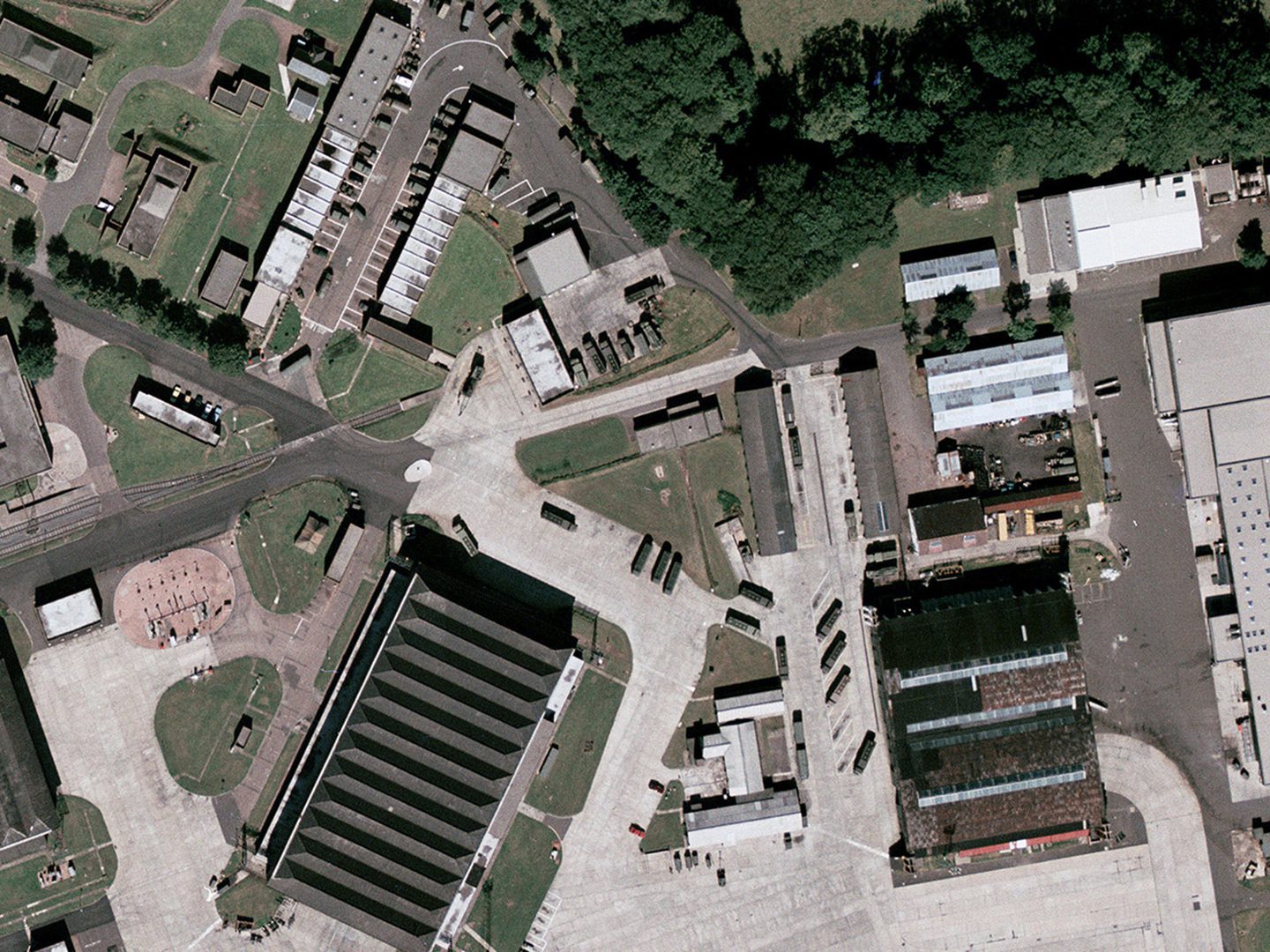
Here, a variety of fuel bowsers, mini-buses and cars can be seen parked outside garages and workshops.
Dispersals
Remote Dispersal
A dispersal is an aircraft parking area situated away from the main technical site, often with some form of protection for individual aircraft. In this image, two English Electric Lightning interceptors are parked on hardstandings flanked by blast walls. To offer more protection against enemy air attack, many military airfields house their combat aircraft in Hardened Aircraft Shelters or Hardened Aircraft Bunkers, which can withstand a nearby bomb blast or chemical attack.
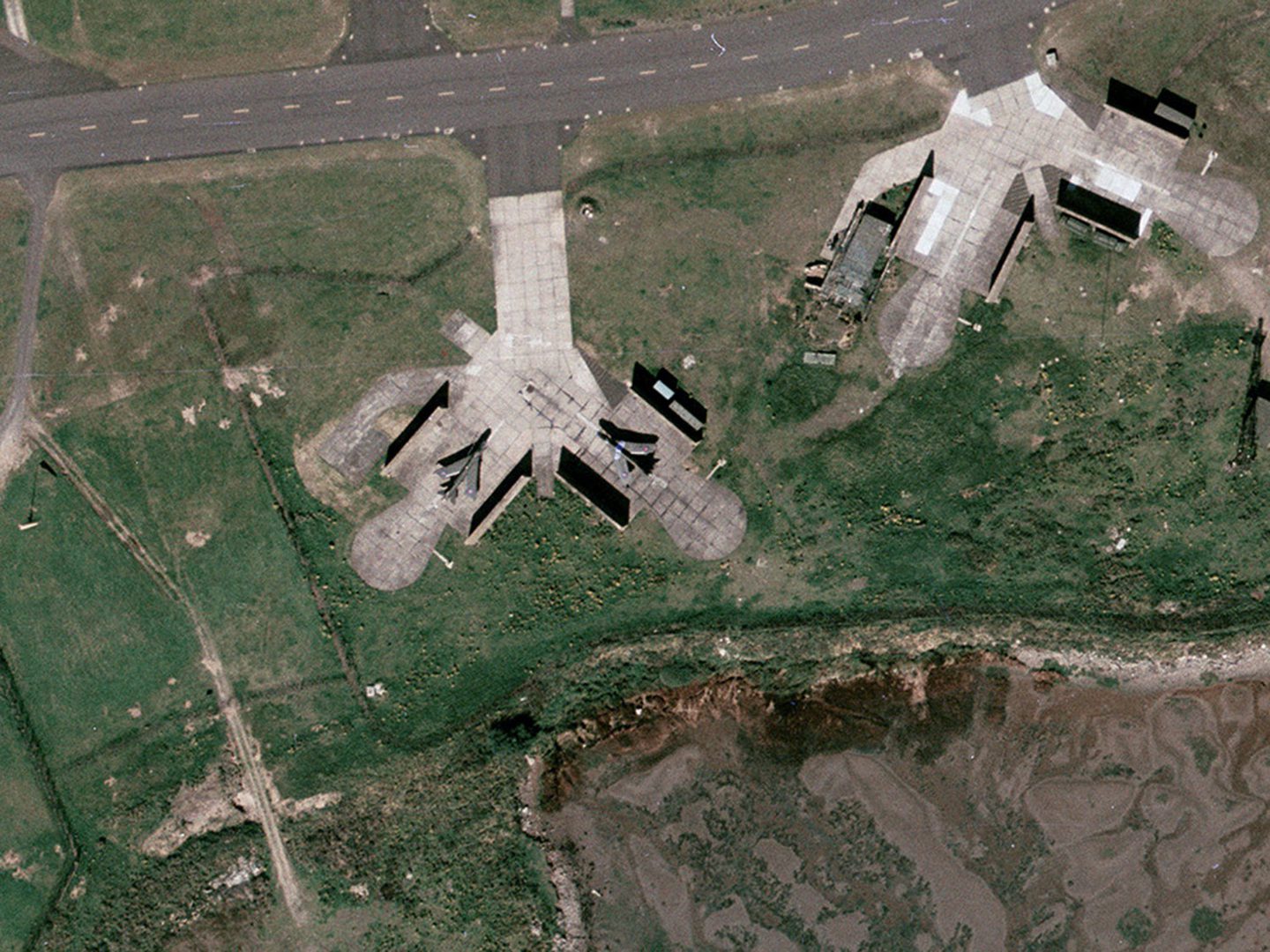
English Electric Lightnings were no longer operating from RAF Leuchars by the time this image was taken in 1978; these may be visiting or derelict aircraft.
Quick Reaction Alert Facility
Situated close to the runway threshold, these two adjoining shelters house armed fighter aircraft assigned to rapid-response air defence duties. This Quick Reaction Alert facility, or Q-shed, is manned around the clock, with the aircraft and crews kept at a high state of readiness. In this image, two McDonnell Douglas Phantom aircraft are parked adjacent to the shed.
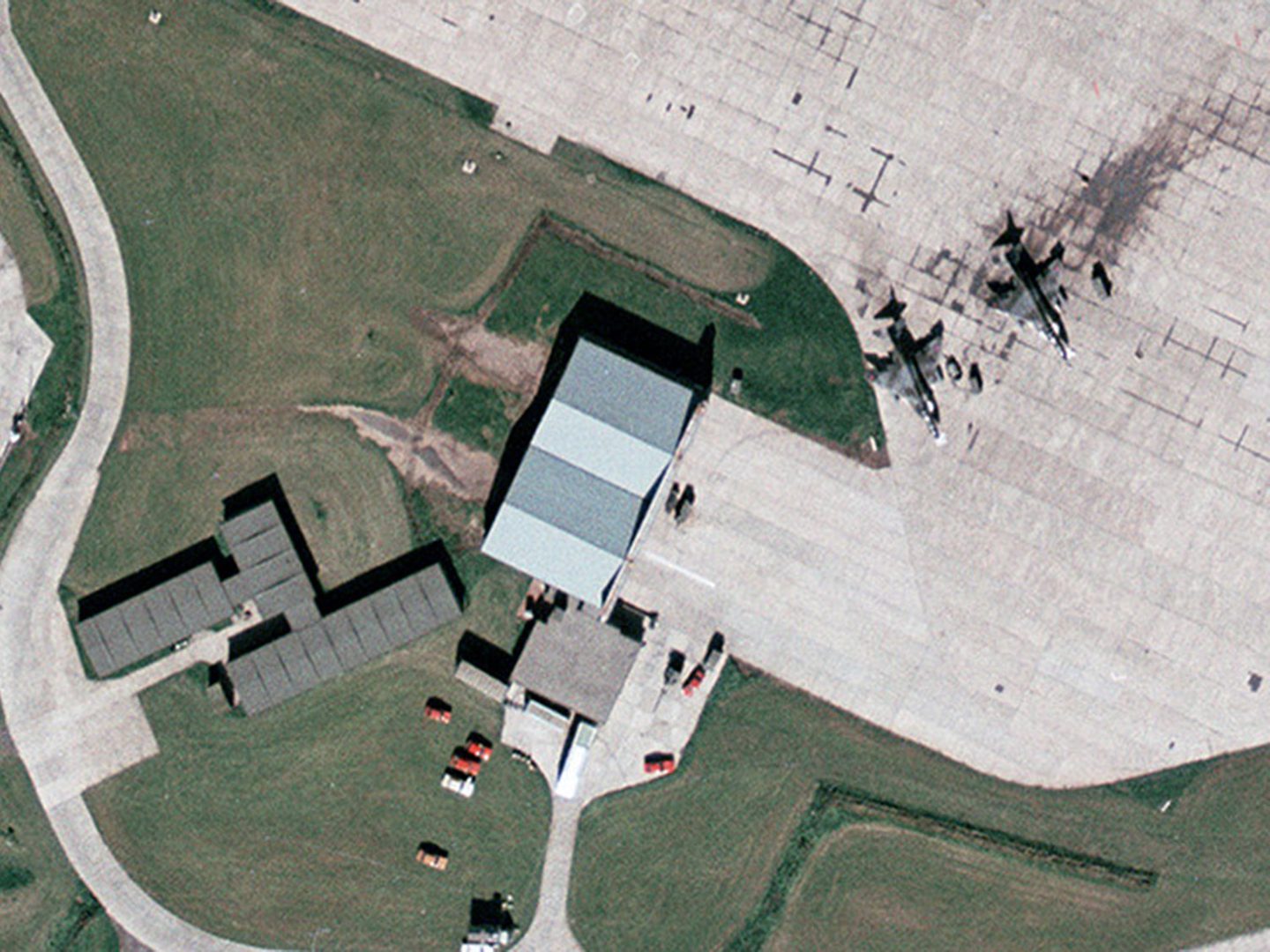
By 1978, the McDonnell Douglas Phantoms at RAF Leuchars were operated by No. 111 Squadron (RAF).
Air Traffic Control
Sited with an uninterrupted view of the airfield, the Air Traffic Control (ATC) tower controls all aircraft movements. A signal square is provided in front of the tower, for aircraft without radio, and meteorological instruments are located to the rear. Fire and Rescue crews and emergency vehicles are located in an adjacent building, with direct road access to the runways. To assist aircraft to manoeuvre safely in crowded skies and bad weather, a variety of electronic navigation aids, instrument landing and precision approach radar systems are available to ATC staff.
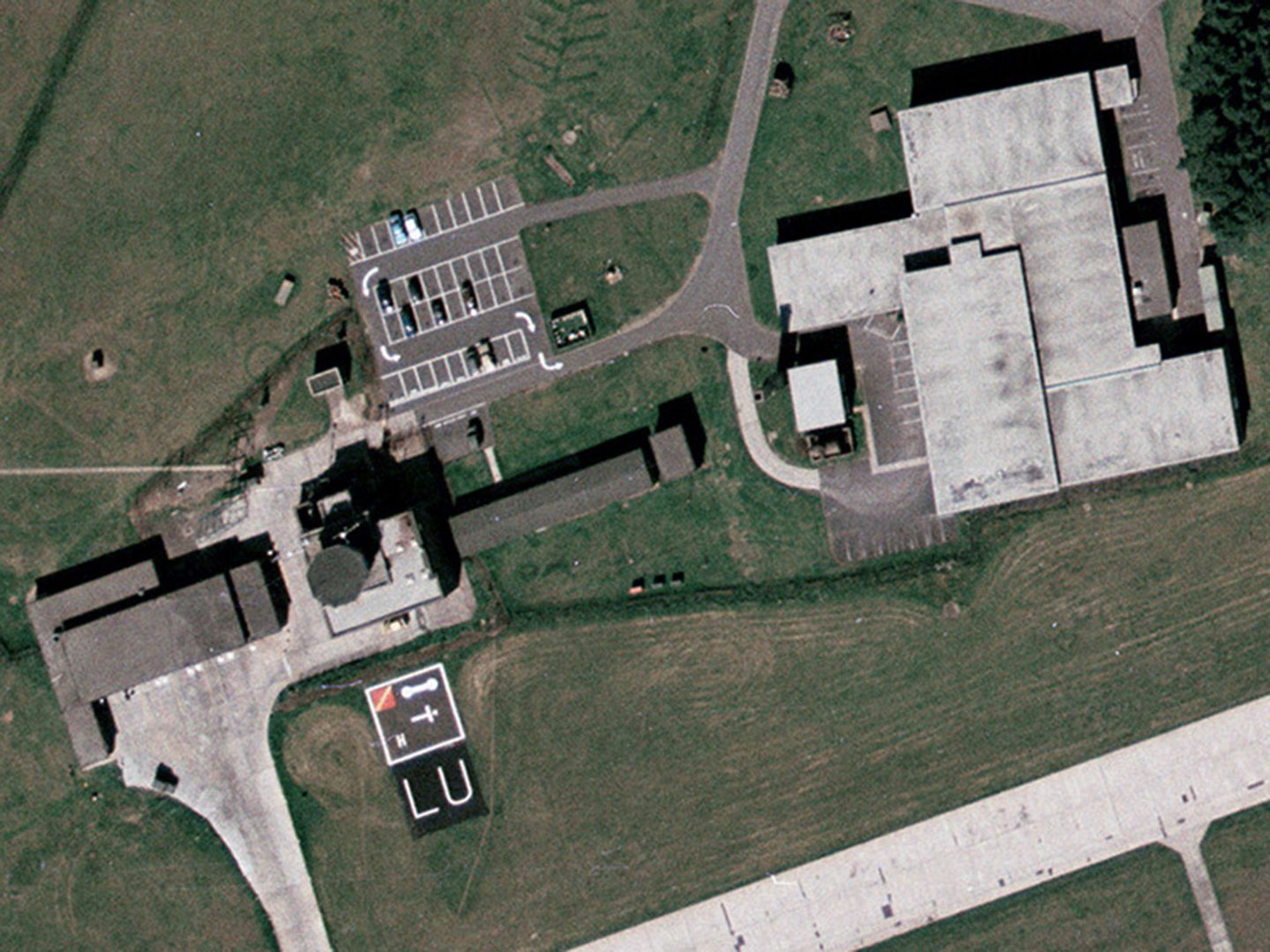
The symbols in the signal square indicate special care must be taken when landing, that aircraft must land, take off and taxi on runways and taxiways only, and the direction to be used when doing so.
Munitions Storage
Bombs, ammunition, missiles, explosives and pyrotechnics are stored in a secure compound, located well away from technical and domestic areas of the airfield. The storage buildings are protected by blast walls or earth revetments and are arranged in a symmetrical pattern, well-served by roads.
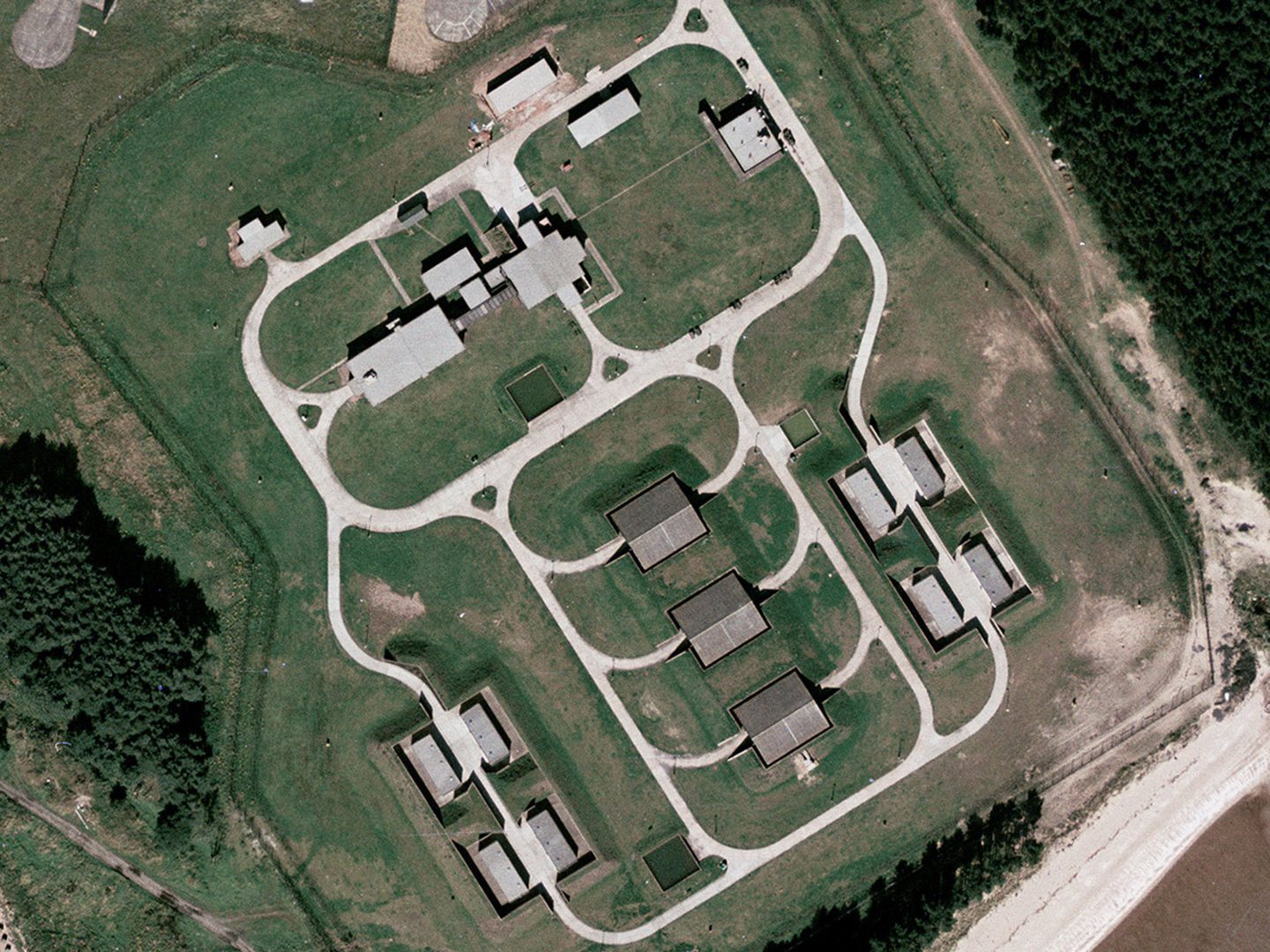
In this image, the munitions storage site is seen to be enclosed by a double security fence.
Fuel Storage
Airfields normally have several bulk fuel storage installations, since intensive aircraft operations consume vast quantities of fuel. These installations are located around the airfield and can be sited unprotected above-ground, semi-buried or completely buried. Fuel bowsers are used to move fuel to the aircraft and each fuel store has a road loop to permit vehicle movement.
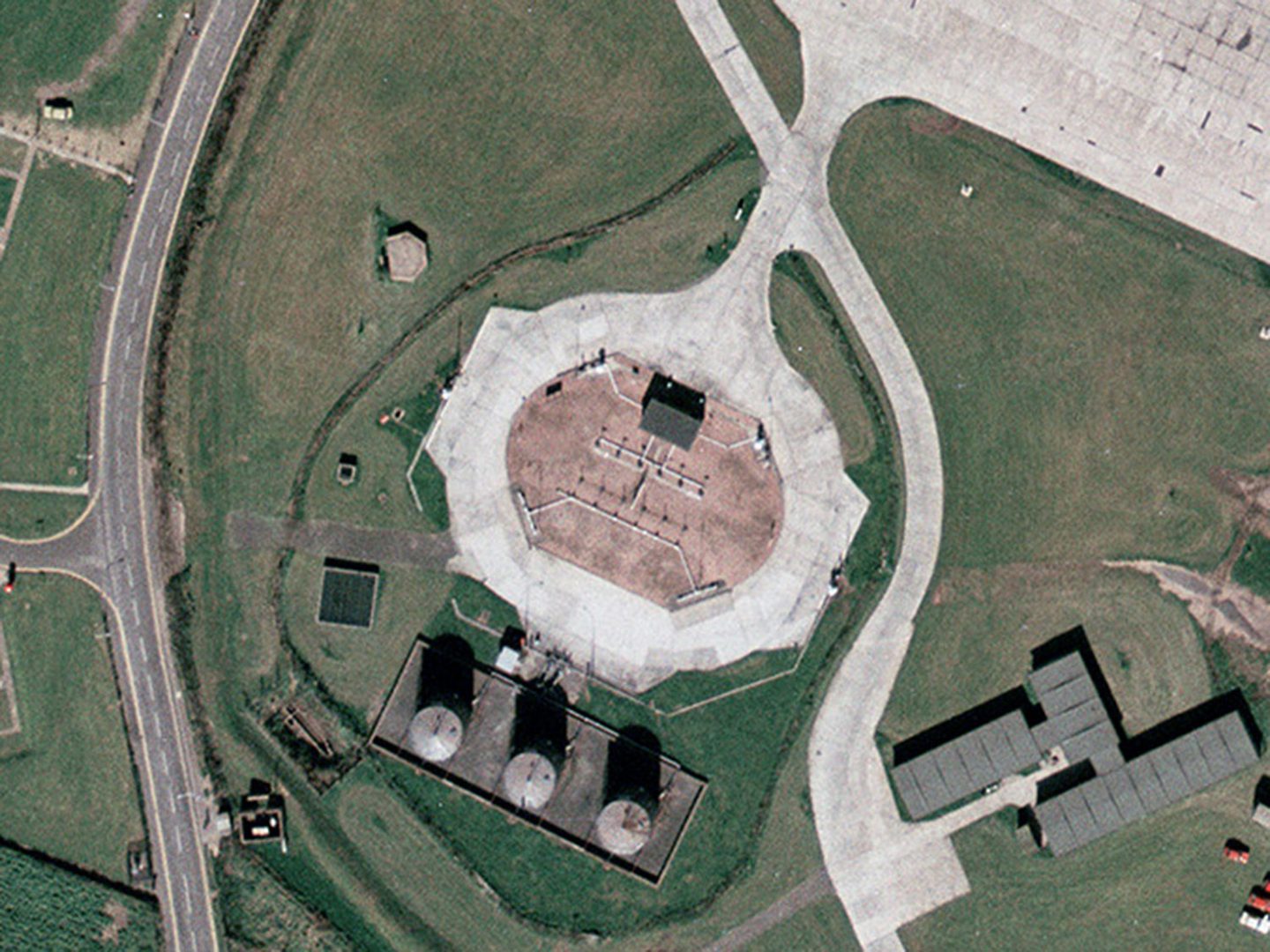
The Bulk Fuel Installation at RAF Leuchars consisted of three tanks (visible here) capable of holding 323,000 litres of aviation fuel, with a further six tanks located underground.
Domestic Areas
Airfields are manned by highly-trained personnel who live in barrack accommodation adjacent to the technical area of the base. Barrack blocks often have a regular plan and are situated adjacent to dining, recreation and car-parking facilities.
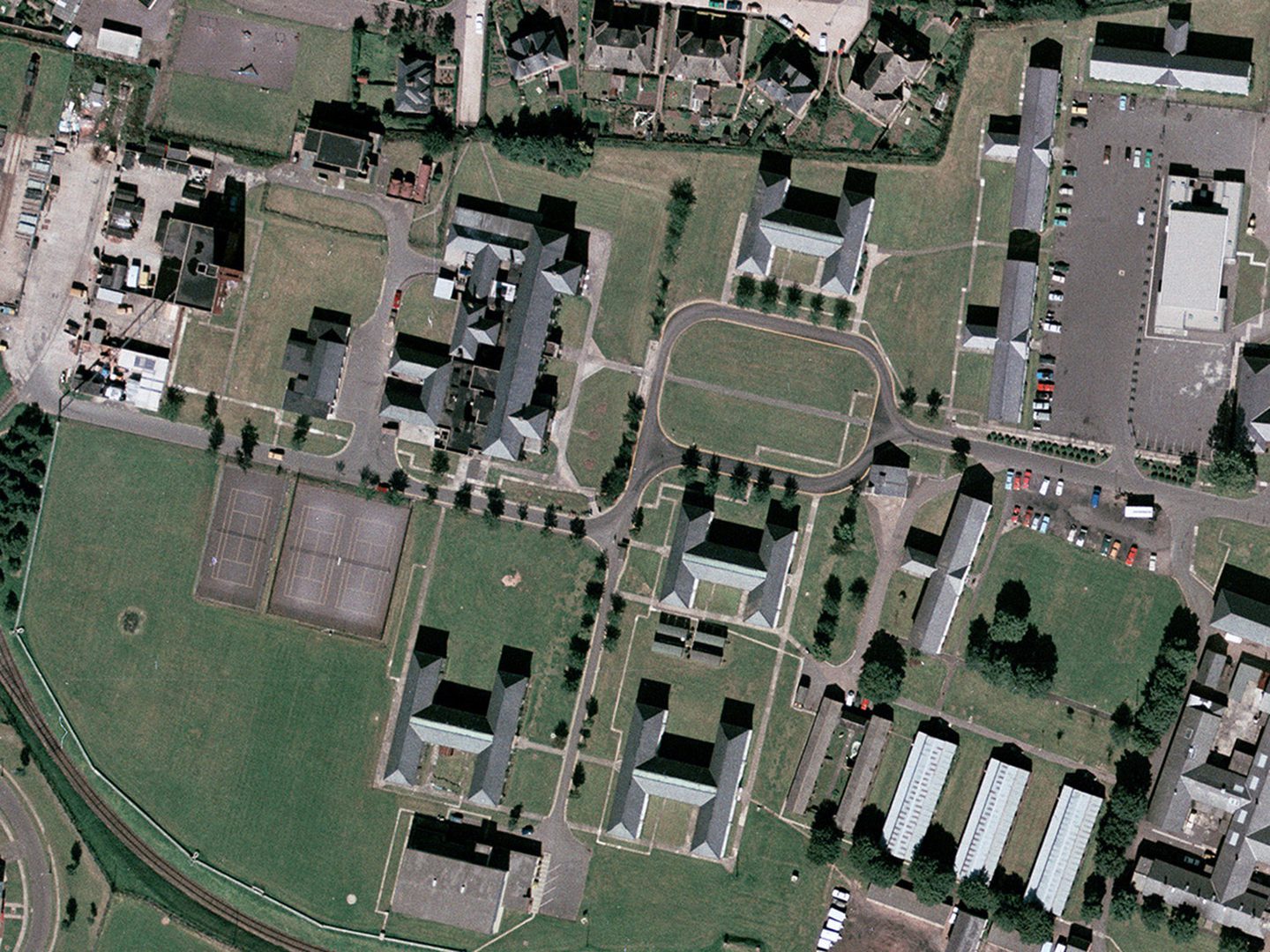
The car park in the top right corner of this image was previously a parade ground.
While the domestic area at RAF Leuchars has changed significantly since 1978, the four identical barrack blocks to the right of the image (three arranged around the carpark) remain intact. They were built in 1935-36 as part of a wider period of expansion across all RAF stations. They are the only examples remaining in Scotland, and would likely have accommodated 4 NCOs and 64 airmen.
Kevin McLaren, Imagery Interpretation Manager