

Spotlight On: Saint Helena, Ascension and Tristan da Cunha
1000 miles from the coast of Africa and nearly 1500 miles from the coast of South America, right in the middle of the Atlantic Ocean, a small collection of islands forms one of Britain's remotest Overseas Territories. The British Overseas Territory (BOT) of Saint Helena, Ascension and Tristan da Cunha comprises of half a dozen islands, with c.5,500 people living on three of them – primarily St Helena.
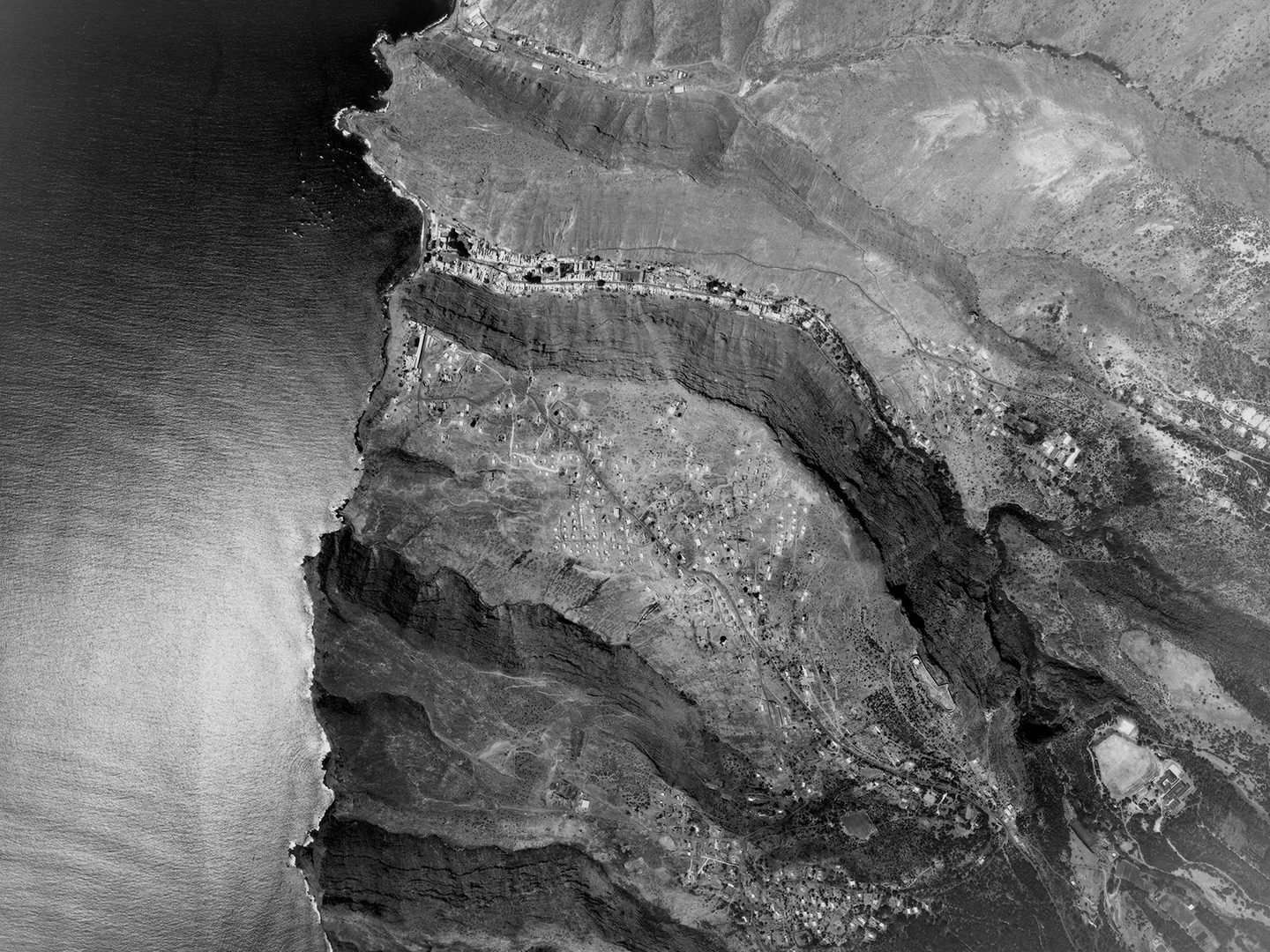
Jamestown, the main settlement on the island of St Helena and administrative capital of the entire British Overseas Territory; Collection: DOS, Sortie: 1PRUA/RAF/0588, Frame: 0214 (28 February 1989)
Saint Helena
When Portuguese sailors discovered the islands at the start of the sixteenth century, they were uninhabited. These volcanic outcrops became vital staging and re-stocking points for ships returning to Europe from Asian colonies. However, British privateers began to lie in wait near the islands to raid the Portuguese ships, and by the middle of the seventeenth century, Saint Helena was being governed by the British East India Company.
Perhaps St Helena's most famous resident is Napolean Bonaparte. In 1815, following his defeat at Waterloo and subsequent capture, Napolean was exiled to St Helena by the British Government. He lived there for six years until his death in 1821, an increasingly lonely, miserable existence.
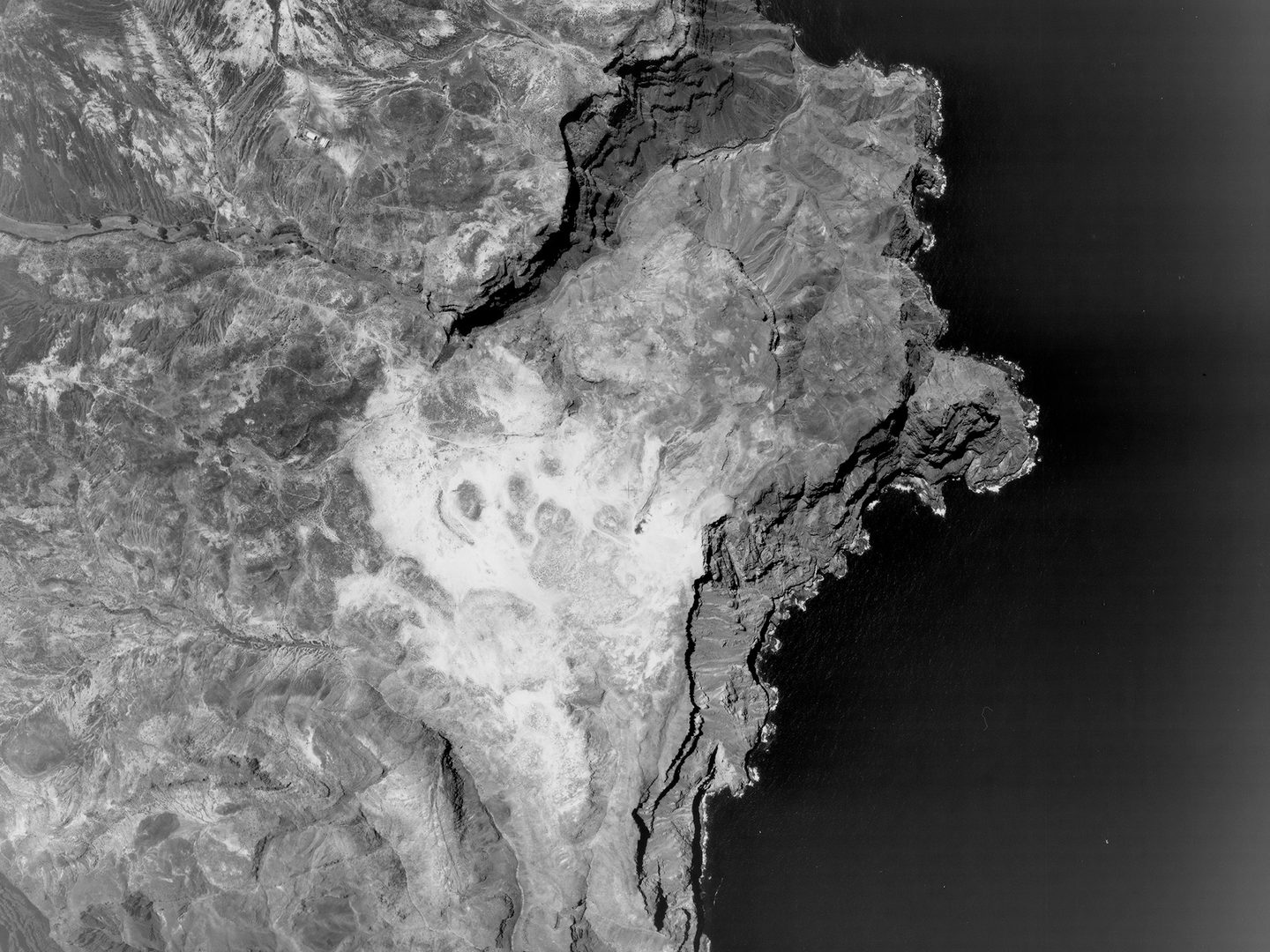
The west coast of St Helena, where the St Helena airport was constructed in 2011-2015; Collection: DOS, Sortie: 1PRUA/RAF/0588, Frame: 0191 (28 February 1989)
Tristan da Cunha
Although part of the same BOT as St Helena, Tristan da Cunha is some 1,500 miles to the south. It has had a permanent settlement since the beginning of the nineteenth century, which was renamed Edinburgh of the Seven Seas in honour of Prince Alfred, Duke of Edinburgh.
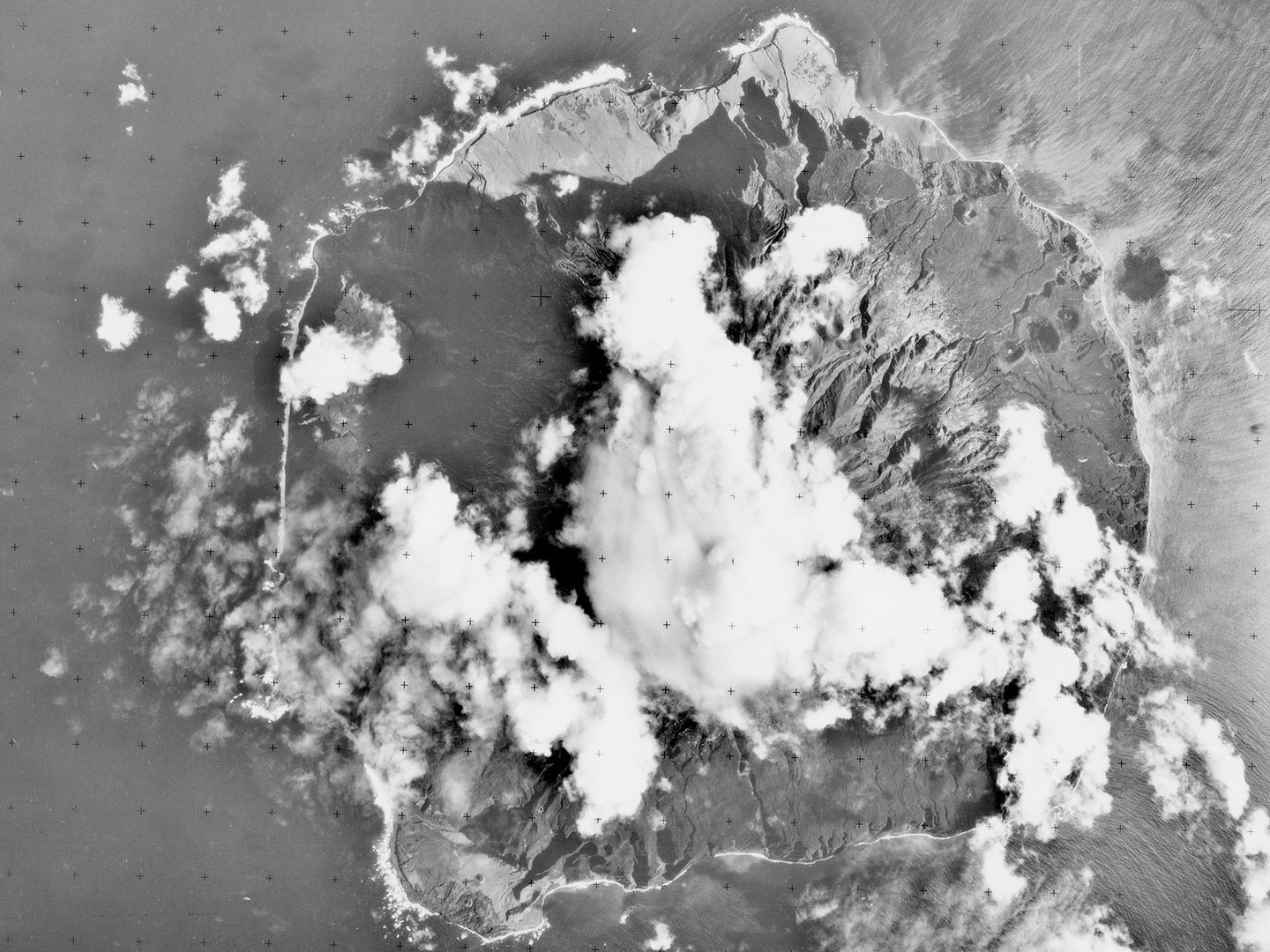
Tristan da Cunha, the most southerly permanently inhabited island in the BOT, with Edinburgh of the Seven Seas on its north coast; Collection: DOS, Sortie: 543B/RAF/0022, Frame: 0055 (21 March 1961)
Tristan da Cunha is sometimes described as the world's most isolated permanent community. During the Second World War, Tristan da Cunha was designated HMS Atlantic Isle and was used to monitor German U-boat activity.
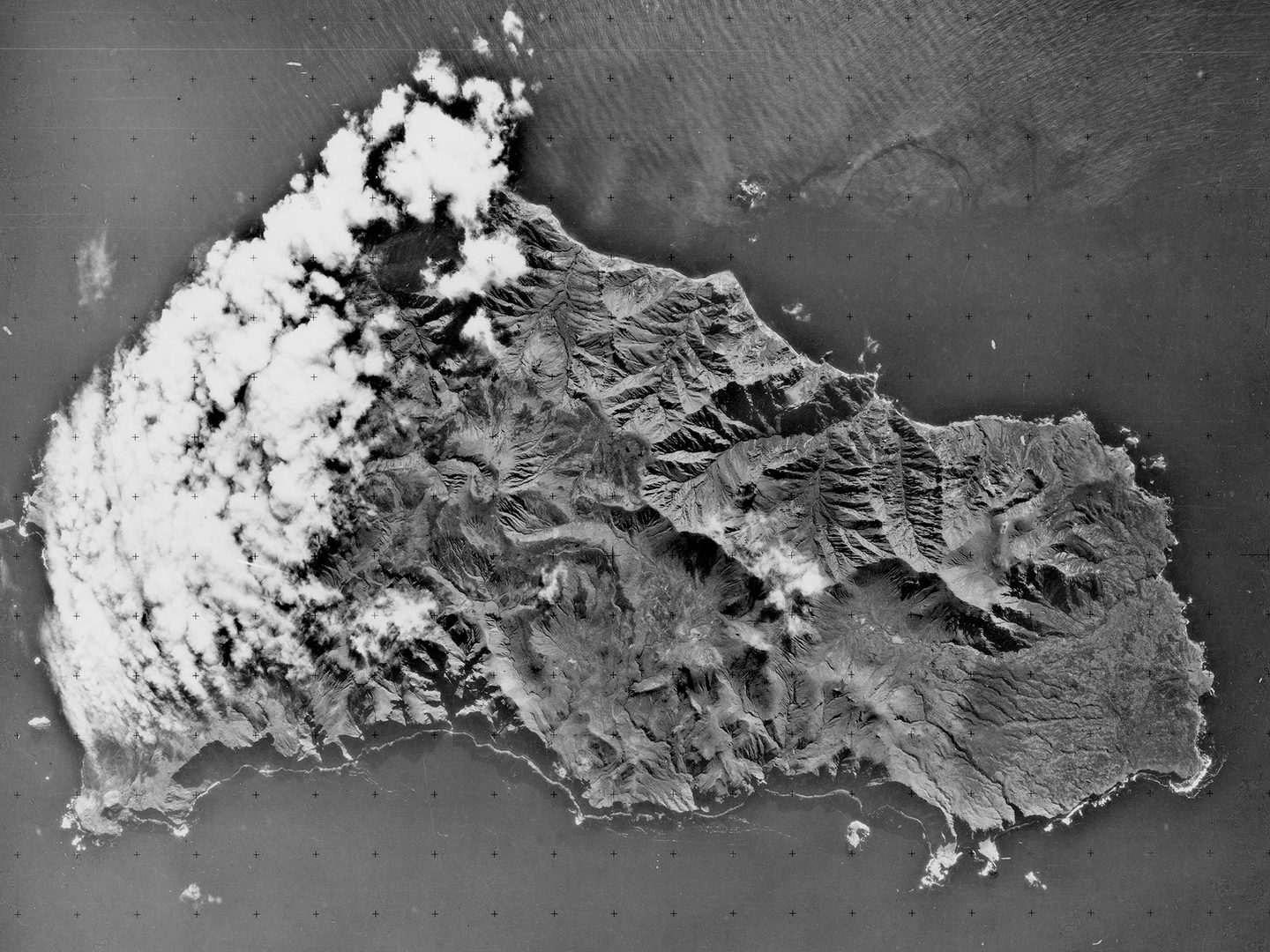
The remote Gough Island - c.250 miles south-east of Tristan da Cunha - is one of the most important seabird colonies in the world; Collection: DOS, Sortie: 543B/RAF/0023, Frame: 0011 (24 March 1961)
Ascension Island
The third constituent part of the Territory is Ascension Island, 800 miles to the north of St Helena. Much like Tristan da Cunha, it was discovered by the Portuguese in the sixteenth century and permanently settled by the British at the start of the nineteenth century.
Ascension's location midway between the coasts of South America and Africa made it a vital location during the Second World War. The United States Government developed Wideawake Airfield (named after the nearby colony of constantly calling sooty terns) on the island during the Second World War. This provided a base for anti-submarine patrols and a stopping point for aircraft on their way from the United States to Europe and Africa.
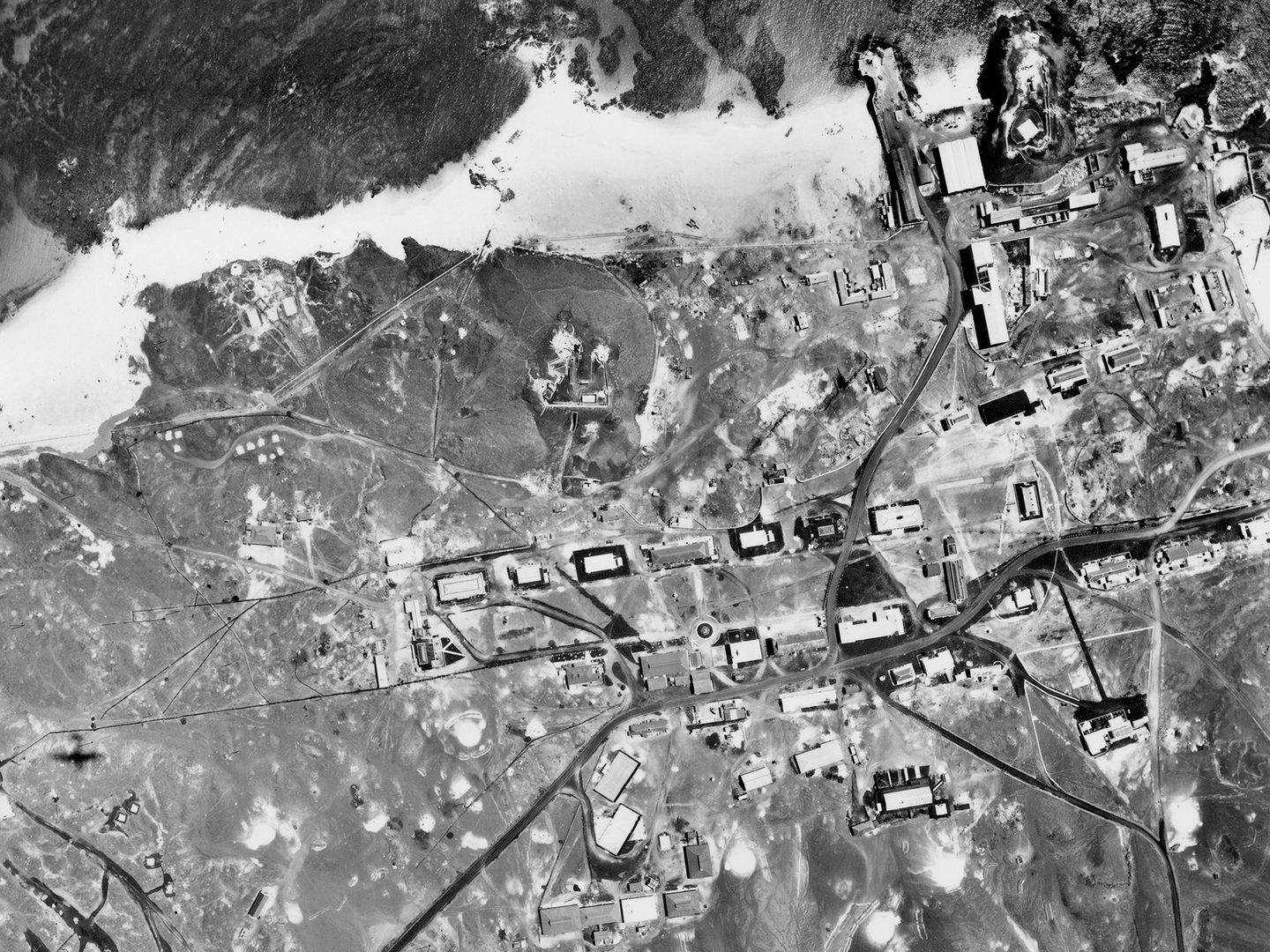
Georgetown is the capital and main settlement on Ascension Island; Collection: DOS, Sortie: 1371/USAF/M/0148, Frame: 0042 (20 August 1958)
Wideawake continued to play a key role in the Space Race and Cold War. Its runway was expanded for potential use by the Space Shuttle in an emergency, becoming at the time the world's longest runway. Both NASA and the European Space Agency track and monitor activity from Ascension. The island is also a terminal for the Atlantic Missile Impact Location System, an acoustic system for locating the splashdown of test nose cones. This system inadvertently picked up signals from what was almost certainly a covert Israeli nuclear weapon test in 1979.
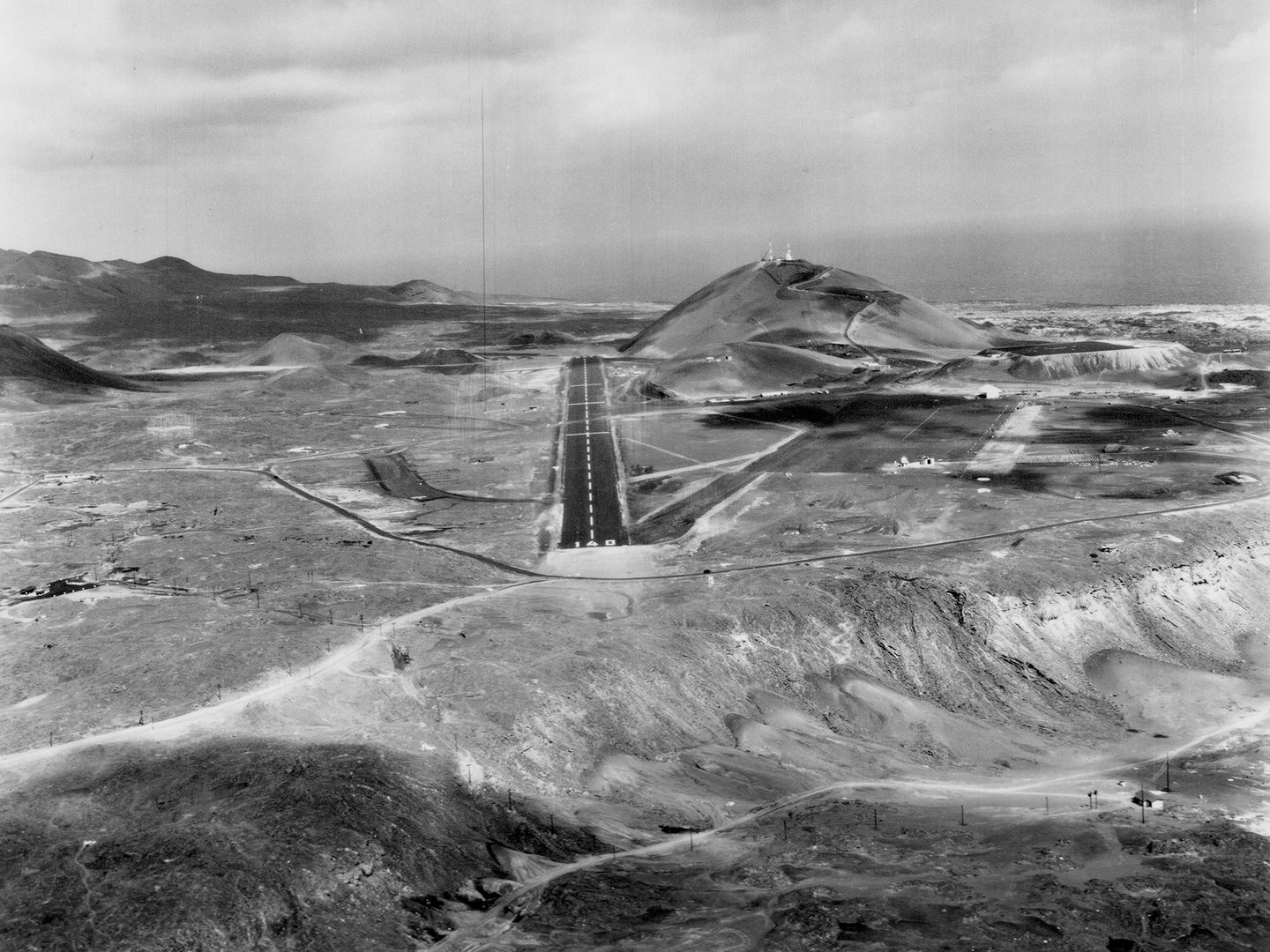
Wideawake Airfield has had the distinction both of having the world's longest runway and being the world's busiest airport; Collection: DOS, Sortie: 1371/USAF/M/0147, Frame: 0005 (03 October 1958)
During the Falklands War, the RAF deployed a fleet of Avro Vulcan bombers and Handley Page Victor tankers at Wideawake. Ascension was used as a staging post during the war and as a base to supply British forces in the Falklands.
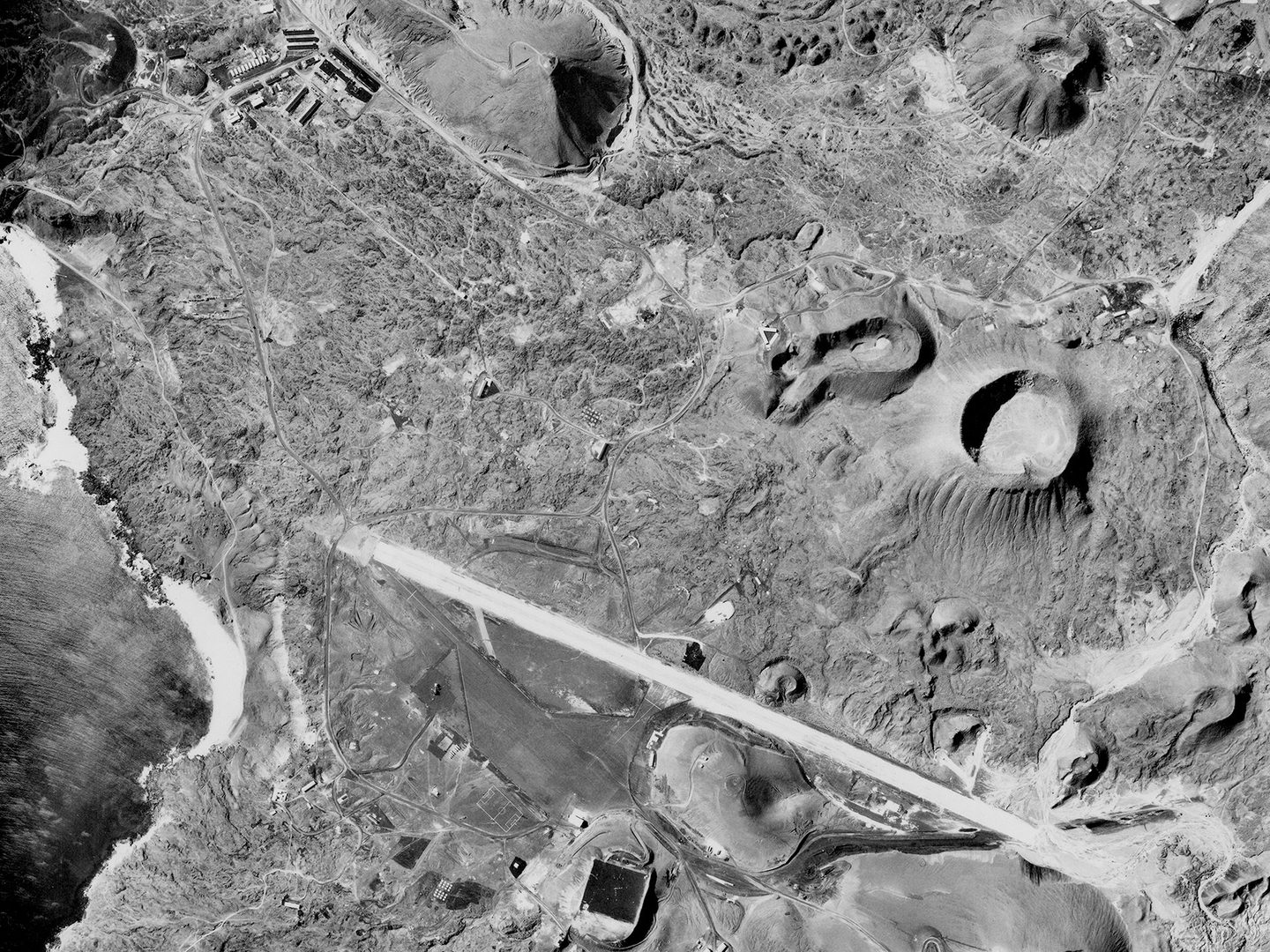
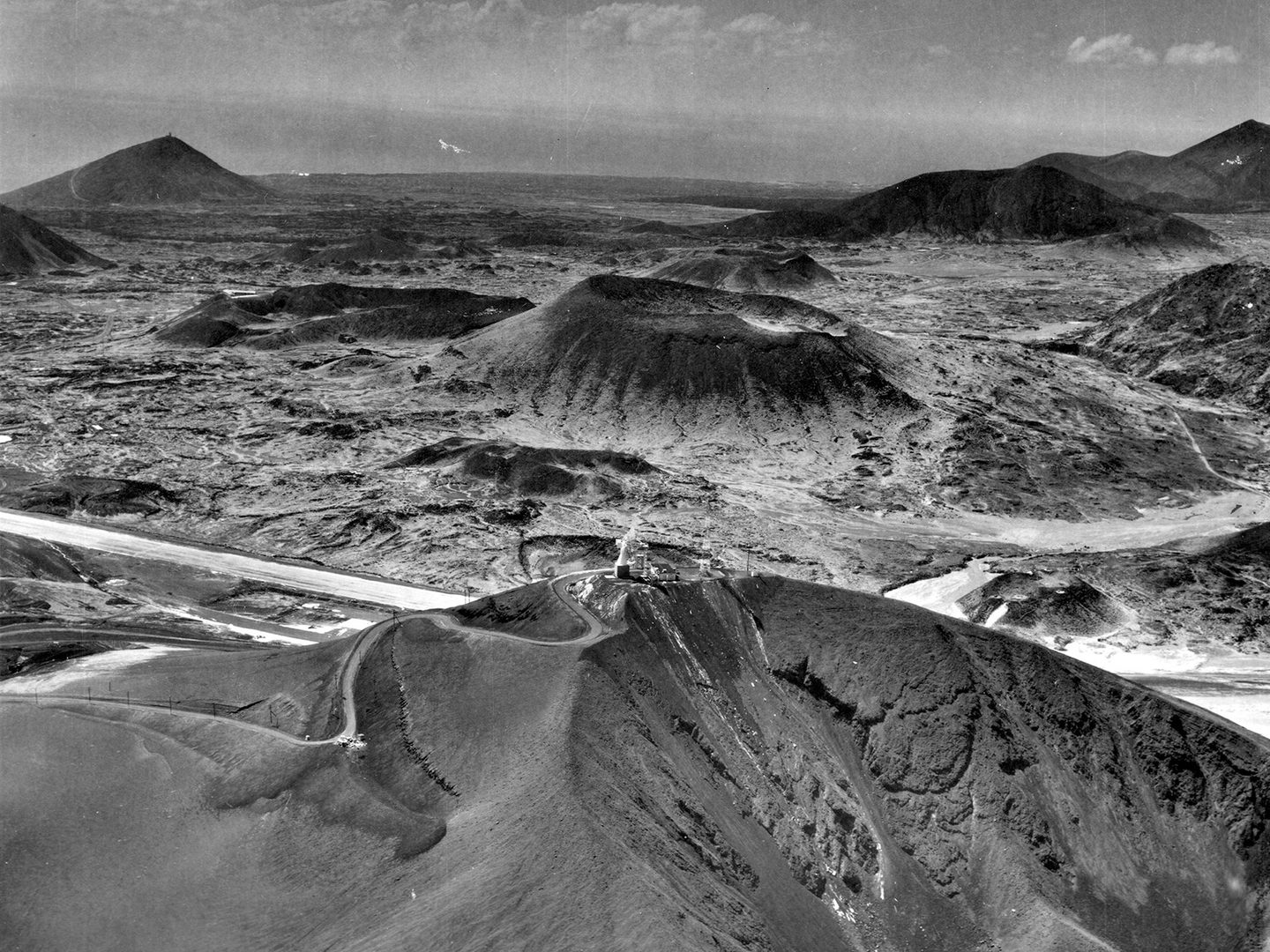
The volcanic nature of the largely barren landscape of Ascension Island is clear in this image; Collection: DOS, Sortie: RADER/GL, Frame: V_0072 (18 May 1962)
Since the late 1950s, Saint Helena, Ascension and Tristan da Cunha have been photographed by aircraft flown by the Royal Navy, RAF, USAF and private aerial survey firms. This imagery, now held by NCAP, provides a fascinating insight into these remote, volcanic specks of rock deep in the Atlantic.
Ben Reiss, NCAP Collections Manager
Saint Helena Imagery Directorate of Overseas Surveys Spotlight On: Pitcairn


