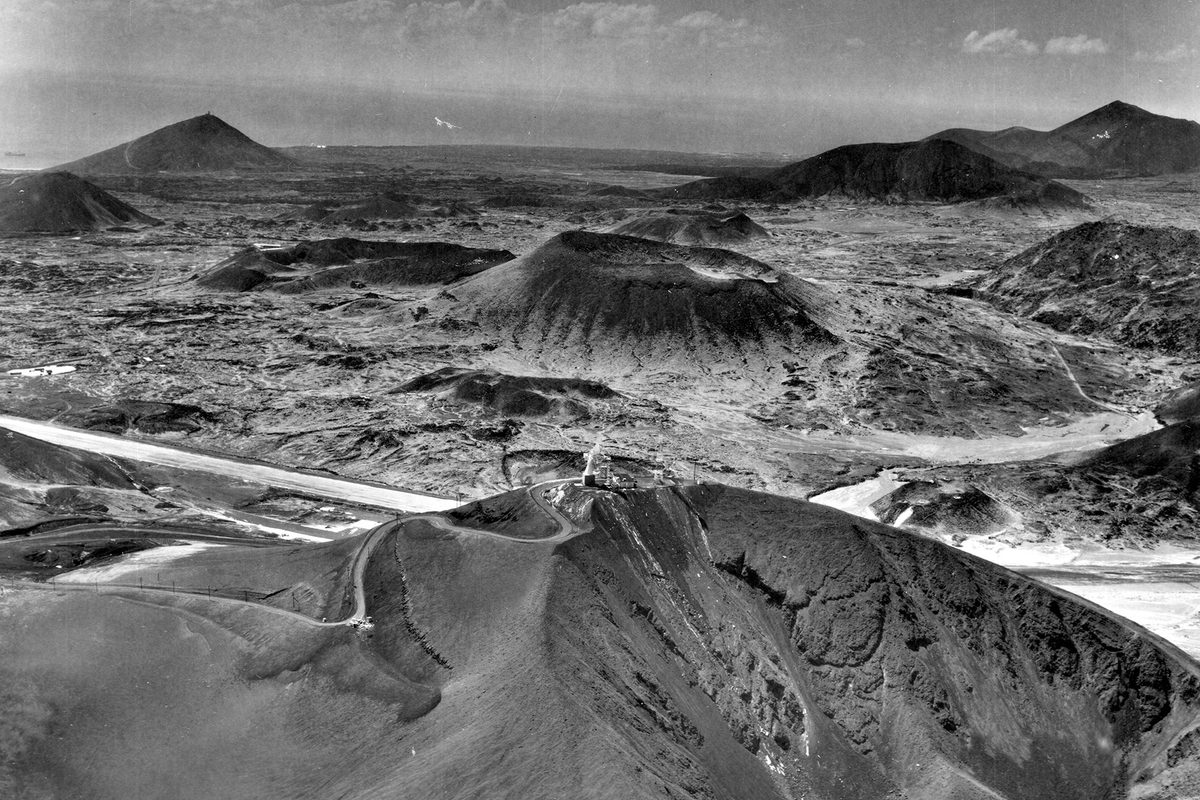
Anatomy Of: Hydroelectric Power Stations
In the first of our 'Anatomy Of' series of articles, we look at the way aerial images held by the National Collection of Aerial Photography reveal how the power of moving water is harnessed to produce electricity in hydroelectric power stations. By releasing water from a reservoir or by using the constant flow of a river to turn the blades of a turbine, electricity can be generated from this natural and renewable source.
Hydroelectricity in the United Kingdom
Using hydropower to generate electricity has a long history in the United Kingdom (the use of hydropower to drive wheels and mills has been estimated to go back millennia around the world), dating to 1878 at Cragside House, Northumberland, where a hydroelectric generator was first used to power electric lights. The first hydroelectric scheme in Scotland came not long after, in 1895 at Loch Ness, swiftly followed by the Kinlochleven hydroelectric scheme, which reputedly made the eponymous village the first in the UK where every house was powered by electricity.
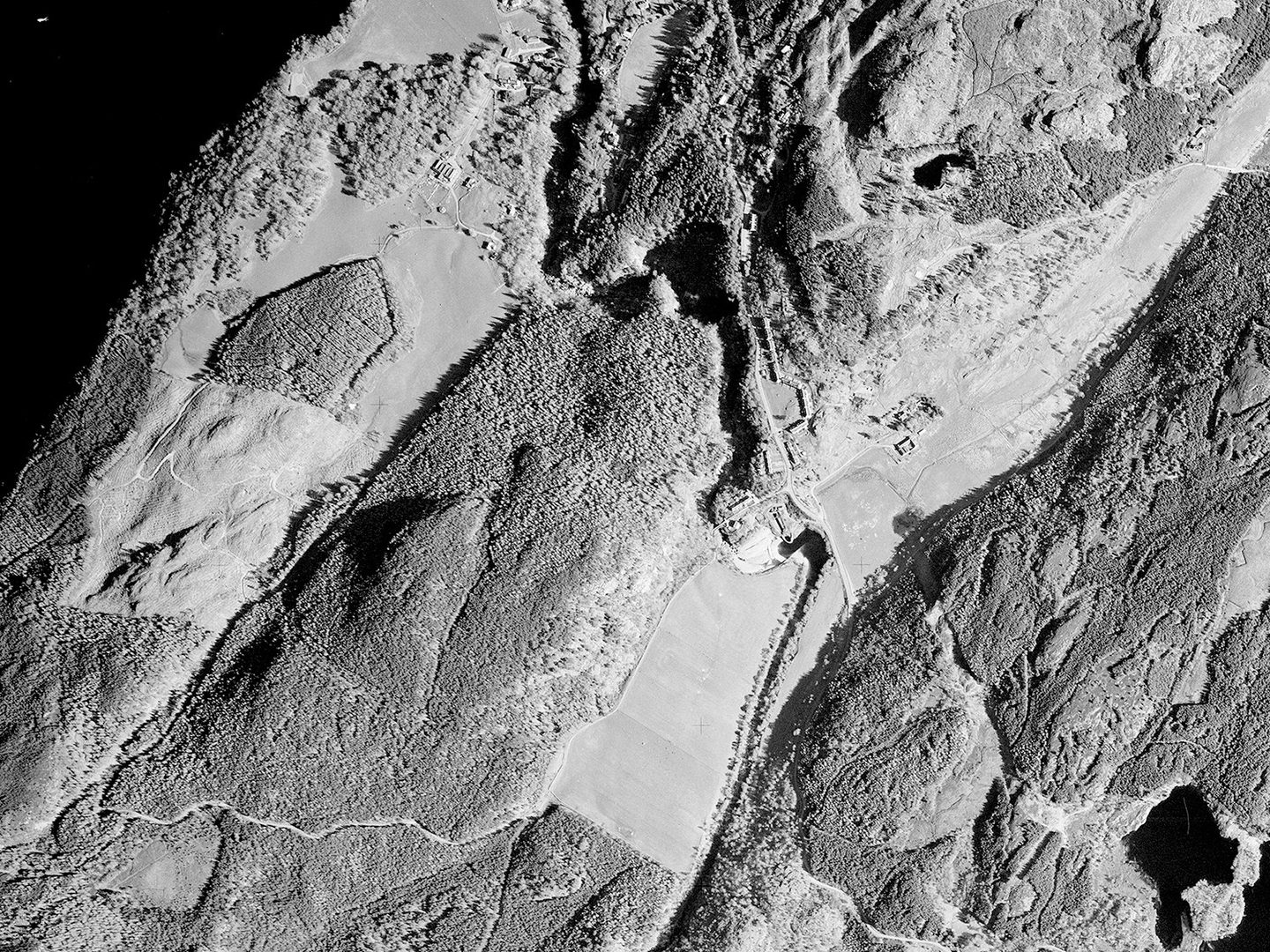
The Falls of Foyers hydroelectric scheme, the first in Scotland, built to power an aluminium smelting plant on the shore of Loch Ness; Collection: SCOT, Sortie: ASS/61289, Frame: 0140 (05 May 1989)
Today, the UK is home to more than 1,600 hydroelectric schemes, which between them have the capacity to generate up to 2 gigawatts of electricity, and which create 2% of annual UK electricity generation. Most hydroelectric schemes use the potential energy of dammed water to drive water turbines, which in turn drive a generator to produce electricity. These schemes generally fall into four main types of hydroelectric power station.
High Dam
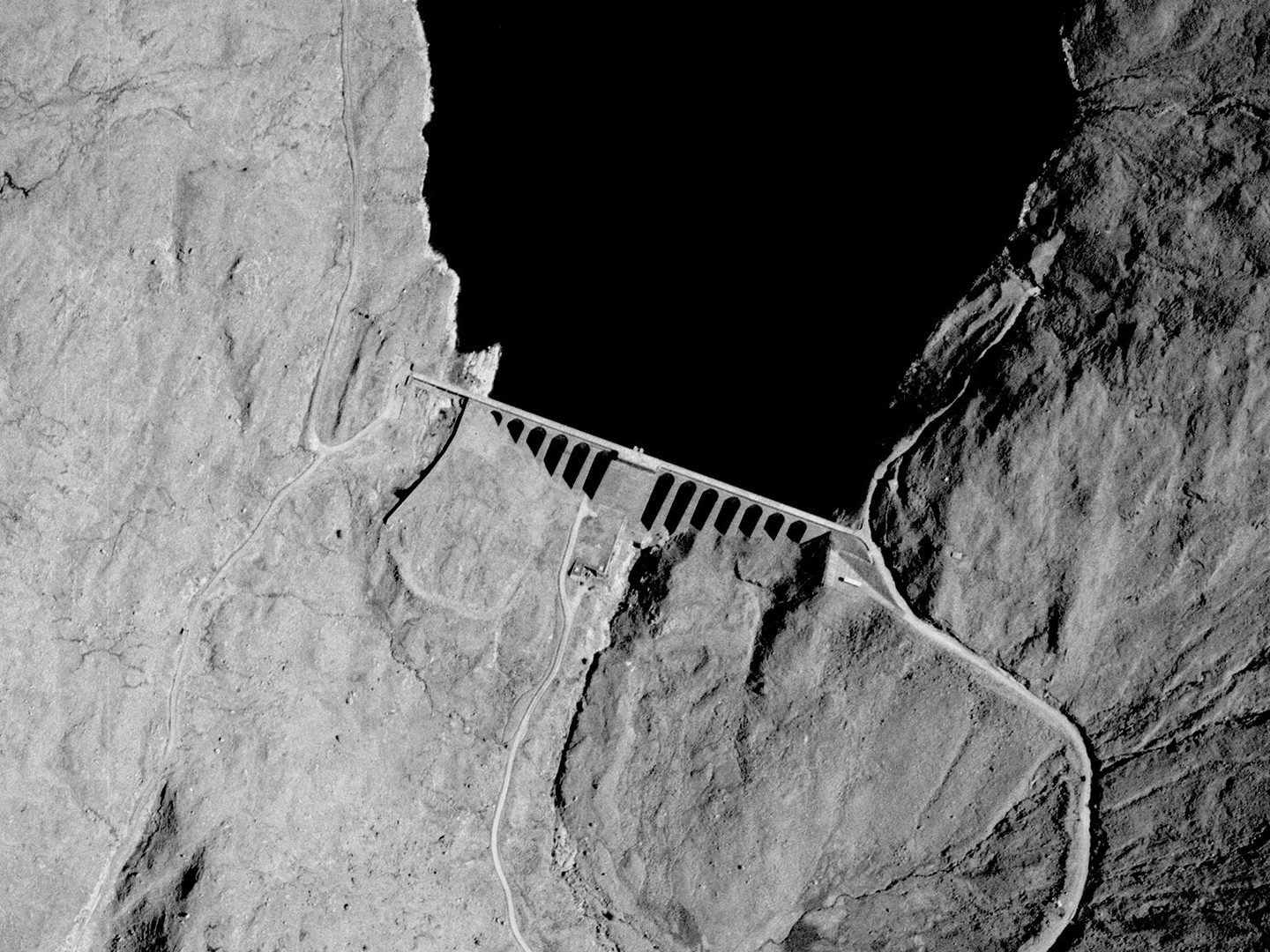
This type of plant uses the head of water pressure held in a reservoir behind a dam to provide energy for the turbines. Water falls through penstocks (wide pipes) within the dam to a generator hall at its base. Electrical transformers and switchgear are often situated adjacent to the dam or downstream.
The Lubreoch Dam and sluices (a High Dam type of hydroelectric power station) at Loch Lyon, part of the Breadalbane Hydroelectric Scheme; Collection: SCOT, Sortie: ASS/50388, Frame: 0108 (15 May 1988)
Penstock
A Penstock station is similar to a High Dam one. The difference is that in this case, the reservoir is normally held by a dam at a higher altitude than the generator hall, and water falls through the penstocks from the dam to the turbines in a generator hall by gravity. A surge tower maintains the head of water pressure in the penstocks and can sometimes be seen uphill from the generator hall. White water flowing from the tailrace in front of the generator hall indicates that the turbines are in operation.
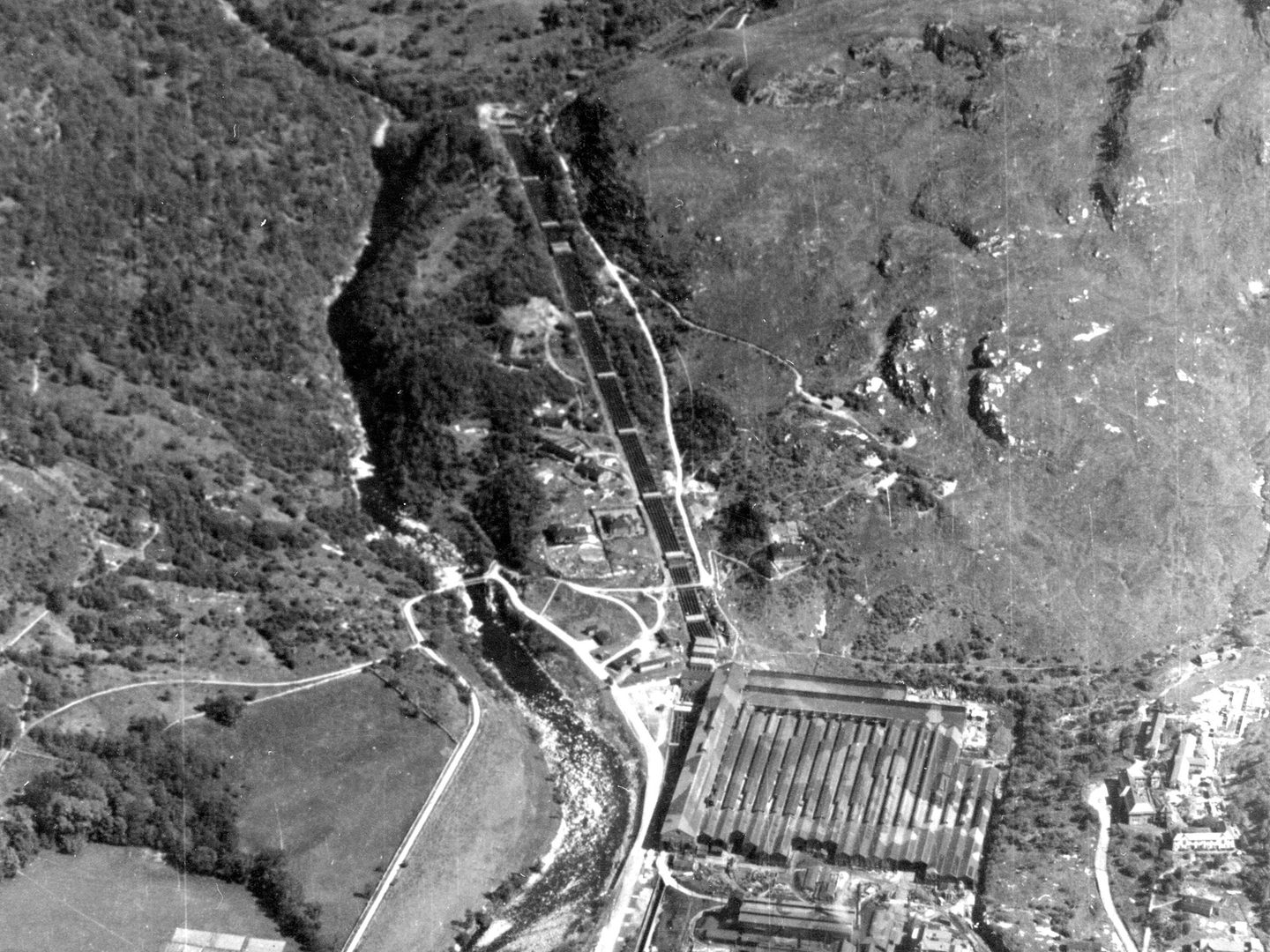
The Kinlochleven hydroelectric scheme, with penstocks carrying water from Blackwater Reservoir to the camouflaged power house below; Collection: SCOT, Sortie: CAM/012, Frame: 0454 (20 June 1941)
Pumped Storage
Resembling a conventional penstock system, a pumped storage plant uses cheap electricity at off-peak times to pump water from a lower reservoir to a higher one. At times of high demand, this water is released to flow back down the penstocks to generate more electricity.
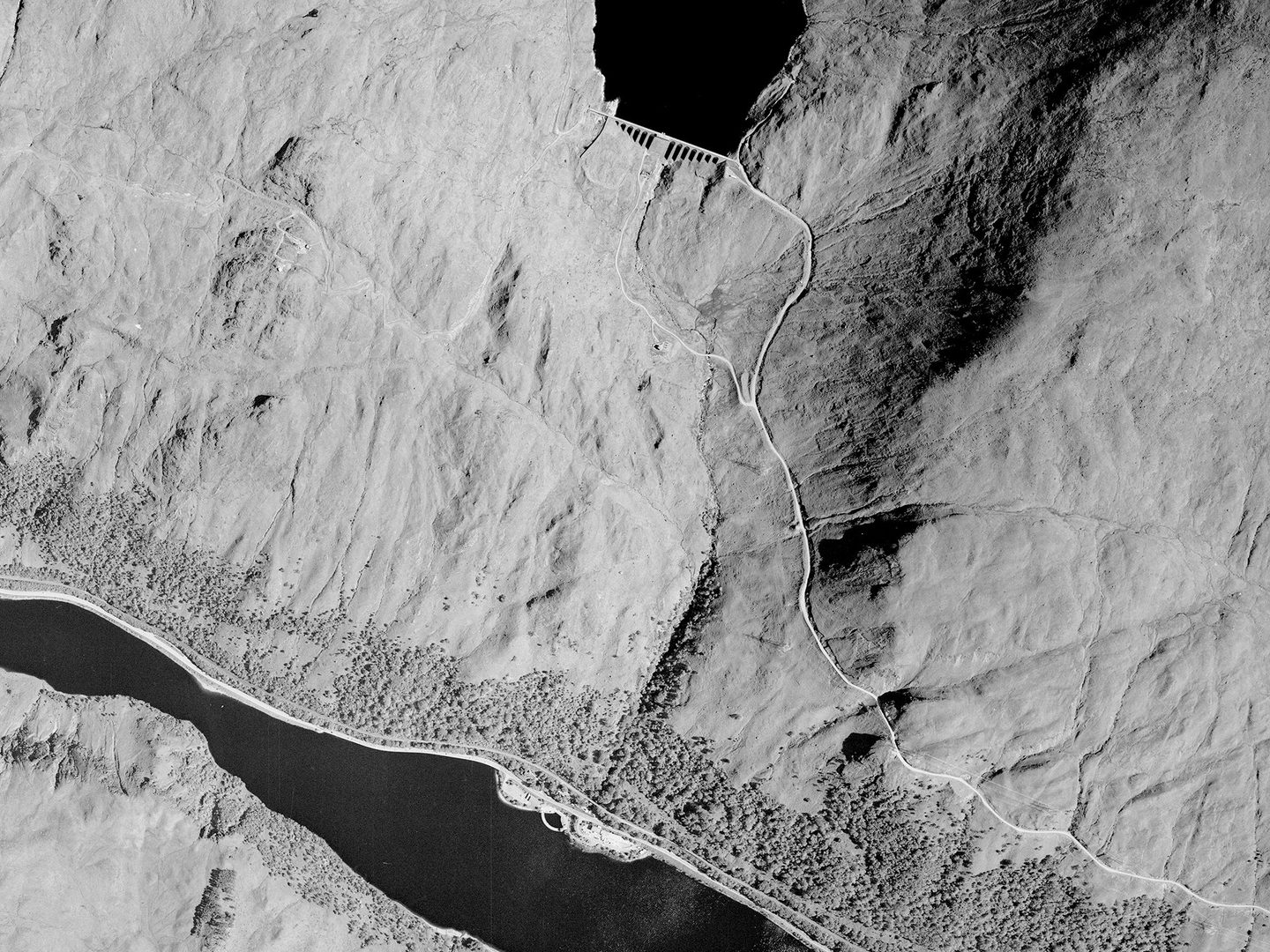
The penstocks and turbine hall of the Pumped Storage hydroelectric scheme at Cruachan are buried within the mountain; Collection: SCOT, Sortie: ASS/51088, Frame: 0012 (08 June 1988)
Low Dam or Run-of-the-River
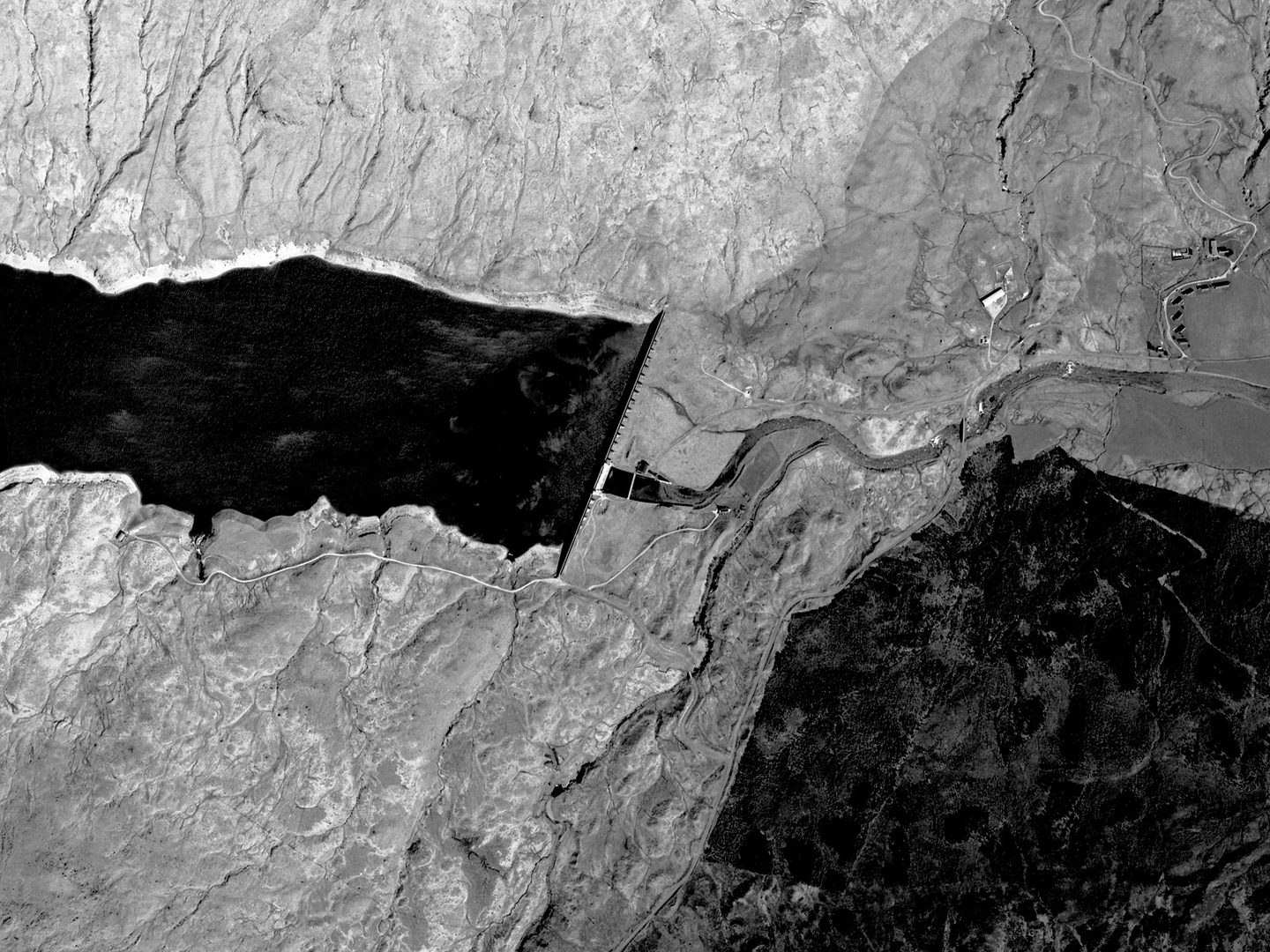
Low dams are situated across broad or deep rivers and electric power is generated from the steady flow of water through the turbines. A fish-ladder or boat lock can be incorporated in the scheme, adjacent to the dam, to allow fish to migrate and river traffic to pass.
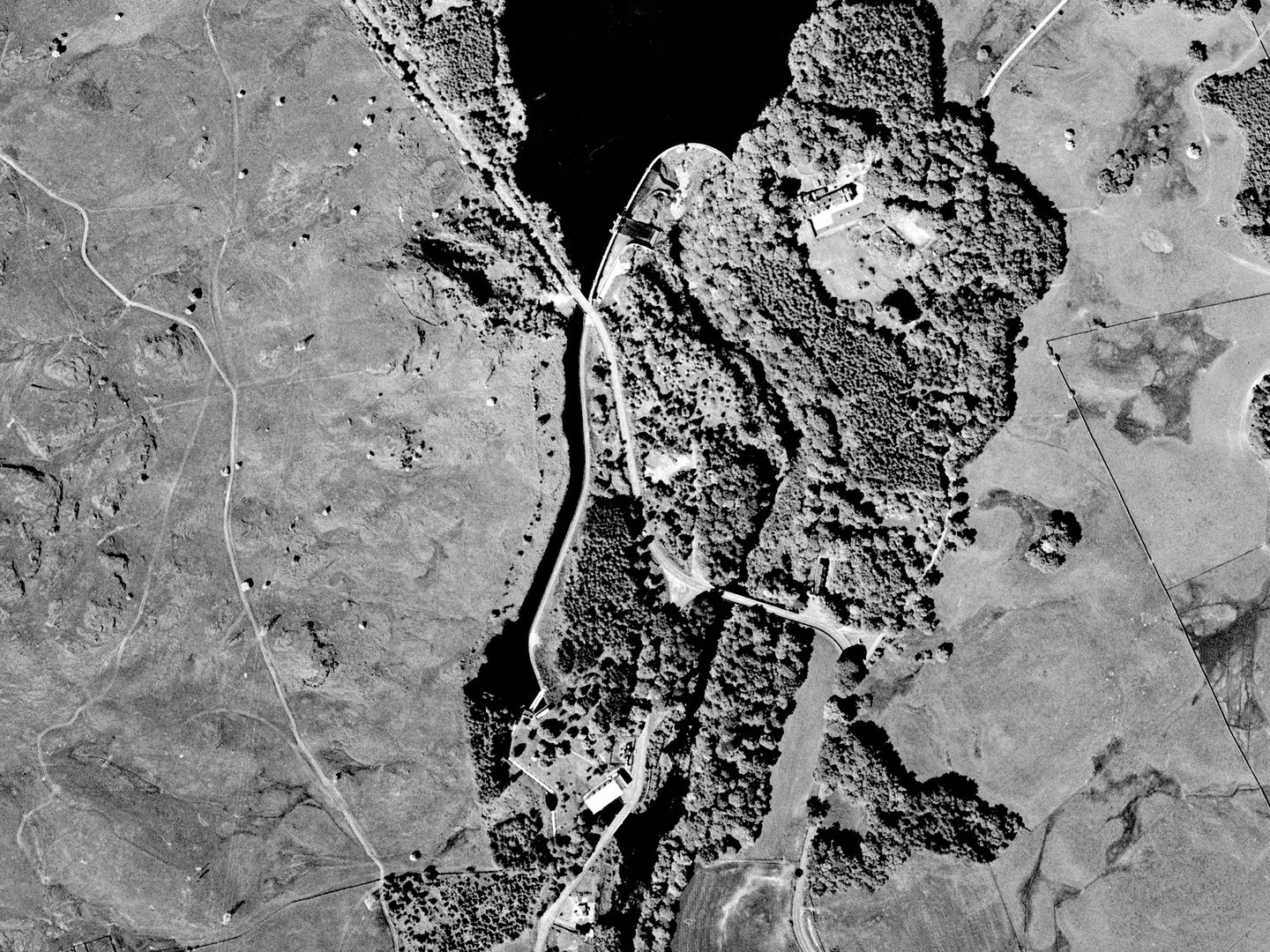
A Low Dam scheme across the Water of Ken at St John's Town of Dalry, Dumfries and Galloway, part of the Galloway Hydro Scheme; Collection: SCOT, Sortie: ASS/62288, Frame: 0160 (10 June 1988)
Other hydroelectric power schemes make use of tidal power, or existing water pipelines and other waterways ('conduits') to generate electricity.
Loch Sloy Hydroelectric Scheme
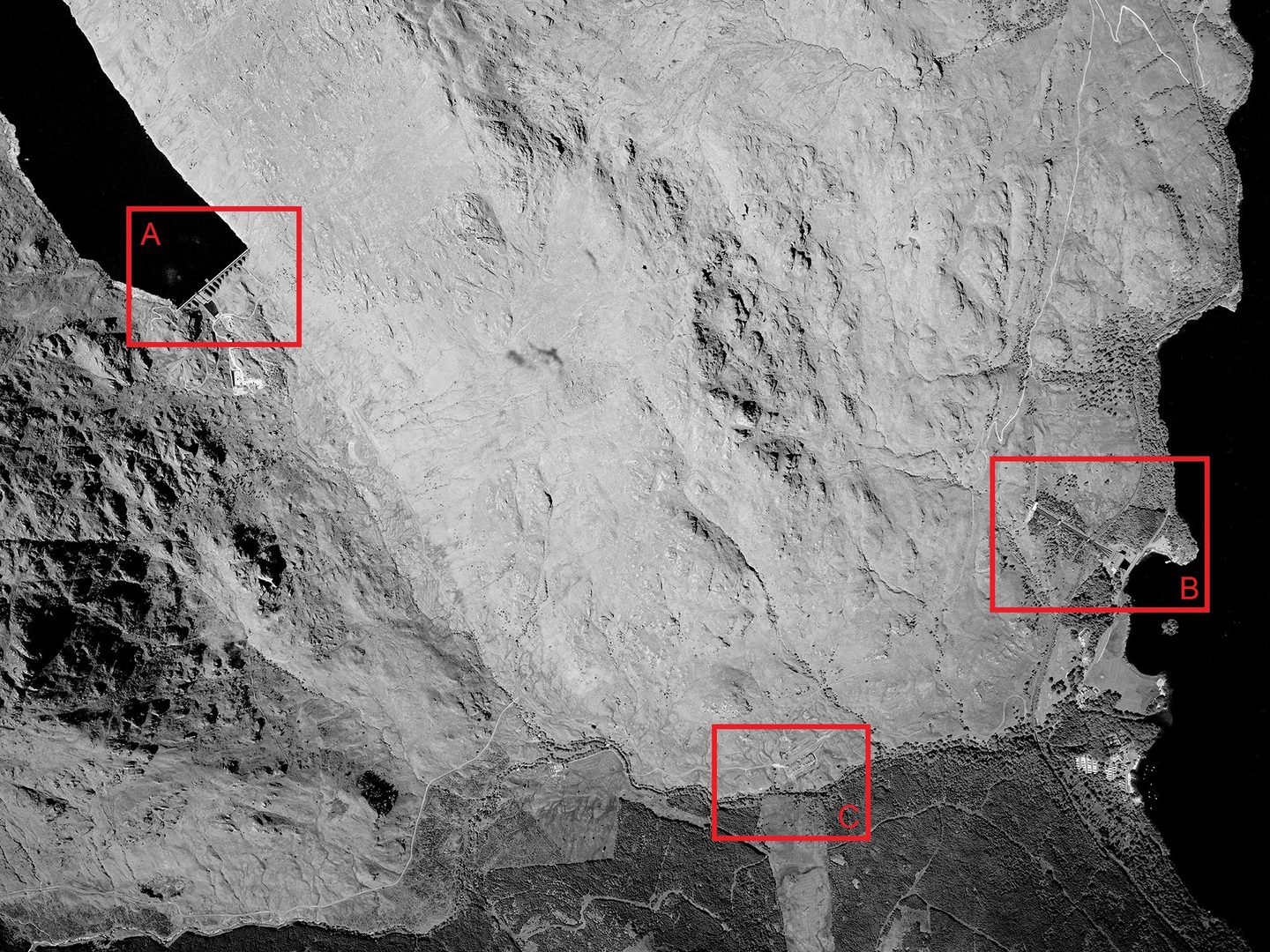
The Loch Sloy hydroelectric scheme, with the dam, penstocks, power station and electricity transformer yard all highlighted; Collection: SCOT, Sortie: ASS/51188, Frame: 0076 (09 June 1988)
Using the Loch Sloy plant as an example, some of the key elements of a hydroelectric power station are examined in more detail below.
Dam
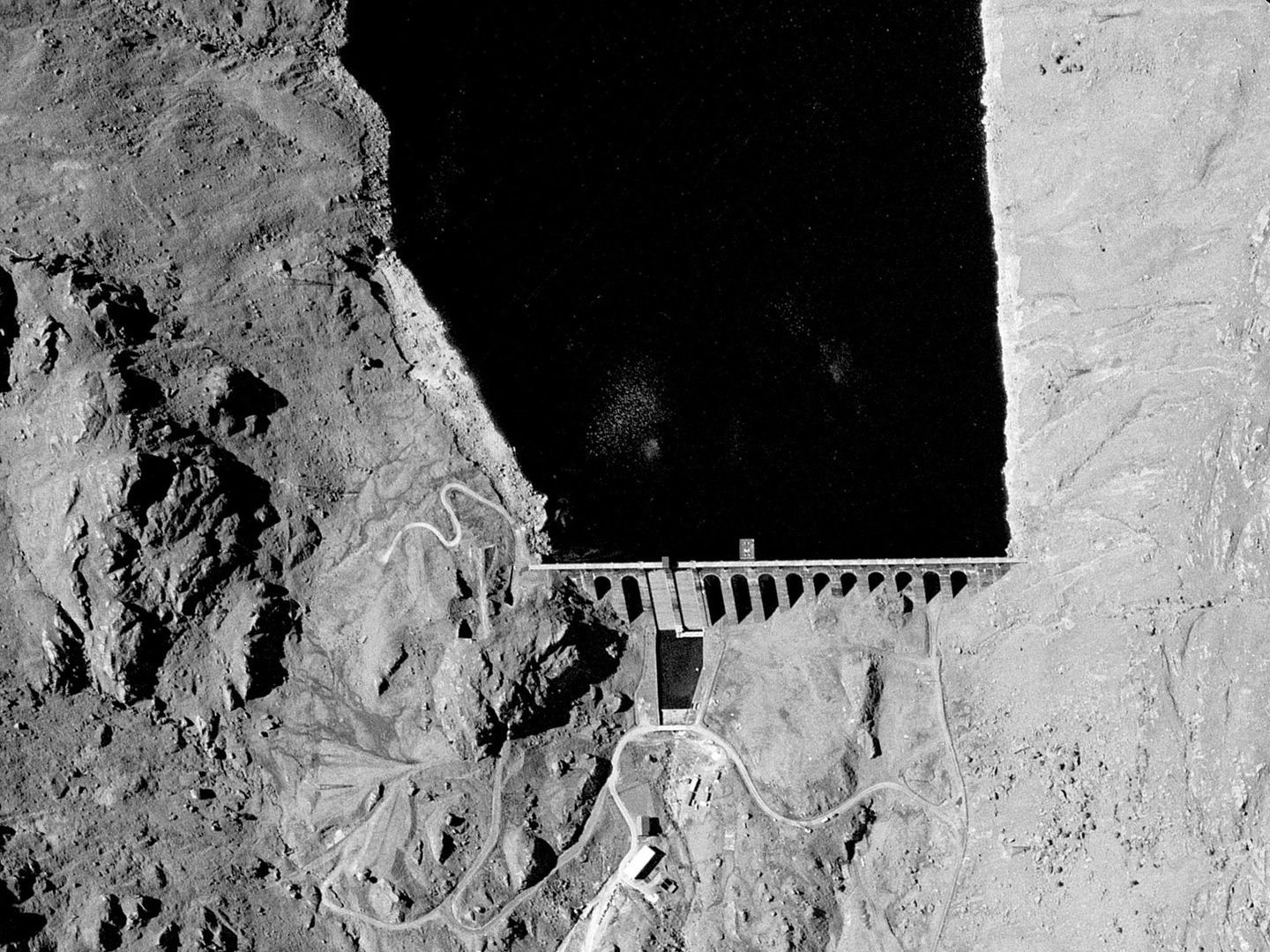
The Loch Sloy Dam is 56 metres high and 357 metres long, and was built of a pioneering buttressed design in 1945-50; Collection: SCOT, Sortie: ASS/51188, Frame: 0076 (09 June 1988), Detail A
Valleys and canyons can be dammed to provide a reservoir of water for use in hydroelectric power schemes. The potential energy of the stored water can then be released into the penstocks as kinetic energy. Intakes near the top of the dam channel water into penstocks buried within it. A spillway enables excess water to be released from the reservoir in a controlled manner.
Penstocks and Power Station
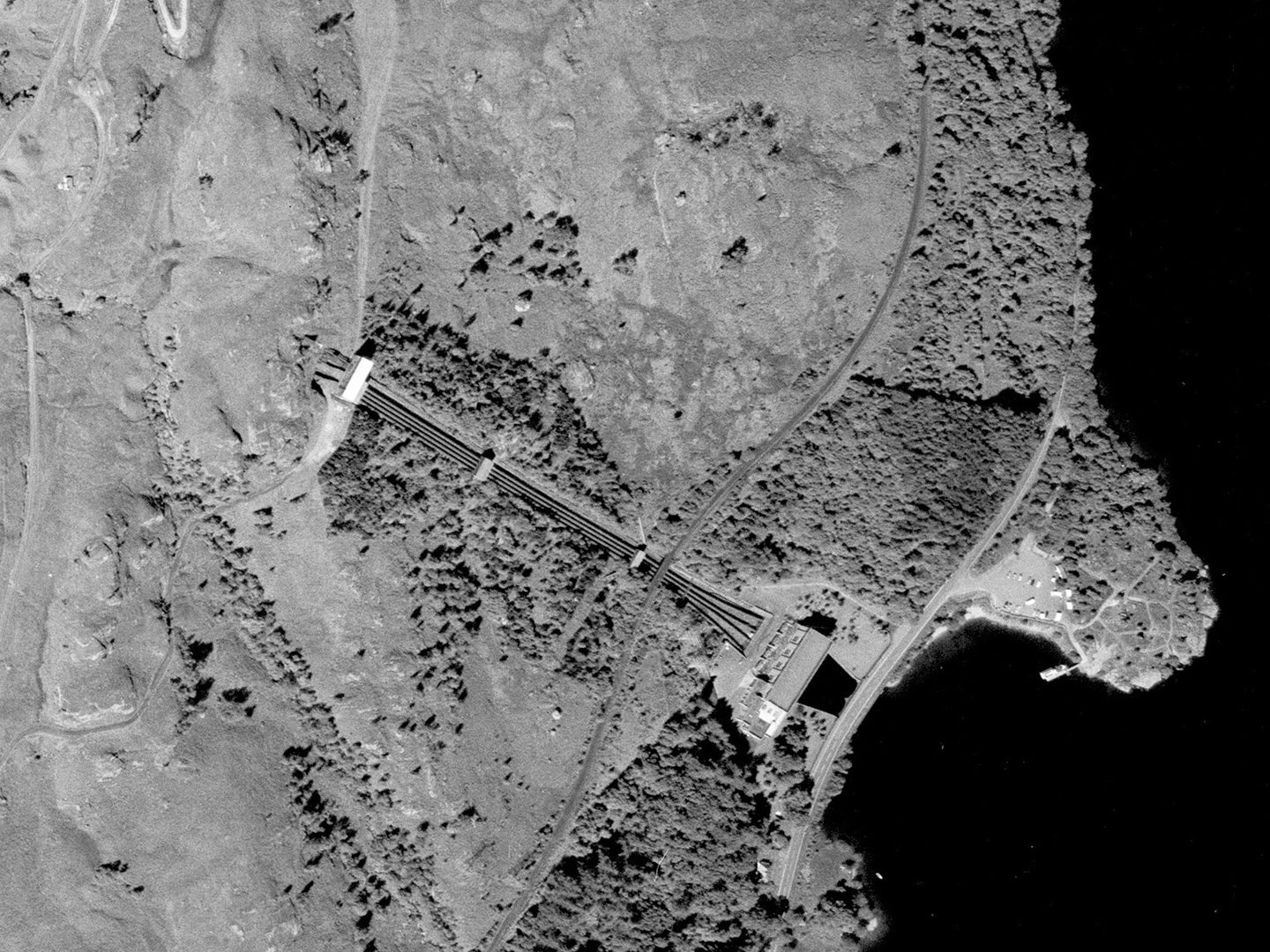
The Loch Sloy penstocks, with the white valve house to the left and the turbine hall to the right on the shore of Loch Lomond; Collection: SCOT, Sortie: ASS/51188, Frame: 0076 (09 June 1988), Detail B
Penstocks carry water from the reservoir, through tunnels under the mountain, before emerging at the valve house. Here, the flow of water is controlled and can be shut off in periods of low demand. Each penstock leads to an individual turbine within the generator hall. As high-pressure water turns the turbine blades, they cause a connected copper rotor to turn within a series of magnets, producing electricity.
Distribution
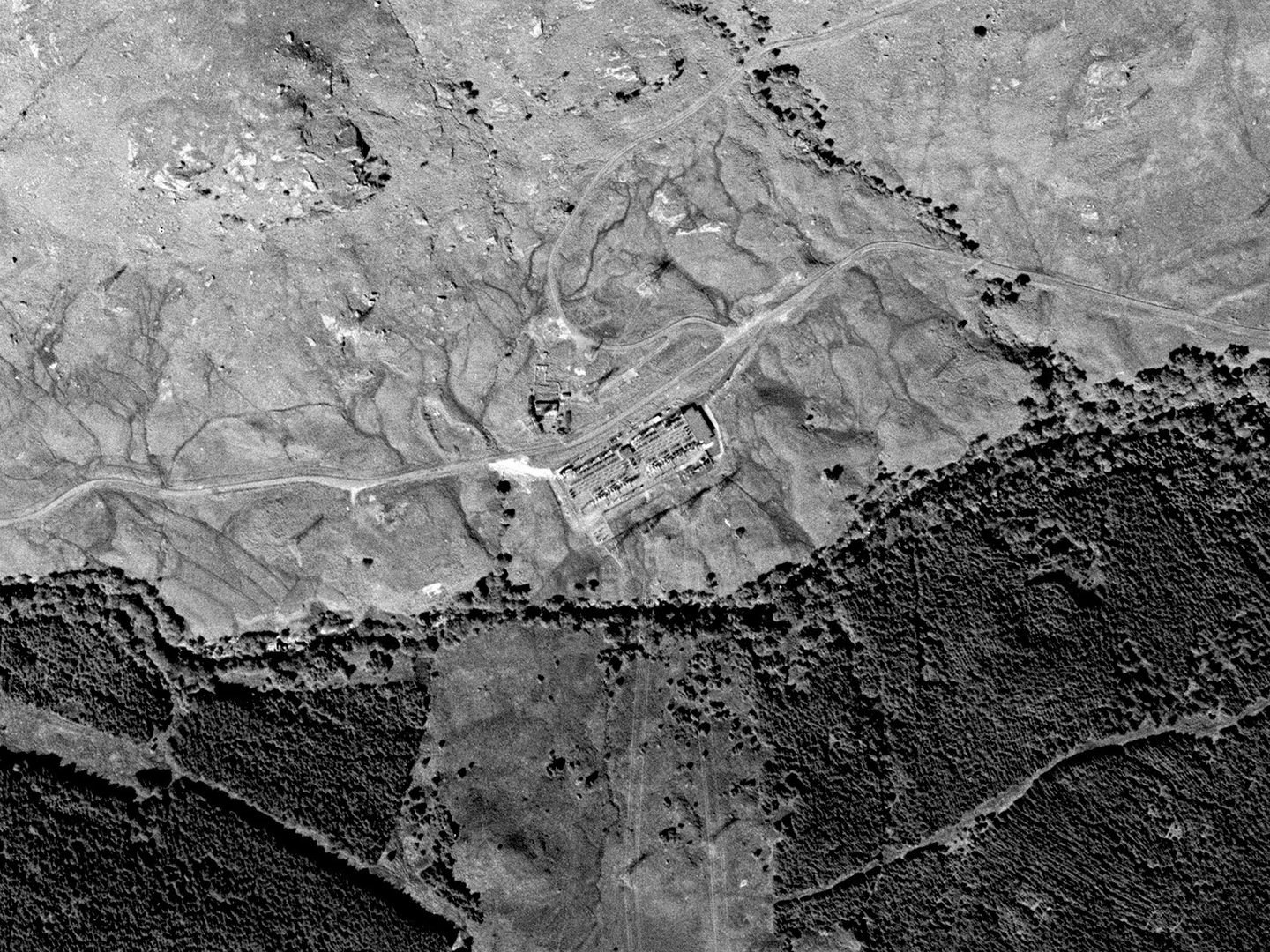
The electricity transformer yard for Loch Sloy - overhead power cables run south through a break in the forestry plantation; Collection: SCOT, Sortie: ASS/51188, Frame: 0076 (09 June 1988), Detail C
Electricity generated at the power station must be immediately distributed to consumers across the country. Transformers step-up the voltage to 400Kv for efficient onward transmission. Normally, power lines are suspended from lattice towers, although they can also be buried underground.
Kevin McLaren, Imagery Interpretation Manager