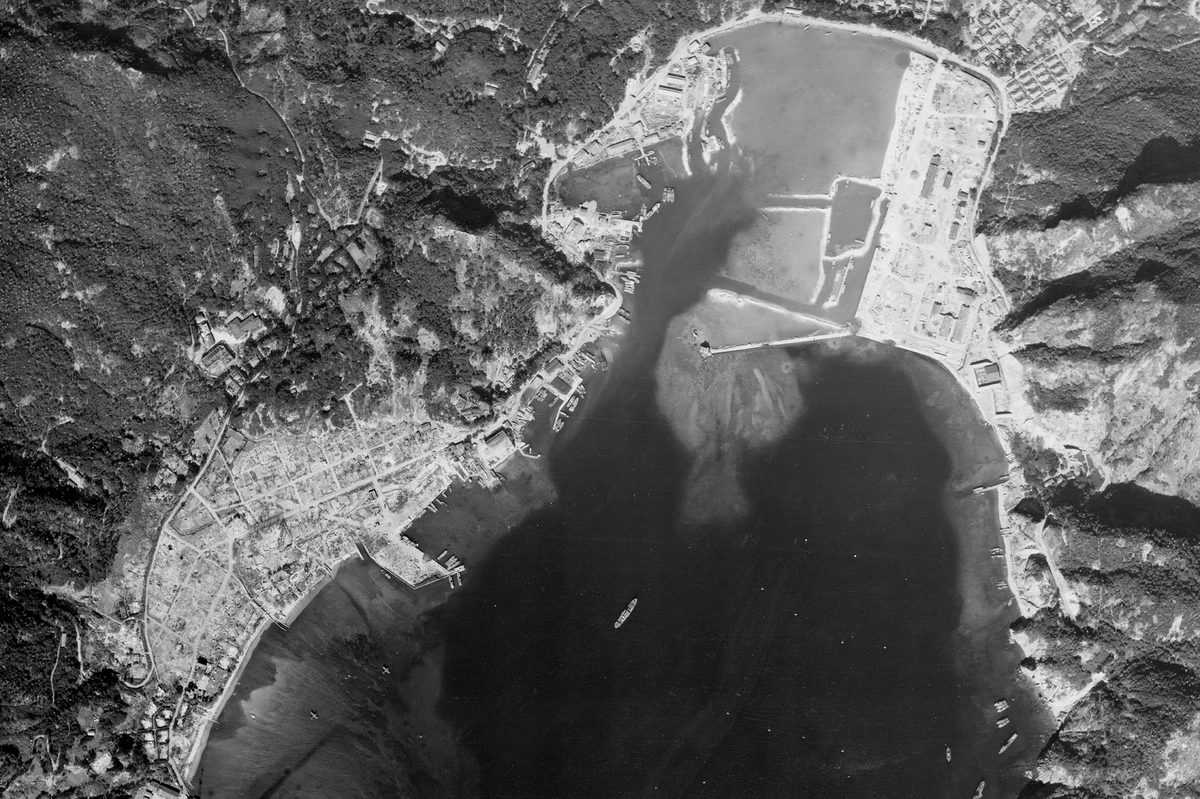
Operation Cerberus
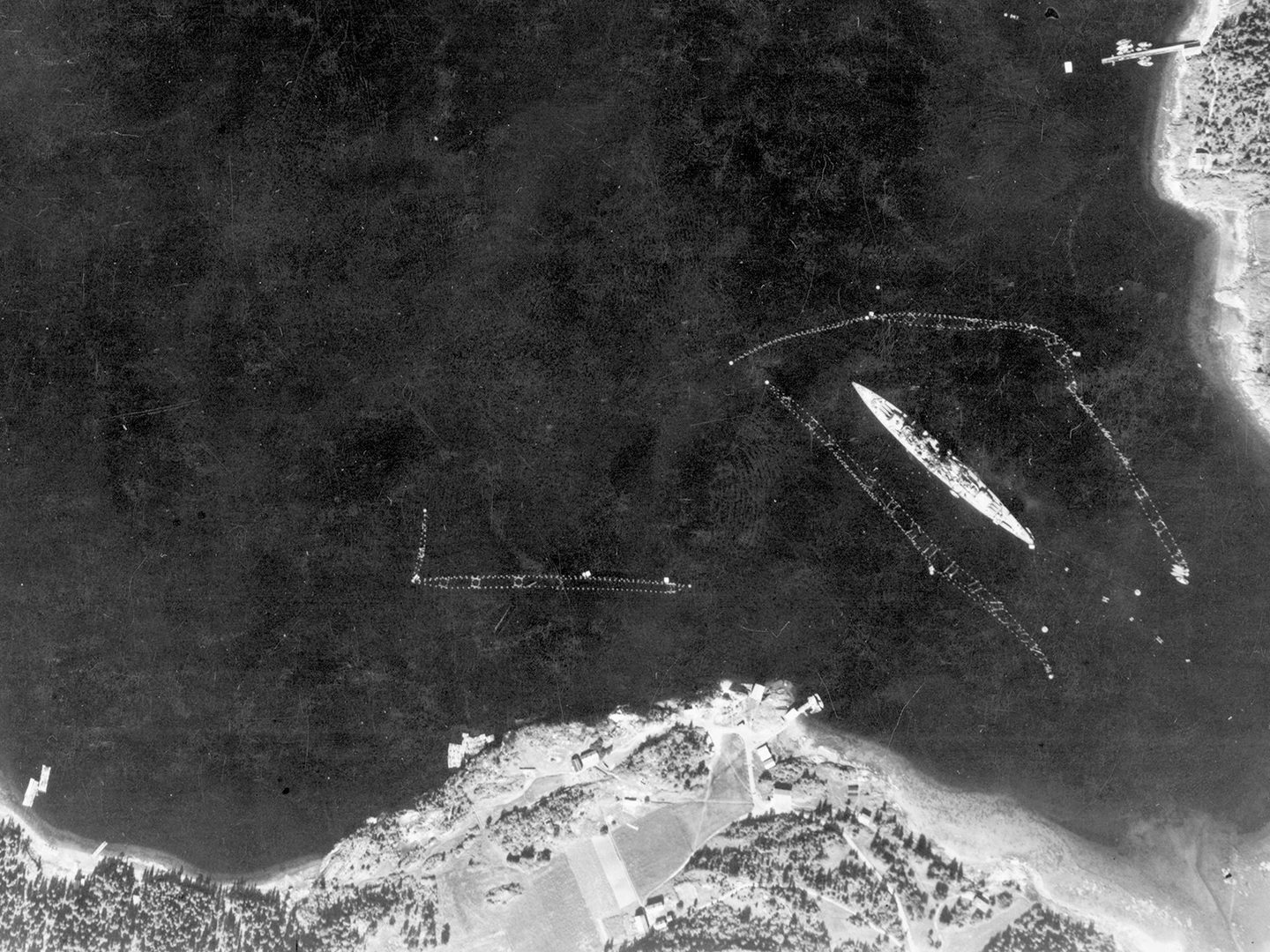
Scrawled on a creased piece of paper in the holdings of the National Collection of Aerial Photography is a date, some names and several lists of sortie references. What at first glance seems unremarkable, is in fact a glimpse of one of the most daring German naval operations of the Second World War.
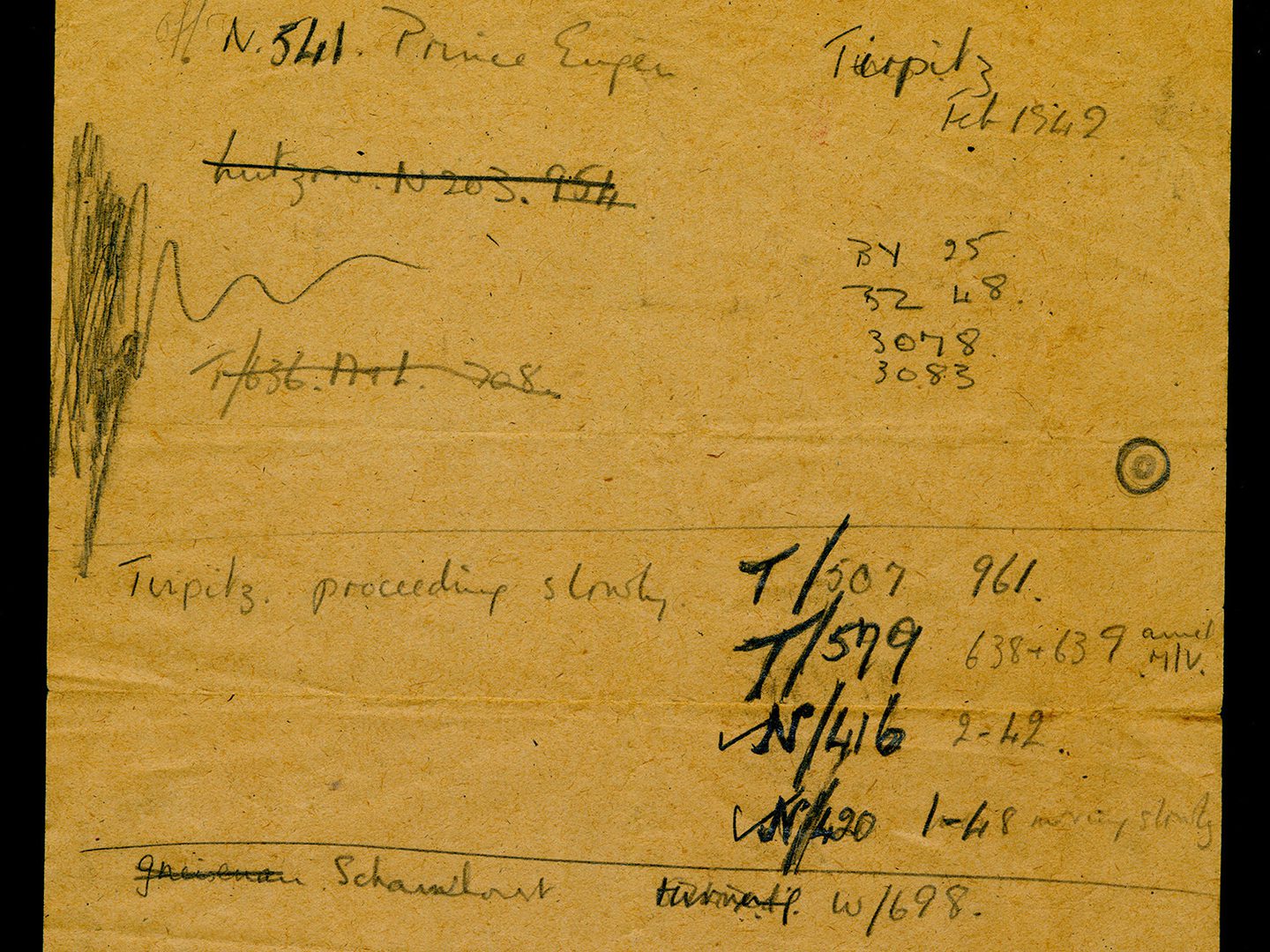
One side of the note found at the National Collection of Aerial Photography, listing Tirpitz, Scharnhorst and Prinz Eugen, along with relevant sortie references, frame numbers and the date 'Feb 1942'.
The Kriegsmarine
The date is February 1942, and many of the names will be familiar to anyone with an interest in the naval history of the Second World War: Tirpitz, Scharnhorst, Lützow, Admiral Scheer, Admiral Hipper, Prinz Eugen, Leipzig, Nürnberg. These ships were part of the German Navy (Kriegsmarine) which posed a serious threat to the Allied war effort, with the ability to cut Britain off from receiving vital supplies across the Atlantic. Surface ships rather than U-boats were initially seen as the greatest threat to Allied convoys.

The back of the note, this time listing the German ships Admiral Hipper, Prinz Eugen - 'seen leaving dry dock', Leipzig and Nürnberg.
After several successful raids, by early 1941 the battleship Scharnhorst – along with sister ship Gneisenau – had arrived at Brest, a natural harbour and important port on the French Atlantic coast. In June, they were joined by the heavy cruiser Prinz Eugen. While Brest was an excellent port with good access to Atlantic shipping lanes, it was also well within range of Royal Air Force bombers, and the ships suffered repeated air attacks, so the decision was made to evacuate them to Germany.
Operation Cerberus
Operation Cerberus – often known as the Channel Dash – took place in February 1942. Early in the month, Tirpitz – stationed in Norway – took part in deception exercises in a bid to distract the Allies from the upcoming escape. On the night of 11 February Scharnhorst, Gneisenau and Prinz Eugen, along with their escorts, sailed around the coastline of France and through the Channel, arriving into the safety of German ports by 13 February. Despite being aware such a manoeuvre was imminent, the Allies failed to stop Cerberus, inflicting only very minor damage and casualties on the German ships as they passed close to British shores.
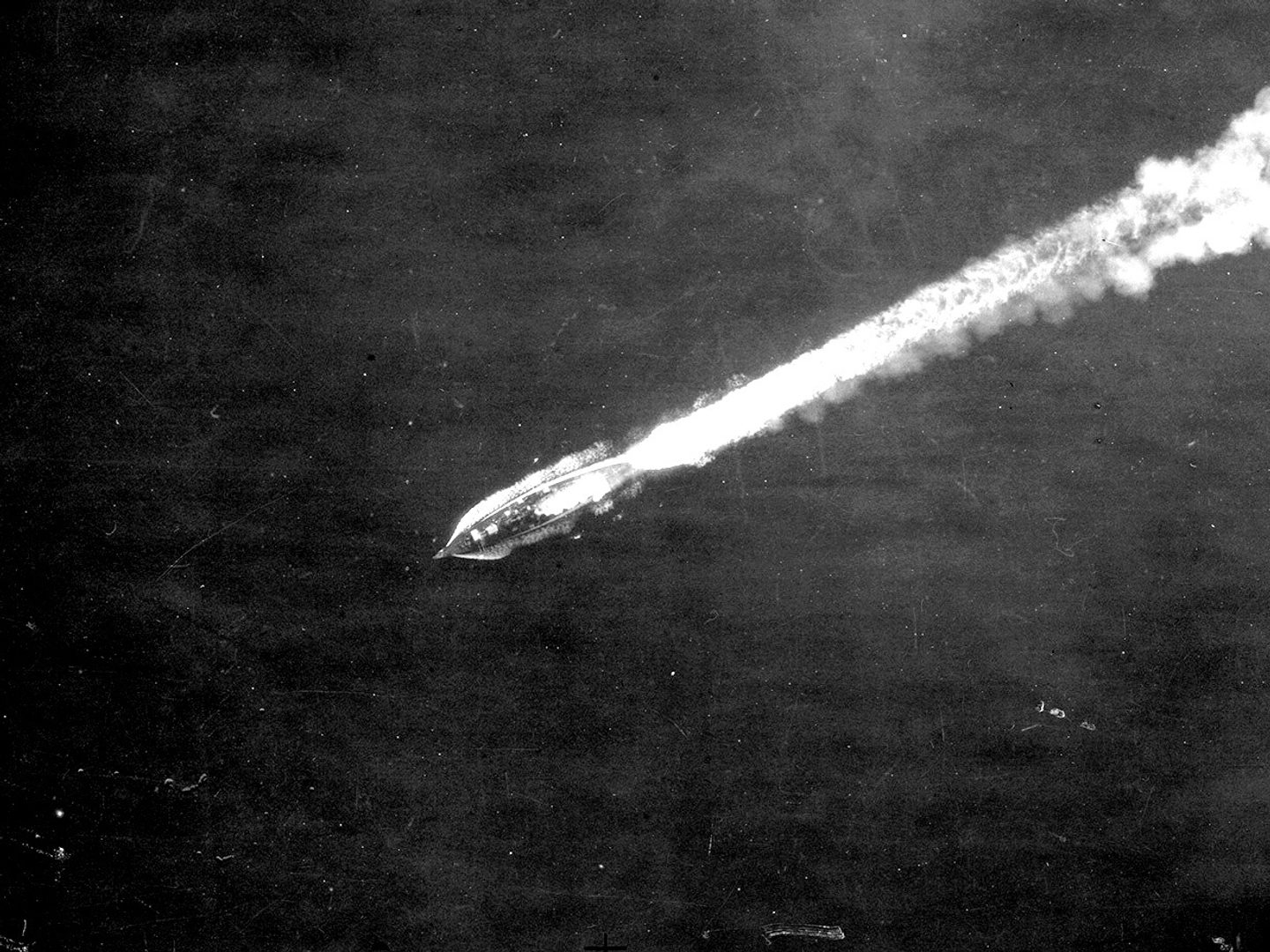
Tirpitz 'proceeding slowly' as described in the note; Collection: ACIU, Sortie: N/0416, Frame: 2043 (19 February 1942)
Evidence
So, what does this creased piece of paper tell us? It appears to be a list of significant ships of the German Navy – several of whom had either been a part of Operation Cerberus or the decoy activities which preceded it – each accompanied by several sortie references. There are notes in places, such as 'Tirpitz proceeding slowly' or 'Prinz Eugen leaving dry dock'. The earliest sortie identifiable was flown on 29 June 1940 (HNA/0055) while the latest dates to 20 May 1942 (F/0074).
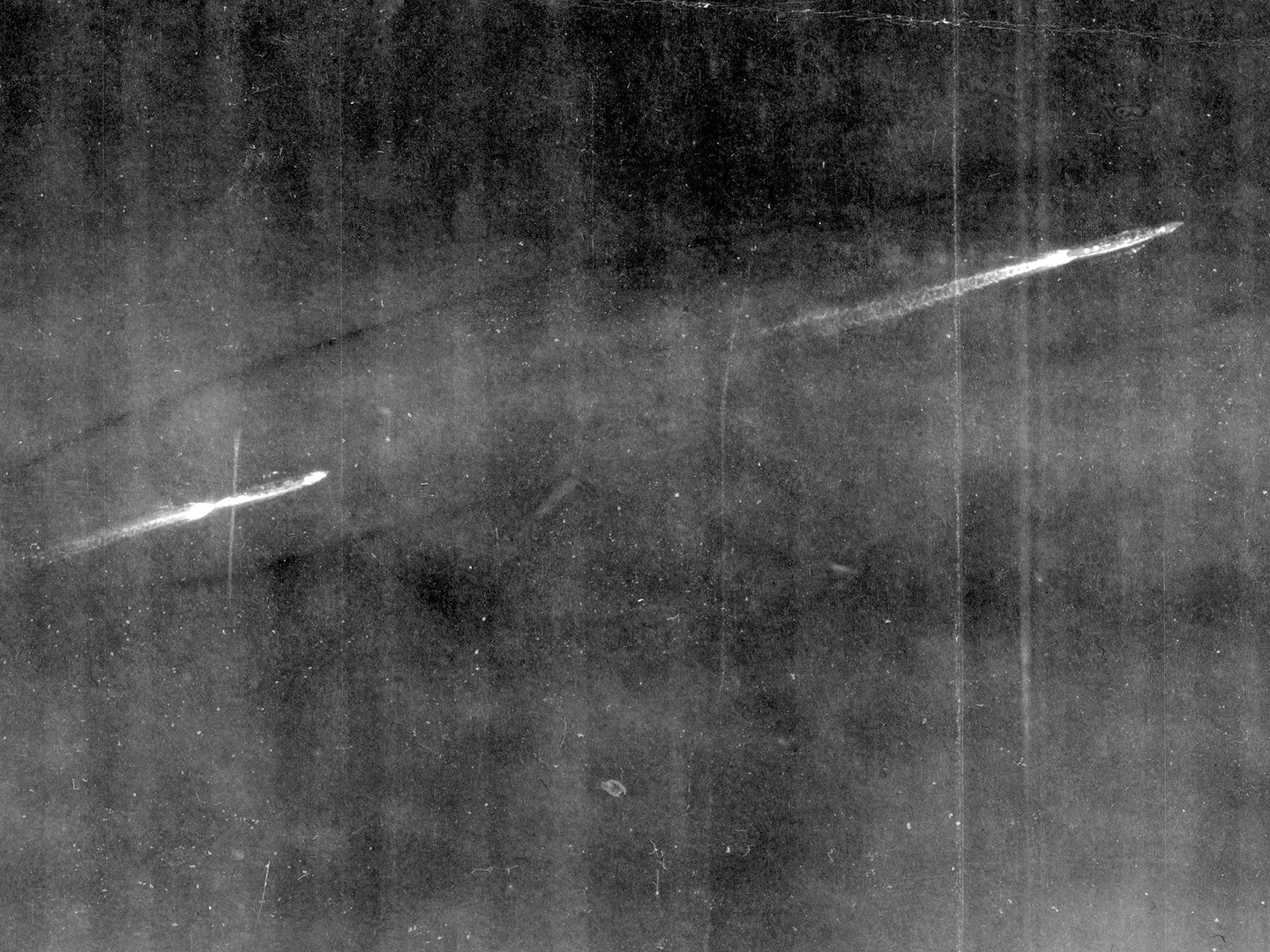
Leipzig and Nürnberg in an image highlighted on the note, photographed in the Baltic Sea near the German port of Rostock; Collection: ACIU, Sortie: T/0636, Frame: 0708 (21 September 1941)
This makes it possible that these lists were drawn up in late May 1942 by a Photographic Interpreter researching ships in the wake of Operation Cerberus, possibly for identification purposes or to record their prior movements. The Channel Dash would still have been fresh in the mind of Allied strategists, and the reference to 'Feb 1942' reinforces the idea that it may have been the spur for this research.
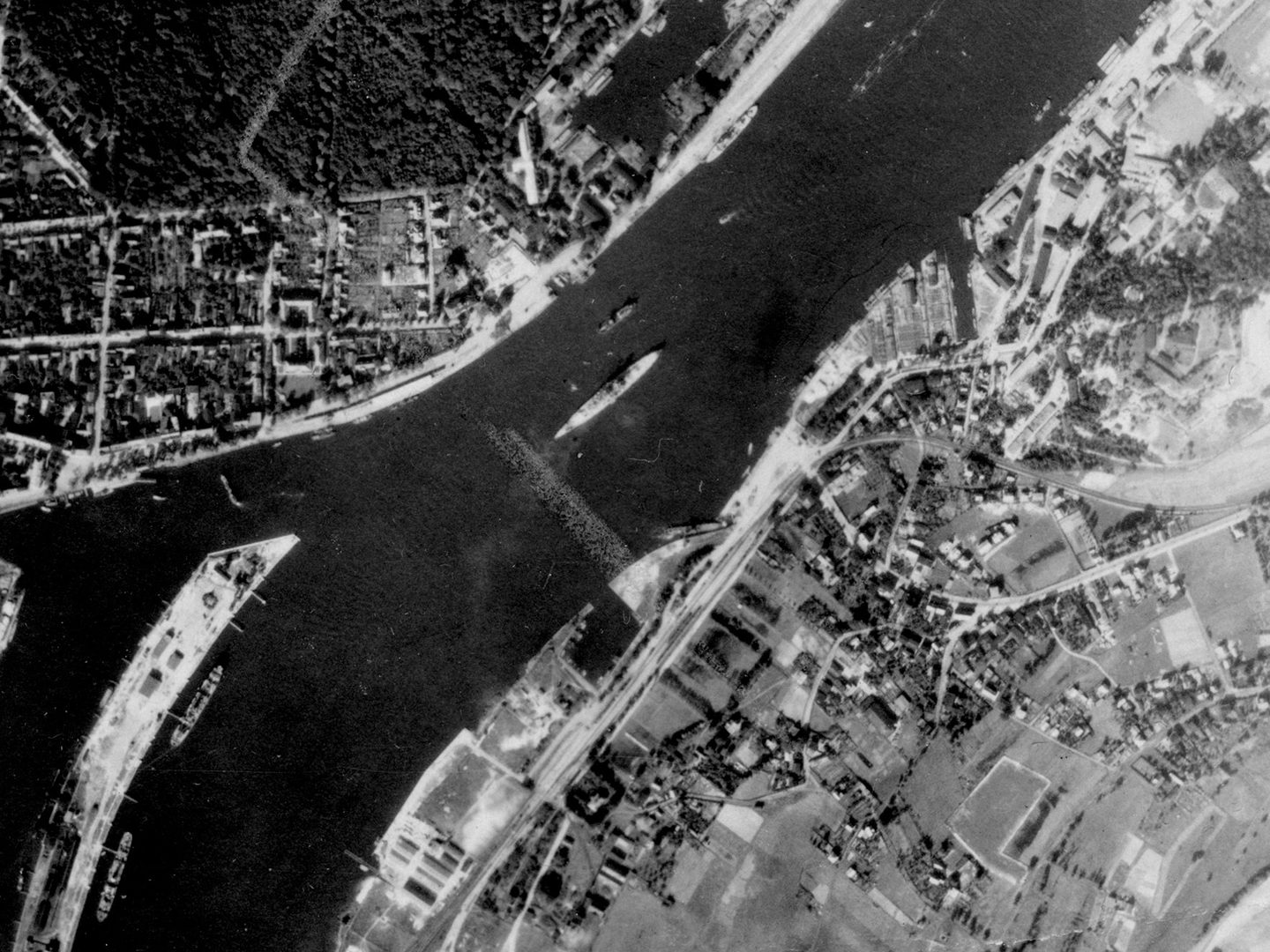
Admiral Scheer in an image highlighted on the note, photographed at the occupied Polish port of Świnoujście (Swinemünde in German); Collection: ACIU, Sortie: T/0616, Frame: 0907 (19 September 1941)
It would have been crucial for the Allies to keep track of the German Navy to try and build up a picture of their movements and possible plans. In association with Human Intelligence on the ground and Signals Intelligence such as Ultra (derived from breaking Axis communications encoded via Enigma machines), Photographic Intelligence was vitally important. This scrap of paper is a physical link to the hard work undertaken by Photographic Interpreters throughout the war.
Ben Reiss, NCAP Collections Manager
Find out more about our collaboration