The Photograph That Sunk a Battleship
Michael Suckling’s Journey
On 21 May 1941, Pilot Officer Michael ‘Babe’ Suckling departed from RAF Wick in northern Scotland on a mission that would become one of the most significant photographic reconnaissance sorties of the Second World War.
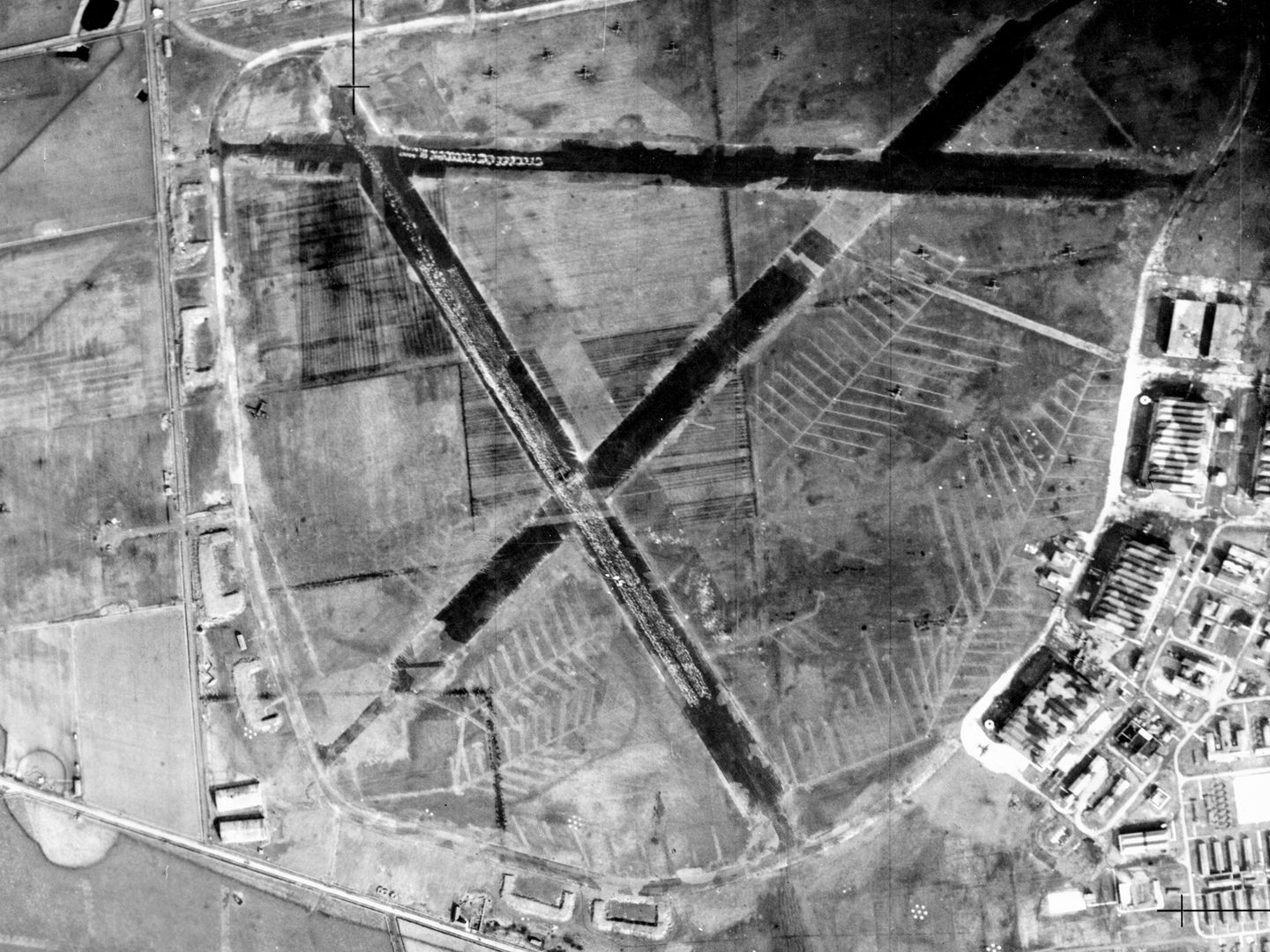
RAF Wick, on the far north-east coast of Scotland, a couple of months before P/O Suckling set off on his momentous mission; Collection: SCOT, Sortie: M/103/NLA/004, Frame: 0352 (10 March 1941)
Flying a long-range reconnaissance Spitfire, Suckling first flew north to RAF Sumburgh at the southern tip of Shetland, where he refuelled to extend his operational range by approximately 30 minutes. From there he crossed the North Sea towards occupied Norway, navigating hazardous weather and the constant threat of German interception.
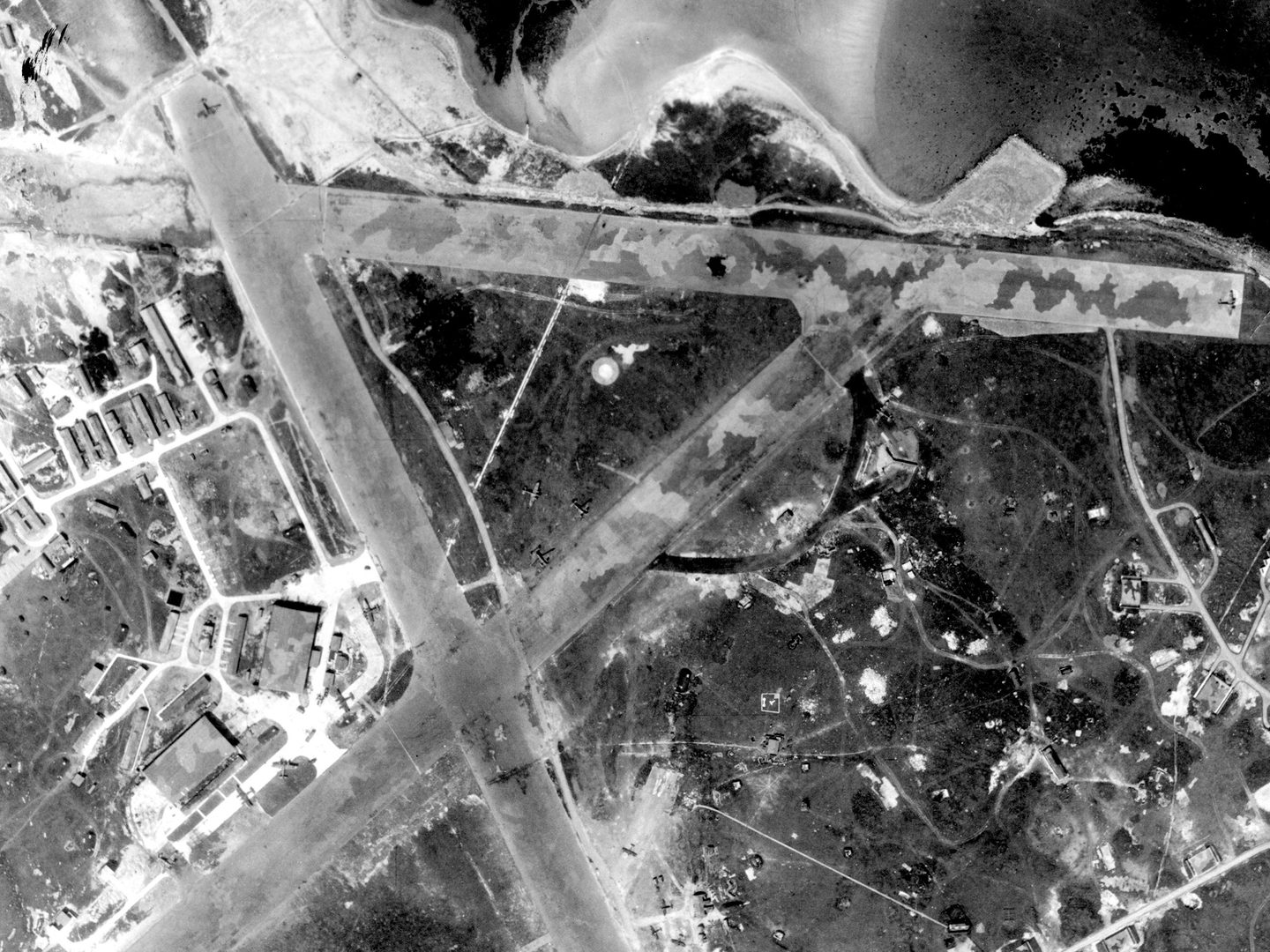
RAF Sumburgh, at the southern tip of Shetland, where Suckling refuelled; Collection: SCOT, Sortie: M/027/WL10, Frame: 2121 (04 July 1942)
His route took him over the island of Herdla, a key navigational point near the Norwegian coast. There, he photographed camouflaged Luftwaffe airfields, carefully documenting enemy infrastructure while avoiding detection by the resident squadron of Messerschmidt Bf-109 fighters.
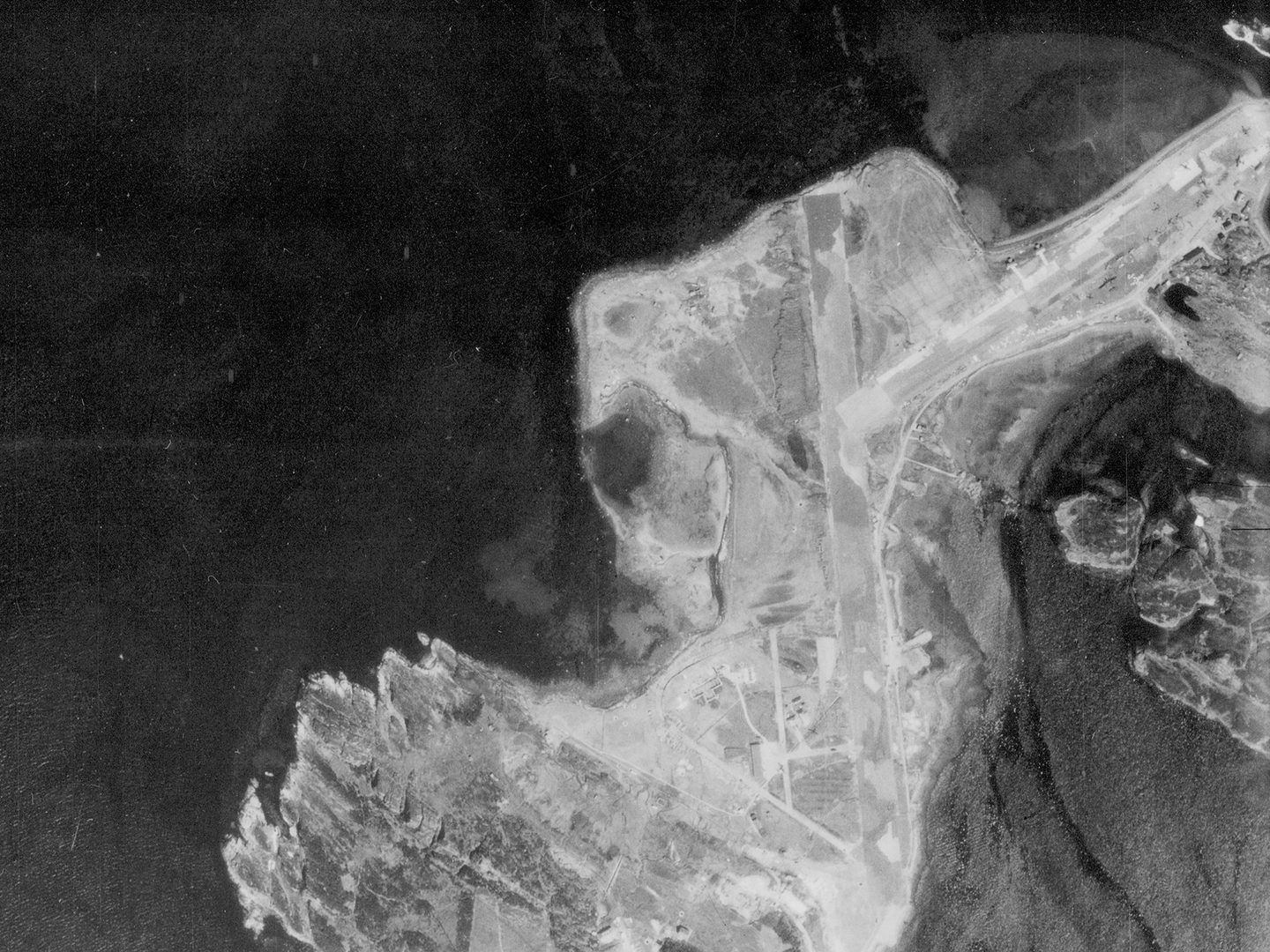
A Luftwaffe airfield on the island of Herdla off the Norwegian coast, photographed early in Suckling's crucial sortie; Collection: ACIU, Sortie: N/0183, Frame: 0919 (21 May 1941)
Continuing south-east along the Norwegian coast, Suckling flew over Vindenes towards Bergen, photographing a cluster of large ships moored in Hjeltenfjord as he went. One of them was the cruiser Prinz Eugen, with a destroyer, a tanker and three large merchant ships moored nearby. Flying at altitude for safety, Suckling descended to capture clear images before quickly moving on.
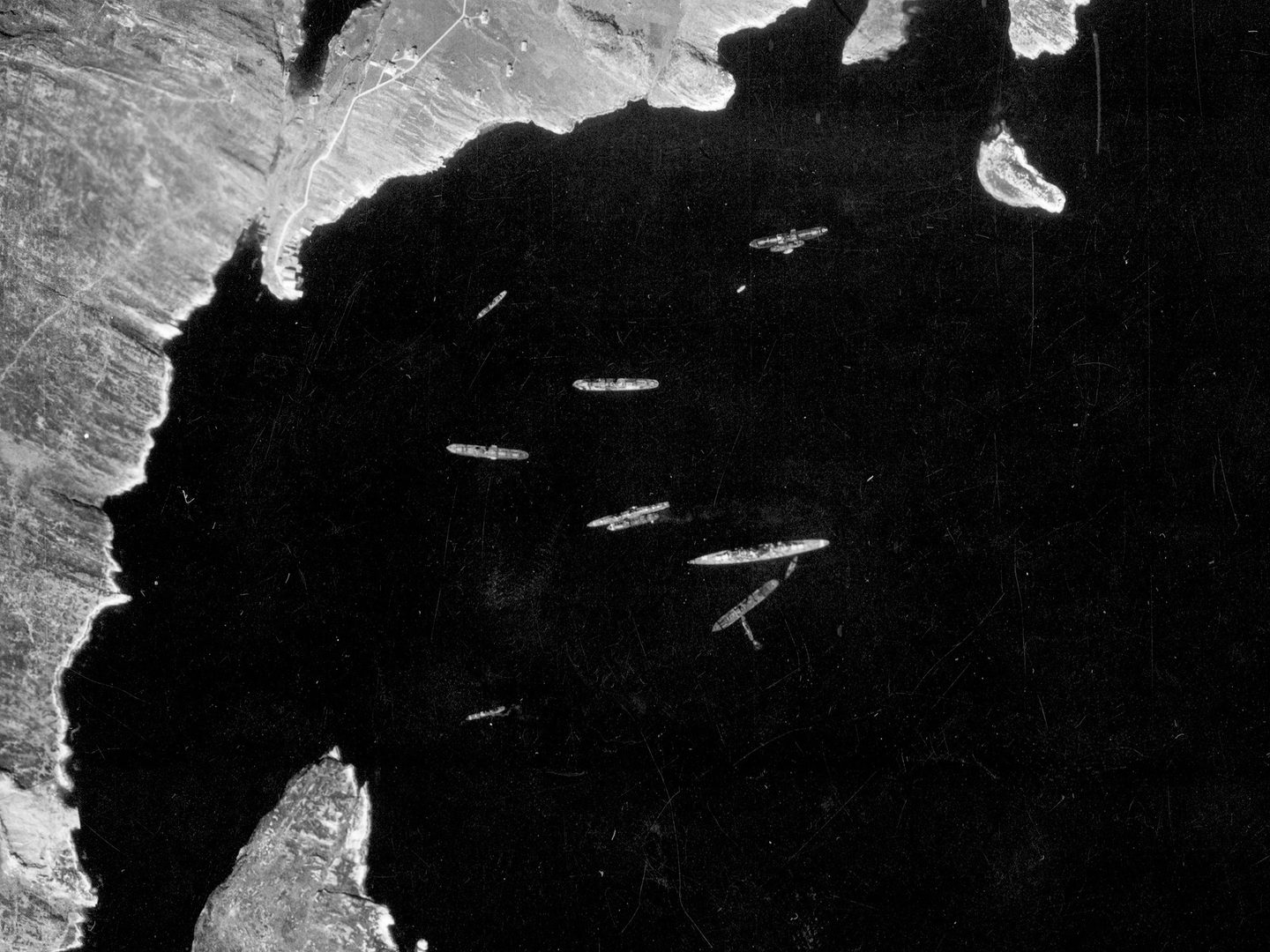
The Prinz Eugen, accompanied by several support ships; Collection: ACIU, Sortie: N/0183, Frame: 0634 (21 May 1941)
By early afternoon, flying over Grimstadfjord, Suckling made his most important discovery. From around 25,000 feet, he identified and photographed the German battleship Bismarck alongside three supply ships. This moment, high above a concealed fjord, would prove critical to the unfolding naval campaign.
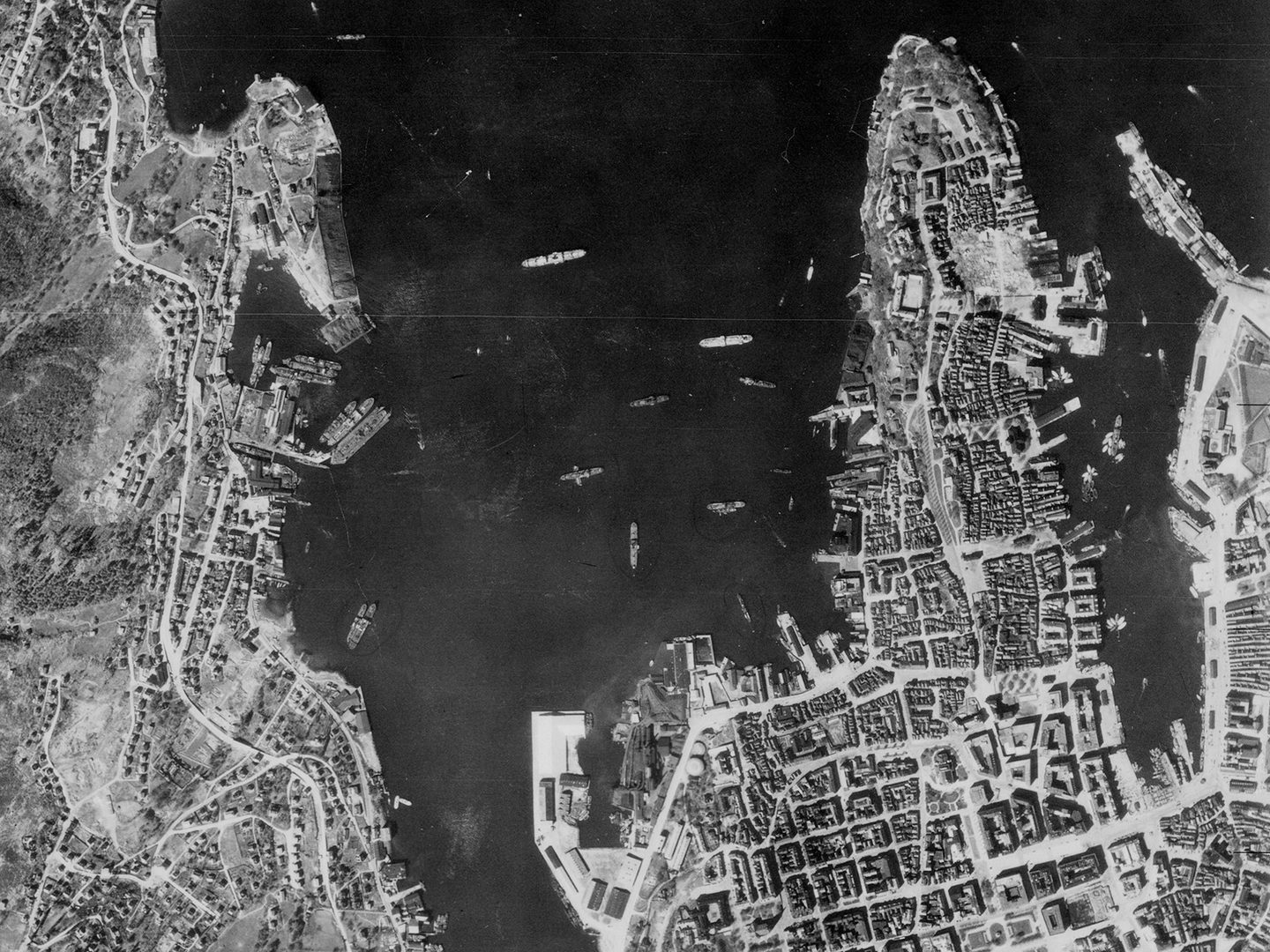
The busy port of Bergen; Collection: ACIU, Sortie: N/0183, Frame: 0944 (21 May 1941)
Photographing the Bismarck
Suckling’s photographs provided the first clear confirmation that the Bismarck was in Norway and preparing for deployment into the Atlantic. The images showed not only the battleship itself, but also accompanying support vessels, indicating imminent operational readiness.
Once back in Britain, the urgency of the intelligence became clear. Rather than sending the prints by train, as was standard from Wick, Suckling transported them himself to Coastal Command headquarters, first flying to Nottinghamshire and then, having run low on fuel, completing the journey via a friend's car. The day after the photographs were taken over Norway they were analysed by David Brachi, a Photographic Interpreter at the Central Interpretation Unit, who confirmed the presence of both the Bismarck and Prinz Eugen, concluding that a breakout into the Atlantic was likely.
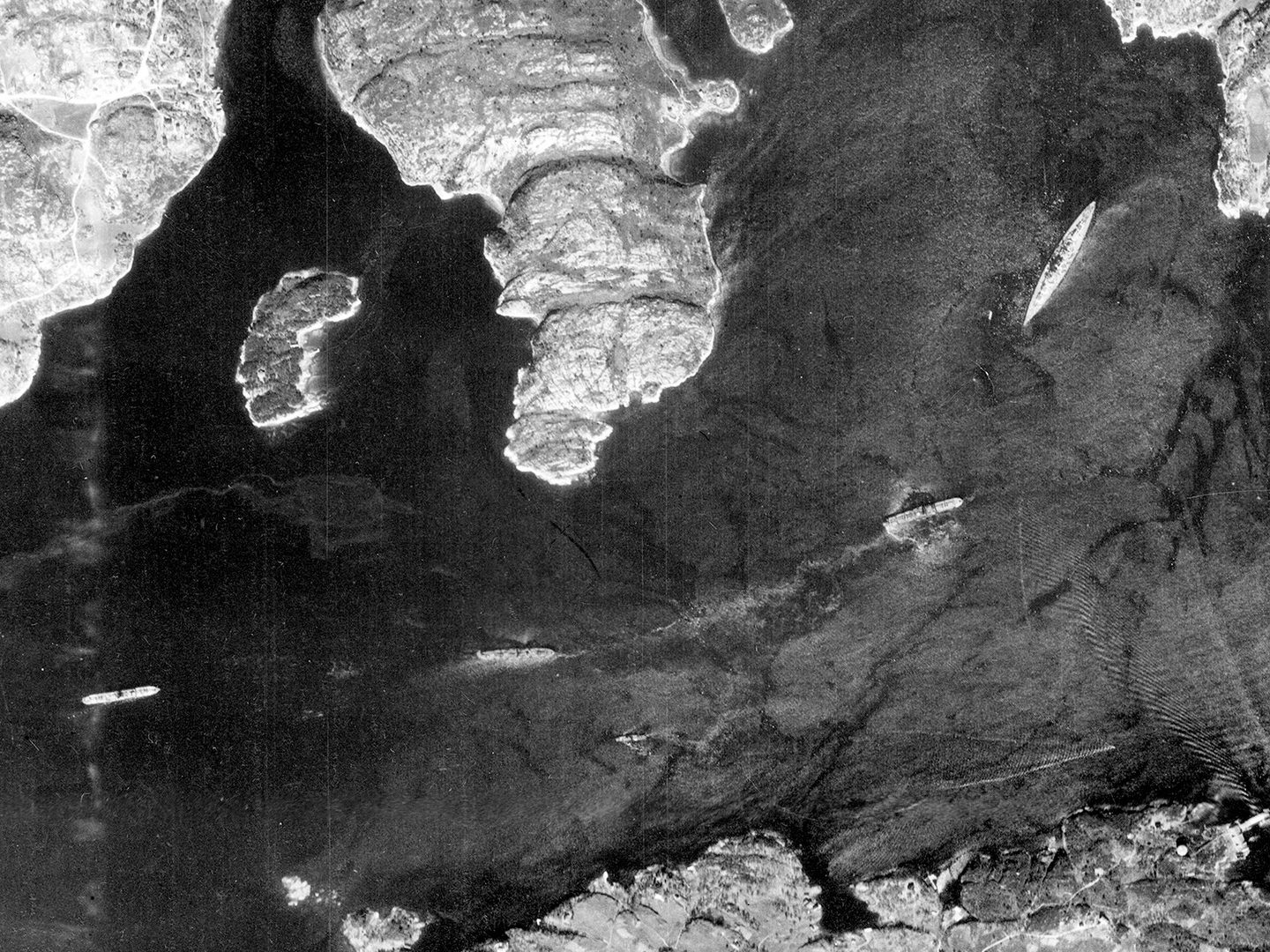
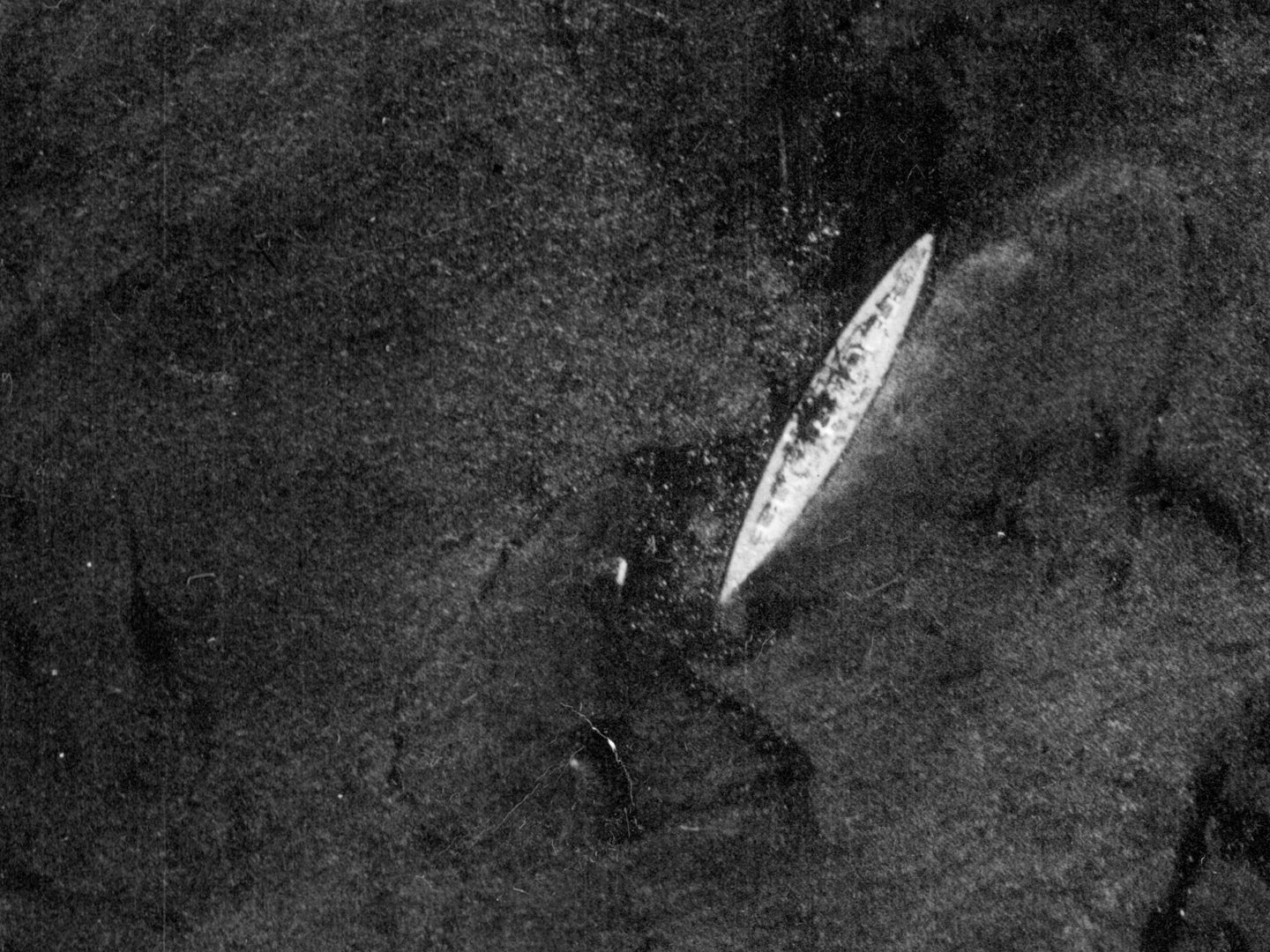
The vital photograph, clearly showing the Bismarck (top right) preparing to break out into the Atlantic; Collection: ACIU, Sortie: N/0183, Frame: 0660 (21 May 1941)
At a time when aerial reconnaissance was one of the only reliable means of confirming the locations of enemy capital ships, these photographs were of immense strategic value. They allowed the Royal Navy to anticipate German movements and to deploy forces accordingly, transforming raw imagery into actionable intelligence.
The Sinking of the Bismarck
Shortly after Suckling’s reconnaissance, the Bismarck and its escort departed Norway and entered the North Atlantic. On 24 May 1941, after a chase across the North Atlantic, the battleship engaged British forces in the Denmark Strait, sinking HMS Hood in a devastating explosion and damaging HMS Prince of Wales.
The Royal Navy responded with a massive pursuit operation. After days of searching, aircraft from HMS Ark Royal launched torpedo strikes that disabled the Bismarck’s steering, leaving it unable to escape. On 27 May 1941, the British battleships closed in and sank the vessel after a sustained bombardment. The Prinz Eugen escaped detection and its whereabouts remained unknown until was photographed in the French port of Brest on 4 June 1941.
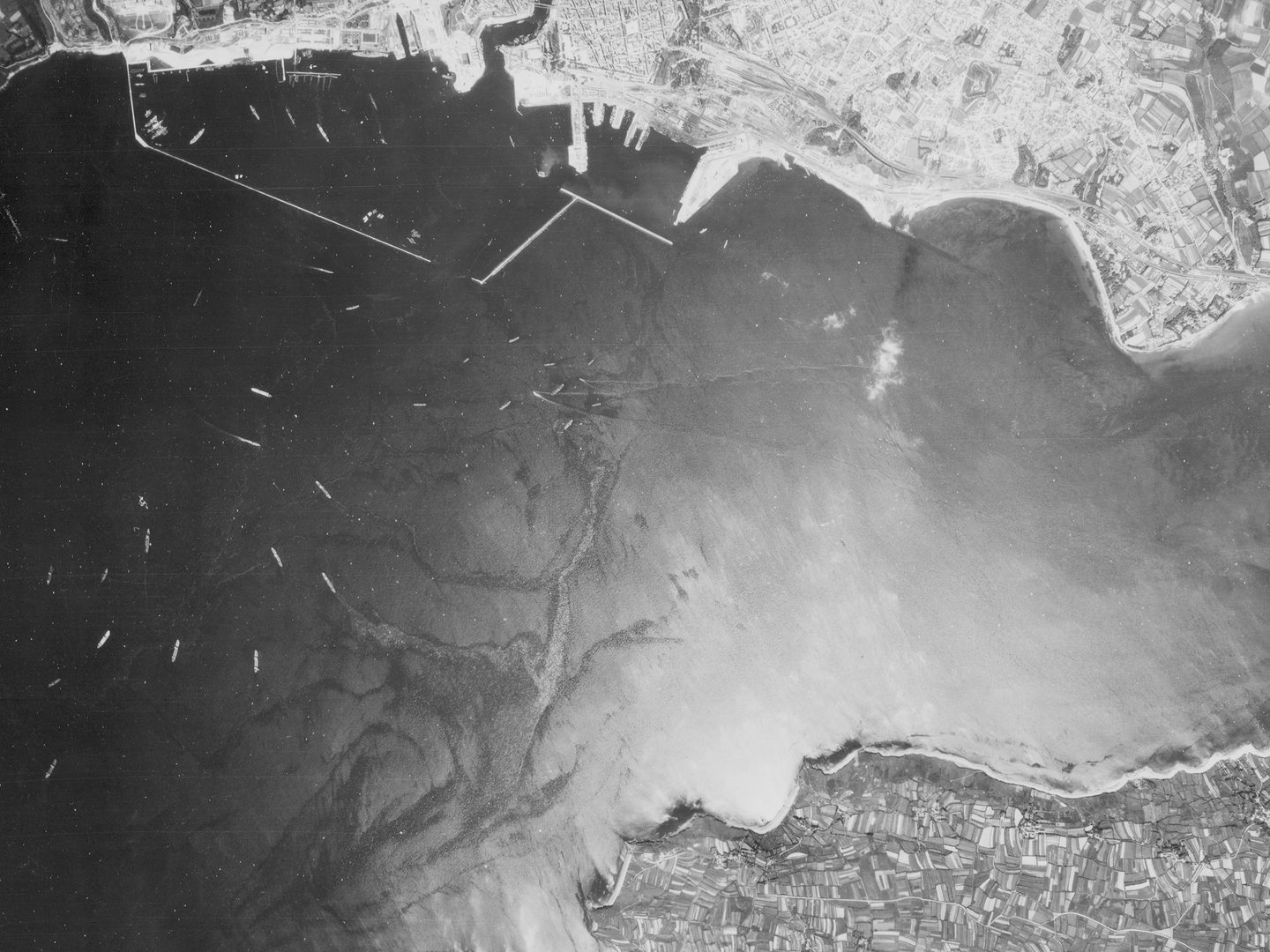
Brest in France - photographed the previous year by a German reconnaissance aircraft - where the Prinz Eugen reappeared in June 1941; Collection: NARA, Sortie: TUGX/2269, Frame: 0122 (03 June 1940)
Suckling’s earlier photographs played a key role in this outcome. By confirming the Bismarck’s presence and readiness, they enabled British forces to act quickly and maintain pressure, ensuring the ship could not disappear into the vast Atlantic undetected.
Michael Suckling’s Legacy
For his service, Michael Suckling was awarded the Distinguished Flying Cross, recognising both his bravery and the significance of his work. Suckling was then posted to RAF St Eval in Cornwall, from where he flew missions to observe key French ports on a near-daily basis. It was on such a mission to check the status of the heavy cruiser Scharnhorst at La Pallice, exactly two months after his delivery of the Bismarck imagery, that Michael Suckling was shot down and killed.
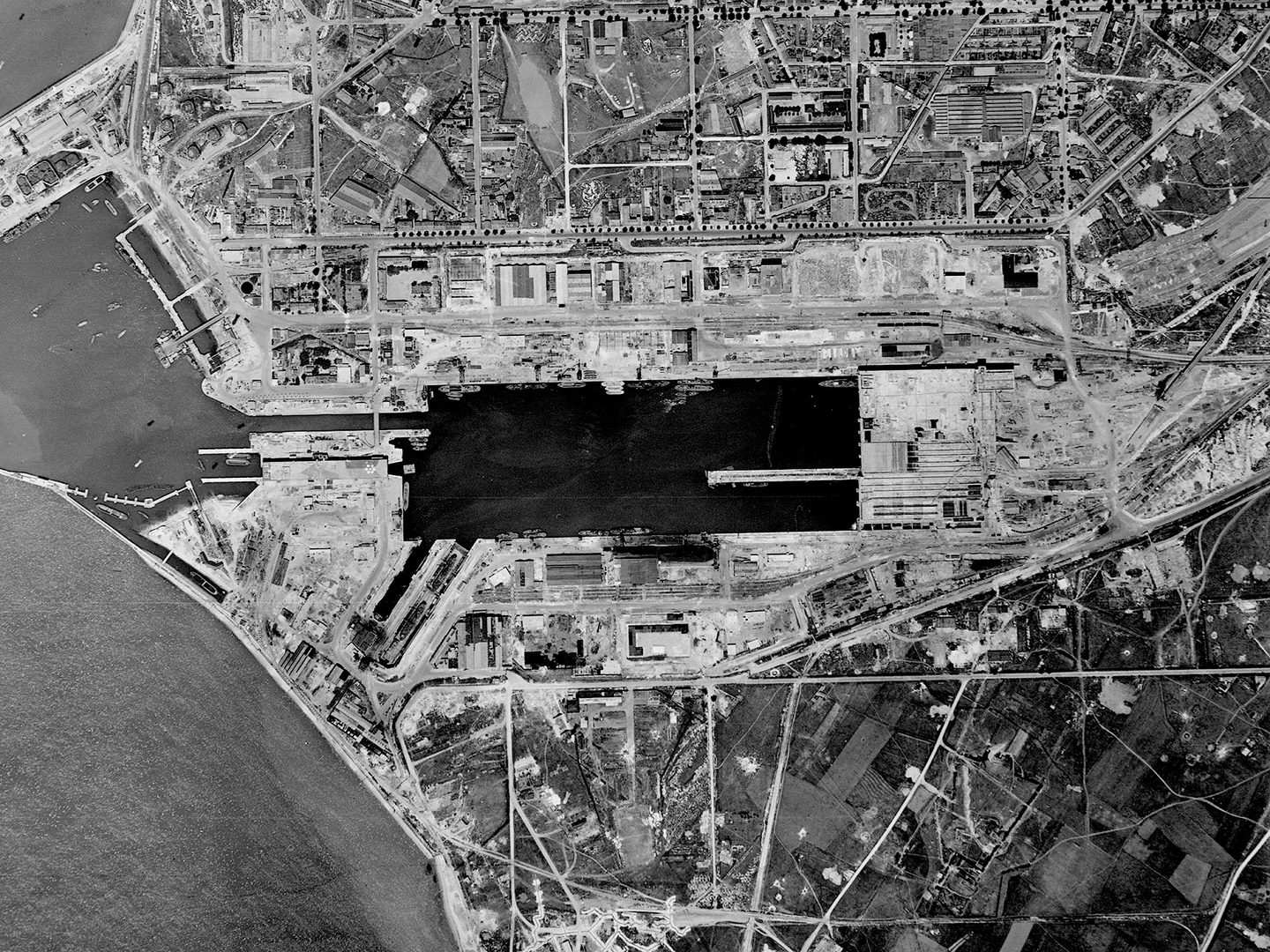
The deep-water port of La Pallice at La Rochelle - Suckling was on his way here seeking the Scharnhorst when he was killed; Collection: NARA, Sortie: 106G/0682, Frame: 3162 (04 June 1944)
Today, the story of the Bismarck is often remembered for its dramatic final battle, but Suckling’s role reveals a deeper truth: that a single reconnaissance flight, and the images it produced, could shape the course of an entire naval campaign.
Isabella Taylor, NCAP Metadata Assistant