

Spotlight On: Pitcairn Islands
Early History
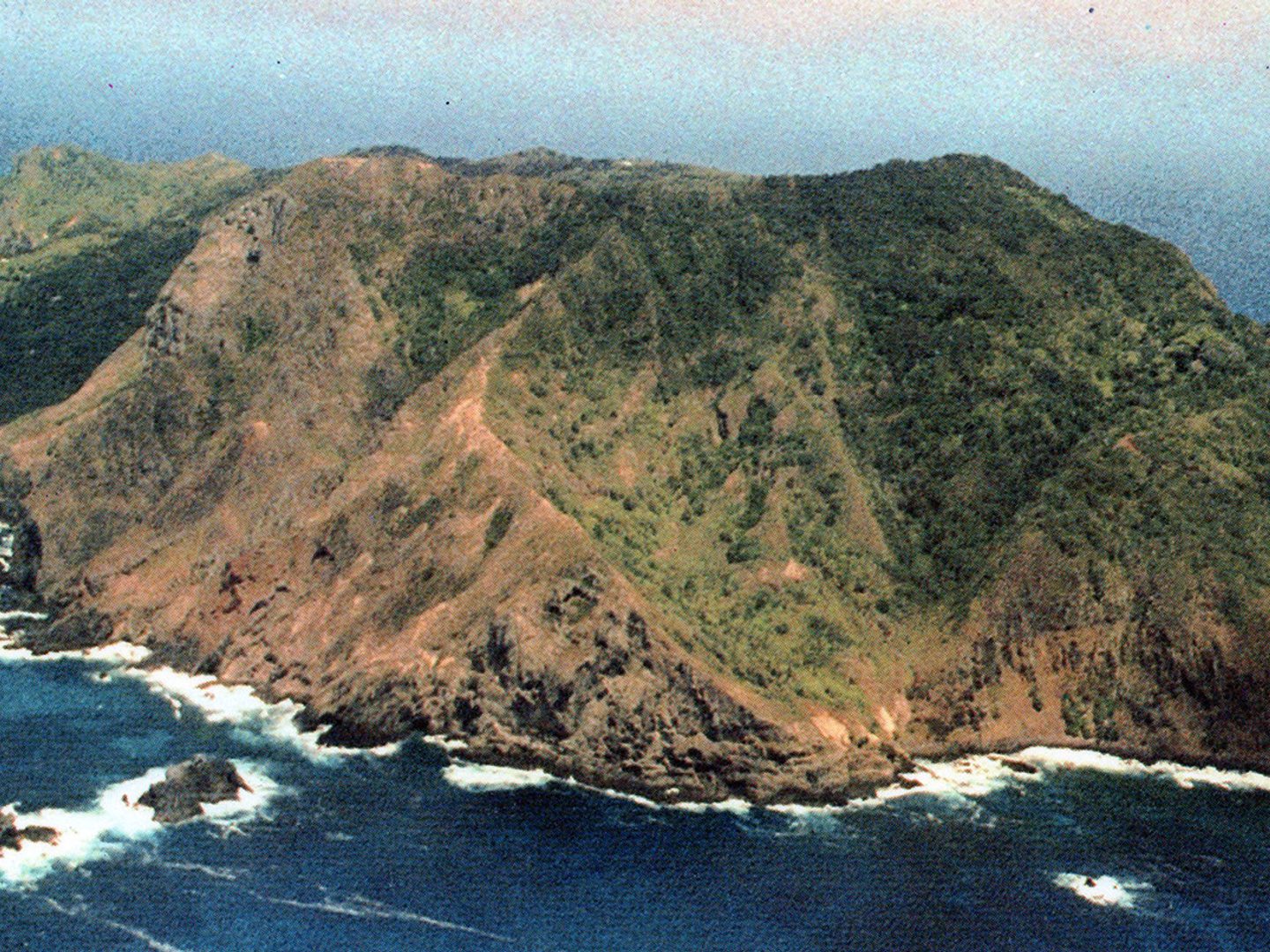
The Pitcairn Islands comprise of four volcanic outcrops scattered across several hundred miles of the Pacific Ocean. Two of the islands – Pitcairn and Henderson – are habitable; Oeno and Ducie are uninhabitable atolls.
The history of the Islands starts at least 1000 years ago, with their settlement by Polynesians, probably from what is now French Polynesia via the Gambier Islands to the northwest. For several centuries, the settlement survived by trading, particularly with the inhabitants of the more populous Gambier Islands.
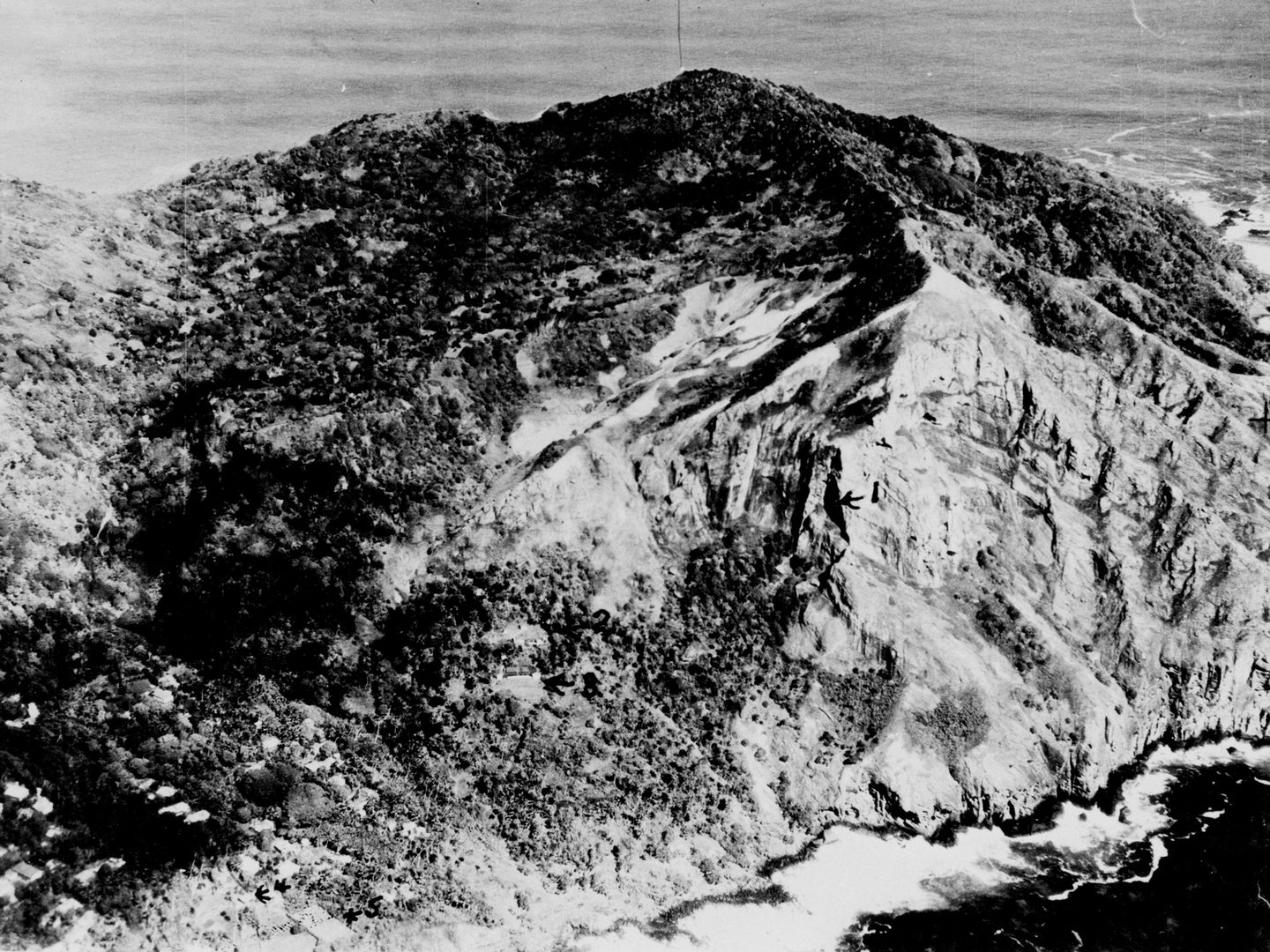
The Pawala Valley Ridge, the highest point of the Pitcairn Islands at 347m; Collection: DOS, Sortie: WARRIOR/RN/57, Frame: 0019/P (1957)
Social collapse in the Gambier Islands in the fifteenth century led to the Pitcairns being abandoned, possibly in favour of Easter Island, nearly 1200 miles to the southeast. Experiments with traditionally-built boats and historically accurate navigational techniques have demonstrated that such epic voyages would have been within the capabilities of contemporary Polynesian sailors.
European Discovery and Settlement
Various European sailors encountered the Pitcairn Islands through the seventeenth and eighteenth centuries, but British interests arrived for good in the most unexpected manner. Searching for somewhere to hide from vengeful British authorities, nine of the mutineers from the infamous HMS Bounty arrived and settled in January 1790. With them were 20 Tahitians – men and women – abducted by the mutineers during their earlier voyaging.
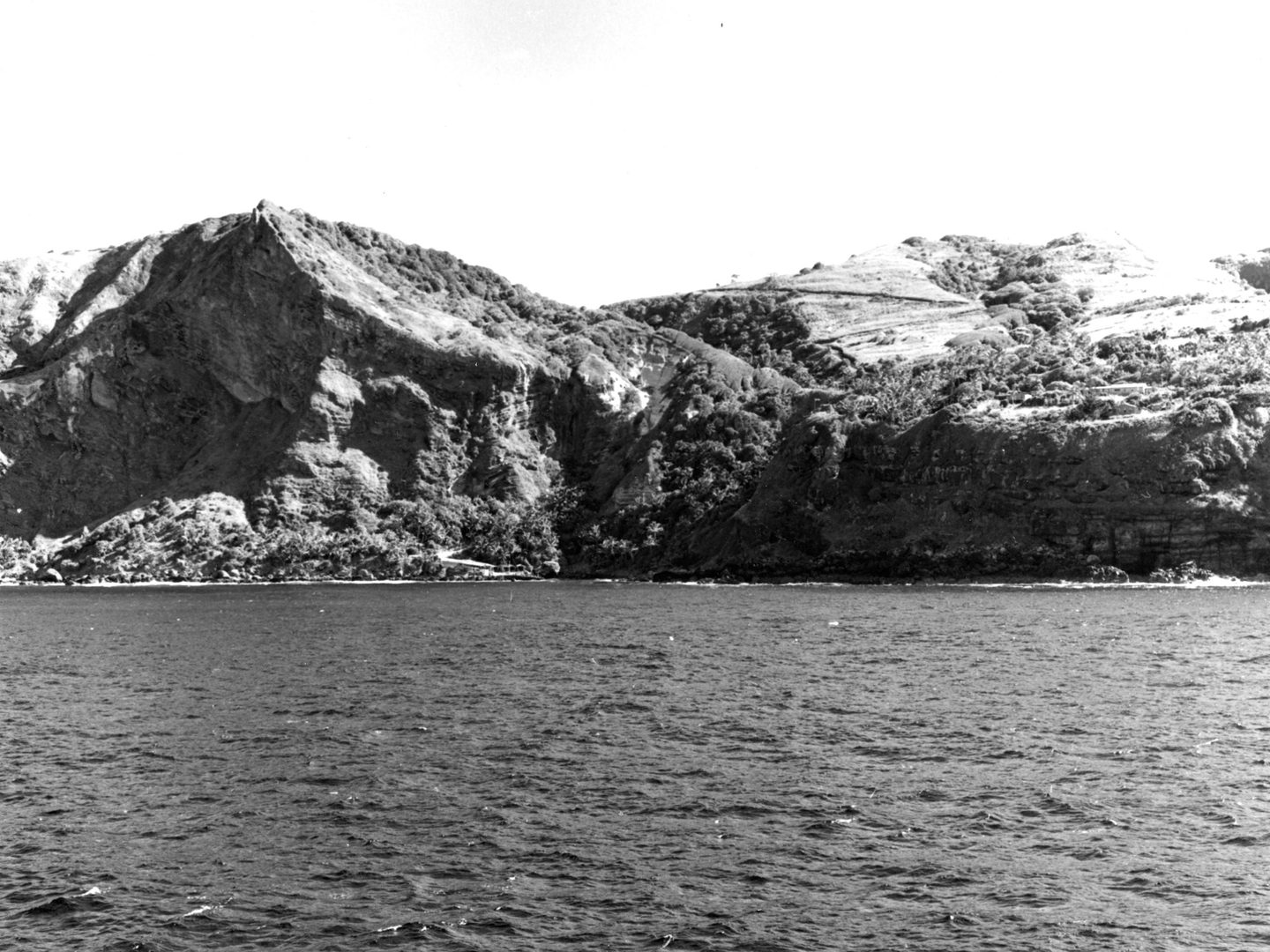
The main landing on Pitcairn is Bounty Bay, where HMS Bounty was grounded and eventually burned; Collection: DOS, Sortie: BRITANNIA/RN/71, Frame: 0004 (1971)
Violent tensions between the British sailors and the poorly treated Tahitians – who were essentially their captives – meant that by 1800, just one of the sailors and none of the Tahitian men survived on the island. However, the remaining population persevered, and the current inhabitants of Pitcairn (the only settled island in the archipelago) are largely descended from the original settlers. The Pitcairn culture derives from a blend of British and Tahitian traditions, while the language Pitkern is an English-Tahitian creole, with elements of diverse eighteenth-century English dialects.
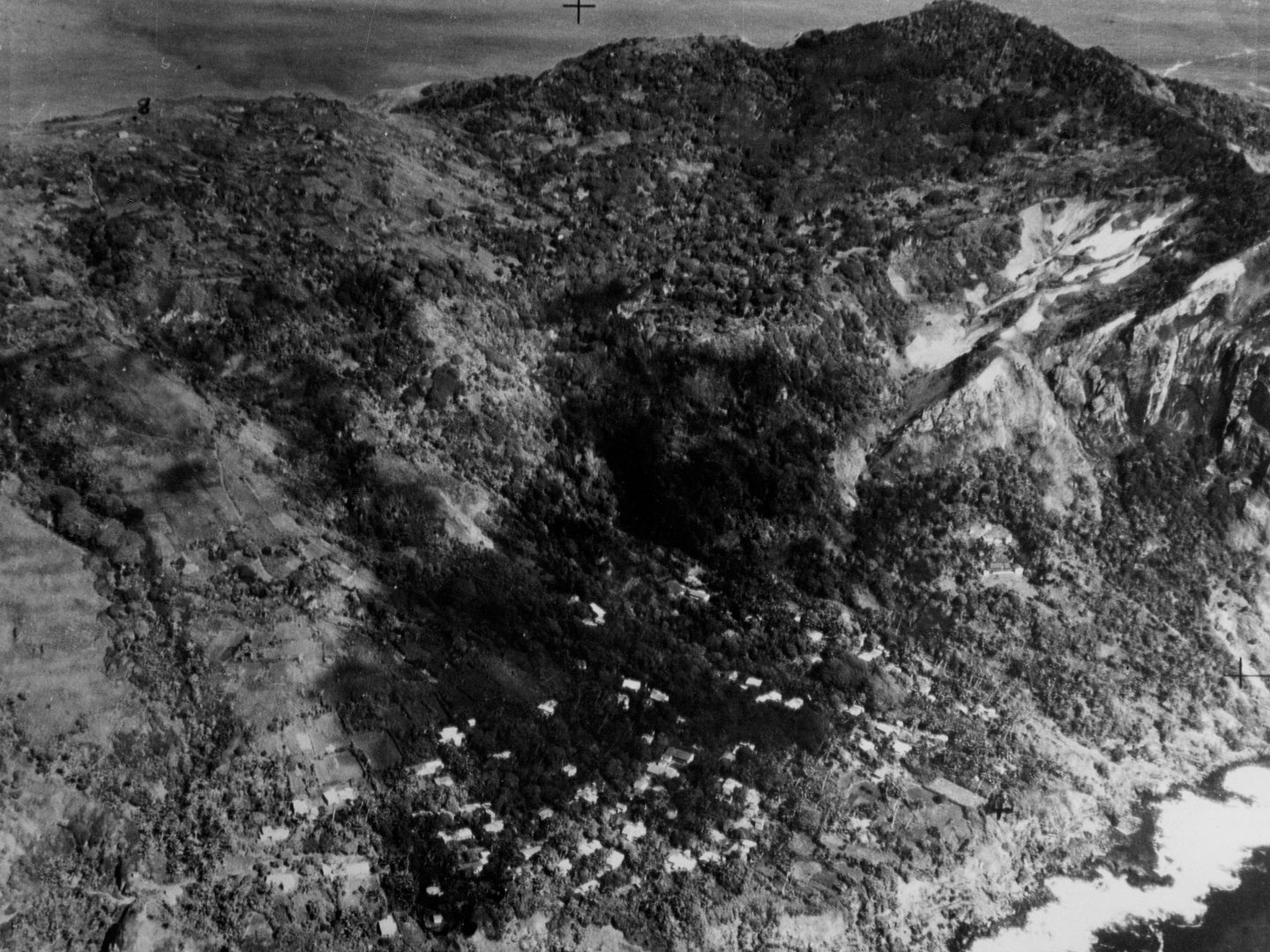
Adamstown, the capital and only settlement of the Pitcairn Islands; Collection: DOS, Sortie: WARRIOR/RN/57, Frame: 0001/P (1957)
But why are we providing a potted history of the Pitcairn Islands, fascinating though they are? NCAP imagery covers much of the globe, but Pitcairn is one of the remotest territories featured in the collection. Photographs of the islands have recently been uploaded to our online portal, letting you experience this unique and distant archipelago – almost 9,000 miles from the United Kingdom – from the comfort of your own home.
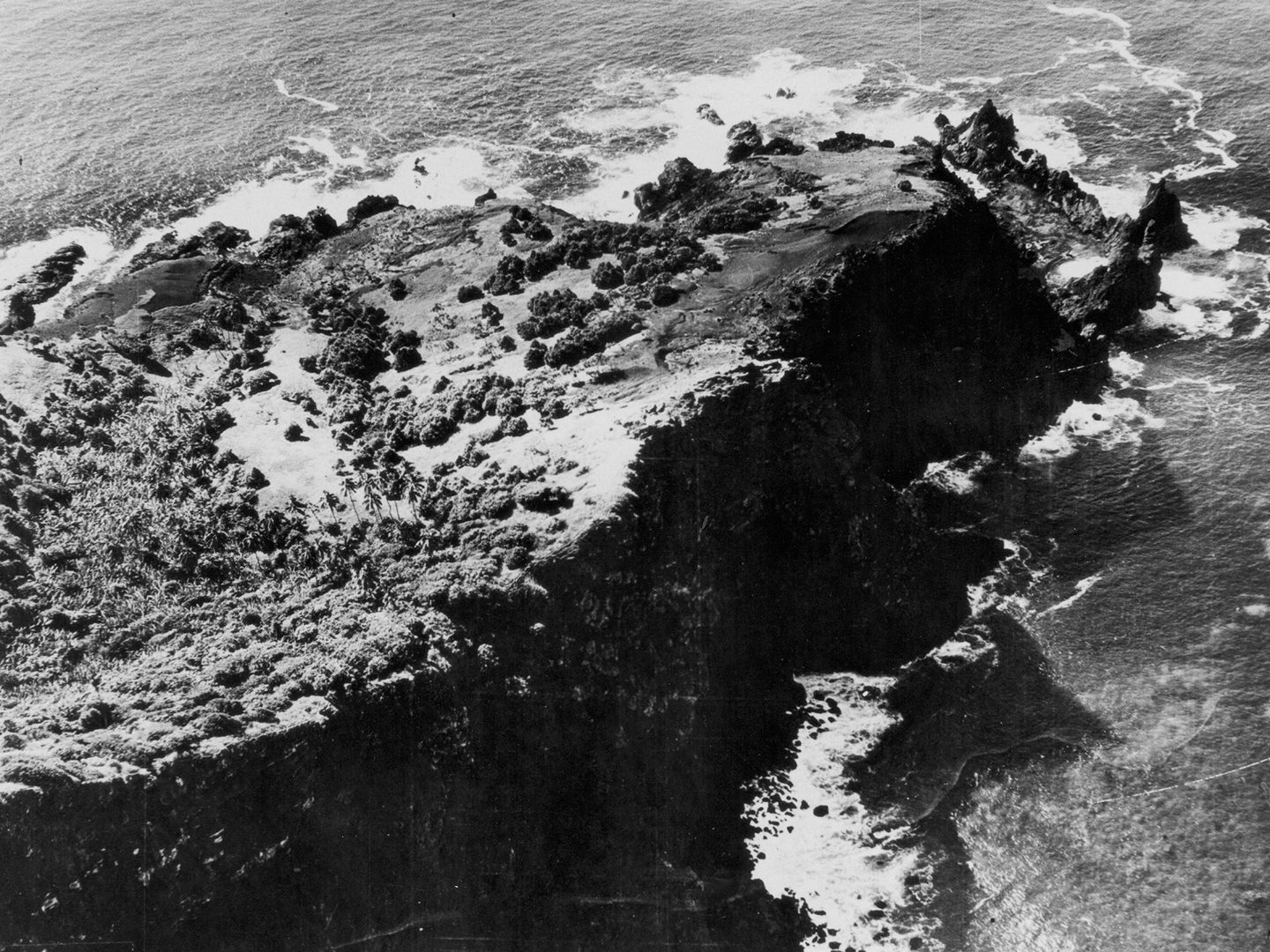
Landing on Pitcairn is difficult due to its sheer cliffs; Collection: DOS, Sortie: WARRIOR/RN/57, Frame: 0026/P (1957)
HMS Warrior and Aerial Photography
In 1957, the Royal Navy light aircraft carrier HMS Warrior acted as flagship and operational control ship for the first three Operation Grapple nuclear tests at Malden Island in Kiribati. Operation Grapple would be the last time the United Kingdom undertook atmospheric testing of nuclear bombs.
Once Warrior was finished with its Grapple duties, it returned to the United Kingdom via Argentina, to whom the British government was trying to sell the vessel. On the way, it stopped at Adamstown, the sole settlement on Pitcairn, and it is during this visit that most of the photographs of the Pitcairn Islands held at NCAP were taken, by hand from helicopters flown off Warrior. The visit marked the first time any aircraft had landed on Pitcairn, as island dignitaries were ferried to and from the vessel via helicopter, and probably the first aerial images ever taken of the archipelago.
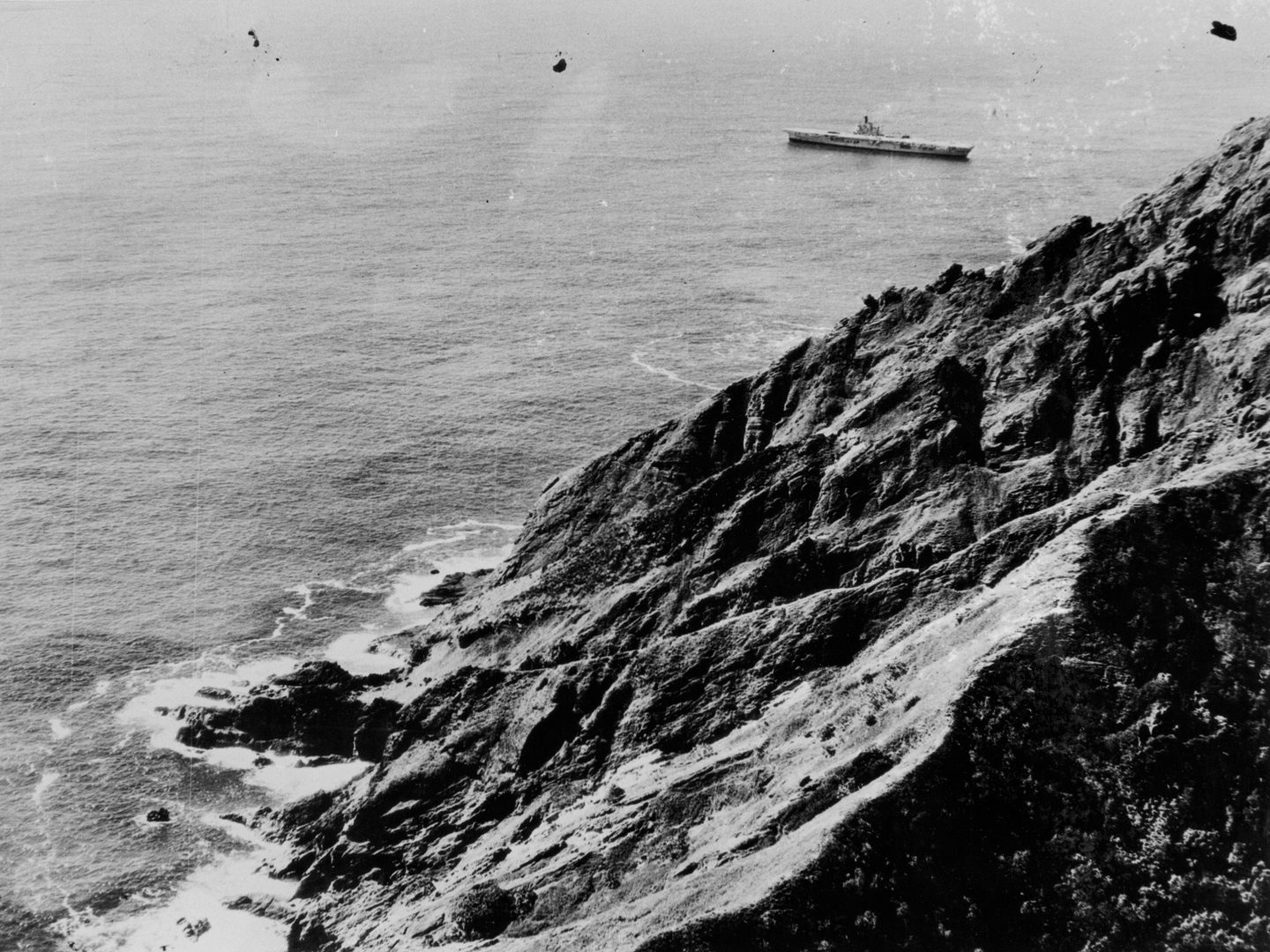
HMS Warrior moored off the coast of Pitcairn; Collection: DOS, Sortie: WARRIOR/RN/57, Frame: 0006/P (1957)
HRH Prince Philip, Duke of Edinburgh also called on the Pitcairn Islands aboard the Royal Yacht Britannia, 14 years after Warrior's visit. As well as inviting Pitcairn’s entire population to dine on board, the voyage resulted in several more photographs of the island being taken, mostly from the vessel’s deck.

The Royal Yacht Britannia approaching Pitcairn; Collection: DOS, Sortie: BRITANNIA/RN/71, Frame: 0002 (1971)
This small collection of imagery forms a fascinating and unique record of one of the remotest and most unusual of all British Overseas Territories. You might never get the chance to visit, but through our online portal, you can catch a glimpse of the intriguing Pitcairn Islands.
Ben Reiss, NCAP Collections Manager
Pitcairn Islands Imagery Directorate of Overseas Surveys Spotlight On: Rockall


