

Choosing the Right Resolution and Format
Resolution determines how much information is captured when an image is digitised, while file formats determine how that imagery is delivered. Understanding both will help you choose the most appropriate product for your project.
Understanding Image Resolution
Resolution is measured in pixels per inch (ppi) and describes how much information is captured when an image is digitised.
Higher resolutions capture more information from the analogue photograph. However, a higher resolution does not automatically mean more visible detail, as image quality is ultimately limited by the source material.
| Common NCAP Resolutions and Typical Use | |
|---|---|
| 72 ppi | Research copies |
| 1200 ppi | Standard image delivery |
| 1270 ppi | Photogrametric scanning resolution |
| 2000 ppi | Photogrametric scanning resolution |
For more information on how image quality is affected by source material, image scale and flying height, see our Image Quality Factors and Scale & Flying Height guides.
Understanding File Formats
NCAP imagery is primarily supplied in two formats.
JPEG - Typically supplied for:
- Research copies
- Already digitised imagery purchased through the online catalogue
TIFF - Typically supplied for:
- Scan on Demand imagery
- Professional digitisation projects
| Resolution & Format Guide | ||
|---|---|---|
| Research Copy | 72 ppi, JPEG | Image identification and archive research |
| Already Digitised Imagery | 1200 ppi, JPEG(6) | Standard purchase through the online catalogue |
| Scan on Demand Imagery | 1200 ppi*, TIFF | Standard purchase via Scan on Demand service |
| Digital Format Upgrade | 1200 ppi, TIFF | Professional review and reporting |
| Second World War Imagery | 1200 ppi, TIFF | Maximum achievable quality from wartime photography |
| Photogrametric / Modern Imagery | 1270, 2000 ppi*, TIFF | Specialist technical applications |
*Availability depends on the collection and original source material.
Please note that some born-digital survey collections were originally created at lower resolutions. In these cases, imagery will be supplied at the highest resolution available from the original source material.
IN THIS SECTION

Image Quality Factors
Explore the factors that influence image quality, from the condition of the original photograph to scanning methods and image processing. Learn why some images contain more visible detail than others.

Scale and Flying Height
Discover how aircraft flying height and photograph scale influence the level of detail visible within an image. Understanding these relationships will help you assess what information can realistically be identified and interpreted.
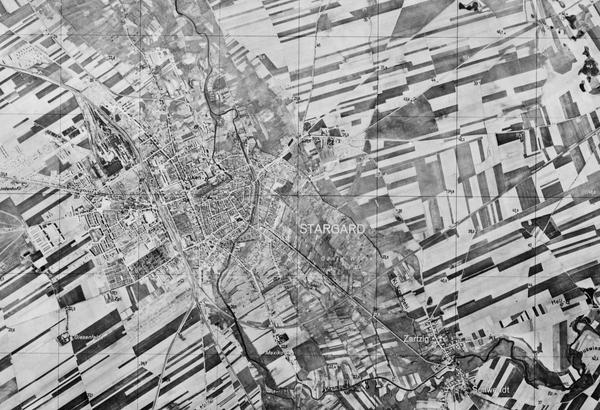
Second World War Imagery
Second World War aerial photography remains one of NCAP's most heavily used collections. Explore its unique characteristics, limitations and strengths to better understand image quality and set realistic expectations for available detail.

Pre-Digitisation Preservation
Learn how NCAP prepares historic films and prints for digitisation, helping to protect original materials while producing the highest-quality digital images possible.

Understanding Collection Coverage
Learn why aerial photography coverage varies between locations, periods and collections, and how this can influence the imagery available for your project.